Rss

He Said/She Said: Bill Bryson (and Sarah Selecky) (on WONDER)

[3-minute read]

There’s a writing coach around whose e-bay window I occasionally lurk. She’s always pretty and smiling, or pensively curled up with notebook and pen. She entices me to write more, and more satisfyingly and more deeply, and to link up with other scribblers. Her messages sometimes inspire in a general way, they encourage without fail, though they may be too jasmine-scented, too chamomile and meditative and soft for me. (I sometimes write with Jeff Beck or The Propellerheads blazing in the background.) Perhaps I just resist for the sake of loonie-pinching resistance, carrying on in my own solitary way. Still, she has me wondering, and doing math about it…

Sarah’s recent e-blandishment was to join a virtual writing community that has a new emphasis each month. May’s is Wonder. She writes, “In their great new book, How to Design a Meaningful Life, Dave Evans and Bill Burnett share their wonder equation. Here it is:

curiosity + mystery = wonder.

When you know the equation, you see that wonder is always available. It’s a choice. You can find it in ordinary things, once you start looking. An apple, when you really think about it, is completely unfathomable…”

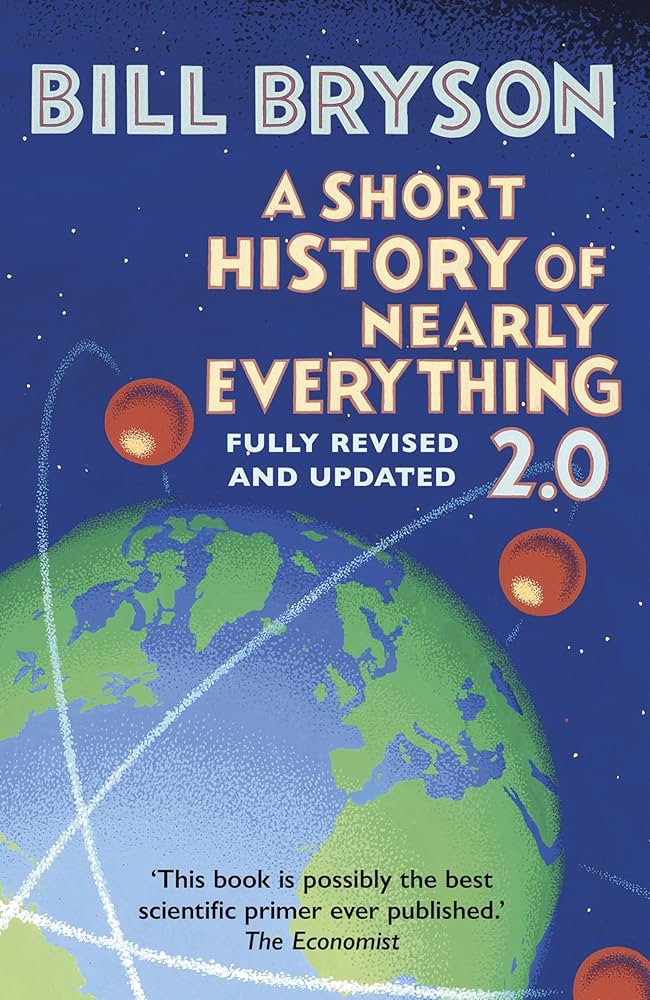
This image comes from Amazon, but please buy from an independent bookseller!

I wonder why and what?! and how?! and who was she in high school? and when will it be?… and I’m off to the races. We all are, when our curiosity isn’t strangled by routine or petty distractions — not to mention that my reflexive question is this: do these slim answer machines that we’re leashed to actually stunt or misdirect our engagement with life’s questions? My big sister loves her iPhone, and quick-drew it on me last weekend more than once to respond to my idlest who won/when’s the next game? queries with an encyclopedic recitation. Fair’s fair: I did ask, but there was precious little mystery attached to my bland microdose of curiosity. My question about smartphones stands, though I do admit that smartphones and the algorithms that fuel their constant use really can (he argues hypothetically, but without much conviction) prompt profound and useful investigations of mysteries more lofty than can you believe what this cat/these guys just did? 

But I wonder, I do, how much and how often this kind of outsourced thinking encourages genuine curiosity about truly mysterious things. They are more likely, in my experience, to excite thoughtless engagement with banal and repetitive images, without a single idea in sight. I wonder.

Now, according to my notes, the force-of-authorial-nature Bill Bryson was on my Sunday Magazine CBC wireless radio as 2025 wound down. (Vacuum tubes, static fuzz-hiss, carefully calibrating the dial so I could listen while shovelling coal into the furnace.) (Okay, no, the CBC still lives in modernity; I mostly listen to its shows as podcasts on my iPhone. Driving. Walking. Or in this case, I believe the Mother Corp soothed and informed me while I loaded the dishwasher.) Bryson is mainly known for writing rich and funny travel books – Notes From a Small Island (England) and A Sunburnt Country (Australia), for only two best-selling examples – but I especially liked his 2003 departure, A Short History of Nearly Everything. It was an avowed non-scientist’s gigantically ambitious attempt to write the story of scientific discovery from the ancients to the 21st century. For the first two years of my family’s five-year unplan in northeastern China, nightly readings of Sciencey Bill Bryson composed my young son’s science curriculum. (When Dad’s an English teacher, you come to expect science as an exercise in storytelling, and what an amazing work of narrative non-fiction it was!)

And is, still and again and even more so! Bryson was interviewing with Magazine host Piya Chattopadhyay about his 2025 complete revision and

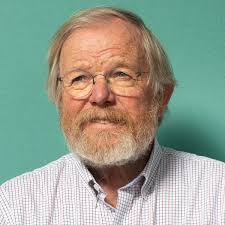
Bryson in 2020 (from The Guardian, a fine news site).

update: A Short History of Nearly Everything 2.0. (This, despite his 2020 “retirement” from writing at age 68, as delightfully chronicled in The Guardian.) It was a tasty, engaging conversation, chock full of fun and fascination and – yes, I did remember where I was headed with this! — wonder. Piya wanted to know, after all these books and the over 20 years that had elapsed between original publication and this renewed re-telling of the greatest (and latest) adventures in scientific discovery: what feeds Bill Bryson’s curiosity? What makes the wonder mill keep on grinding?

I loved his answer. He’s a humorist by nature, but a relentlessly thoughtful and wonderfully wise one. He said,

“Here we are….We have this very short window of existence. Before we existed, there was this great eternity that we didn’t take part in, and when we die eternity will go on….But in between, there is this moment where we have the exhilarating privilege to exist. And I think it’s such a shame that we take it all for granted.”

So here’s the math: add Bill Bryson’s furious, curious desire to understand to the vast slowly revealed mysteries of the universe? The sum total is WONDER. Reverence. Amazement. And he moved me to want MORE.

Jim Rohn (on discipline and regret)

[3-minute read]

I had never heard of Mr. Rohn until years after his passing. It appears he was one of that prototypical tribe of American salesmen – “born poor, a millionaire by 30, broke by 33, etc.…” – who come to prominence in their quest to make influence, personal development and individual psychology into an alternative faith tradition. I don’t mean to trash the field entirely. After all, I am a Psych grad and a frequent consumer of PD content; Tony Robbins and I have gone a few rounds, and I learned some useful things. Jim Rohn wrote many books, with titles like The Power of Ambition, Take Charge of Your Life, and The Day That Turns Your Life Around. He inspired the Chicken Soup guys (Hansen and Canfield) as well as Master Robbins. So, that’s coaching. That’s influence, and I can think of a pile of so-called “influencers” who are far less valuable than what Mr. Rohn’s body of personal development work appears to offer.

So. Here’s the Rohn quote that brings me here.

“Everyone must choose one of two pains: the pain of discipline or the pain of regret.”

It’s pithy and blunt, and it got me one day back in 2025. I don’t remember, but it probably came from a basketball coach’s email subscription. Now, let’s talk about an out-of-context quote! It’s the kind of thing, my research tells me (though I might have guessed it), that you can order from Amazon in kitschy suitable for framing on fridge magnets form, but I haven’t been able to find what book it appeared in. On Reddit forums and Facebook pages, it often comes accompanied by the reminder that “discipline weighs ounces, but regrets weigh a ton”. I don’t know how much of his life pitch I would buy, but since I stumbled on THIS one, long after Jim Rohn had passed beyond this vale of human development, I haven’t been able to kick it out of my way. That’ll be useful for my players, I told myself. (Of course I did!) I do love coaching, from basketball to poetry, but recently I have challenged myself anew to accept coaching — and to reconsider my own levels of discipline and regret.

Coach Creede, meanwhile, has accepted the challenges that come from working with an egotistical writer, teacher and coach who has been accused of that worst of sporting crimes: being uncoachable. (That would be me.) Like Apollo (Rocky’s boxing frenemy), this Creede is beginning to punch through my phalanx of weaponized bad habits, mindset disorders, alleged neurodiversity and gigantic appetites for distraction. She asks Those Questions, simultaneously wonderfully encouraging and also barbed. Before long, I found myself making promises that I often don’t keep when I only make them to myself.

The pain of discipline? It’s real. It’s hard to put a lock on the doors of whimsy and impulse. This teacher and mighty slow learner is only too aware: push yourself away from the table, sir, or you’ll still be carrying extra kilos around without a wheelbarrow; if you don’t manufacture time for your writing, ol’ buddy, it’s unlikely to just fall into your crumb-laden lap!

HOWEVER. You’ve all heard this bold statement: I live my life without regrets! So say many contemporary influencers, entertainers and sports stars. It seems foolish to me. Juvenile. While I’m all for throwing off the slimy burdens of useless guilt and chronic self-loathing, it seems to me that people who claim to live without regrets just aren’t reflecting sufficiently on their lives. (Unless they’re psychopaths.) We are meant to take stock of our lives, and decide what is worthy of us and what we should leave behind. Certainly, for me, it’s the reality of various forms of regret that encourages me to stiffen feeble habits, that reinforces my general desire for a more disciplined sort of life.

Is that too old-fashioned for you? Don’t be afraid to comment below, or to share these thoughts with folks who might value them.

Thanks for reading, friends.

Going All *Gregorian* (though not necessarily in a timely fashion)

[And lo, he wrote a poem about OldNew Years and promises of scribbling. And a Happy 2026, headlines notwithstanding, to you!]
[2-minute read]

Going All Gregorian

And I said, Lo, this is an ancient and decrepit choreography for the

Changing of the Temporal Guard,

With attenuated powers of renewal and jangly echoes fading along

consumptive corridors of materialist advancement and

post-hangover promises.

Ridiculous spot for a “New Year”.

And yet it has been a new and Sunday sort of Day

And I’ve been thinking that even a busted, rusted tabula rasa

still offers that shopworn but still clean-enough board of

resolution.

(And resolution came into my language* to express a bringing-into-focus

of things seen darkly, as with camera or dialled-in microscope

of the kind I never used very well in the biology labs of yore)

(* in which your humble scribe lays claim to English)

So I’ll dig a little every day, using Seamus Heaney’s brand of shovel,

not worrying (much) about the impossibility of spading up

soil as rich as that Irish hero spelunked and spelled out.

I am deskside, armed with twentieth century penmanship and apparently

writing a POEM fergawdsake!

Although, reading Heaney aside, that was never the plan for this First Day

But I will X-marks-the-spot each day in January until the calendar scoffs.

And listen: this hardly hurt at all.

Retrofitting a Fancy

“I was an educator of some sort,” began my scribbling about a recent dream.

(This was also true to life. What “sort”, then? This sort: high school; English Creature; one for whom Dead Poet’s Society probably meant too much; taught like world peace depended upon my chalk-stained energy; raced to the gym many an after-school day; teacher-coach; regularly heart-broken but deeply committed, happy and perhaps absurdly proud to be so. “Uncle Jay,” a niece who had been with me in Room 2011 once wrote, “is, um, colourful.” Unlike my sons, she didn’t have to deal with me on the basketball court. And the ghost is still in the machine. I continue to haunt the corridors and the hardwood of Endless High School. “I guess that this must be the place…” (Talking Heads) One of my places, that’s sure.)

I was an educator of some sort, wandering through tight spaces in a huge, high vault of a warehouse. I couldn’t get out, or get where I needed to go, and was also frustrated that I couldn’t escape the dream itself. Moments of am I dreaming here? alternated with me writing on various found surfaces and random papers, here and there, so I wouldn’t forget what I was seeing. And then I’d forget where I left my urgent records. But I was amazed by all I saw in that enormous, high-walled building: old dictionaries, reams of stationery and computer equipment, redundant textbooks, tables, racks and shelves of building materials, fossil remains of art. There were a few rancid corners, but mostly it was filled with odd and dusty and stolidly interesting things. It went on and on. Does anybody realize that all this is still here? I had to get the word out, that all the old-school material — steel and wood and paper and thought — in this building, not to mention the real estate it sat on, had to be worth a LOT. It should at least be recycled and/or sold off! I made notes, lost them, wrote others.

All this STUFF! All this SPACE! Somebody should KNOW about all this! I gotta get this written down (AGAIN!) before I lose or forget it (again!)!

I went for a walk that morning, shared a few choice words with the sun and sky, cocked my head at a certain point and knew, without thinking hard or directly, what that dream was trying to tell me. (Most of the time, I find my dreams are just stacks of frustration dripping with a slurry of random events-from-the-day. I don’t expect revelation, or even meaning. But I’ll take it when I can get it.)

Ha! It was a Writing Dream!

Let’s say the storage area was my life and mind, my understanding, maybe even my imagination. Let’s say that, despite my distrust of my capacity for mysticism, I’m not above looking for signs and portents!

***

All this is a long way of saying that I’m having another kick at the Can. The Writing Can, the I-can Can. A.T. helped me resuscitate this old repository of my stuff. I’m spraying Lock De-Icer on my fingers, and sprinkling hopefulness on my spirit. You’re reading a wee result. Thanks for reading.


[I have also dumped, *just* over there in the “It’s All About Sports!” section, a lengthy essay on basketball coaching. It’s a ‘State of the Disunion’ address, slightly different versions of which I’ve been trying to share with coaches in my region, the wider basketball community, and anybody who can tolerate (or venerate) the idea that sport and education can “share the same space for a minute or two”, as the mighty David Byrne used to sing.]

Where We Found Them

[1-minute read]

I felt my bumbling way, blindly and bemused, back to a website I used to be frenemies with. I won’t be coy: it’s this one. Surprise!

To those generous humans who’ve subscribed to this thing – and let’s not be too precious about this, the price is no barrier to entry! – I say thanks, folks! and strive to go “on without apology”, as Big Bill had Romeo say at the point of crashing the Capulet ball. But hey: It’s my website! And I’ll post if I want to!! (Yeah, I’m riffing on an old song most people have never heard; I’M BACK, BABY!! Semicolons and all! [You are free to mentally insert the amusement emoji of your choice here.])

All this to say, again, that I’m going to scrape the rust off this now-antique whatever-it-is. It helped, after it hurt to see the gap of three years since I had anything to say here, to re-read my last two posts. One was local and light-hearted, and the other was global and everything but. They were my only two posts that year, but I really really liked them! I couldn’t restrain myself from frowning over this little bit of awkward punctuation, or that weary word choice, but mainly I had that consoling reminder that comes from reading old stuff and thinking, Hey, this guy’s not bad, even if he *is* me! I confess: I enjoyed these two articles, and wish I’d done a little more with them back then. But we takes our confirmations where we finds ‘em…

I will still hive off athletic ruminations into the “All About Sports” nook, and quarantine quotes from others (and my reflections on same) into the “He Said/She Said” file. Both the pieces above sit, along with this little greeting, in the “At First Glance” section, though the second one probably belonged in the “On Second Thought” compartment, since it ran deep and feeling and long. Come back anytime, friends, neighbours, citizens of Earth.

A.O. Scott (on writers, on Mank)

Gary Oldman in the title role, and Amanda Seyfried as a muse-buddy. It’s an interesting film, best viewed after Citizen Kane (the Howdy formula).

                                                                        [2-minute read]


Anthony Oliver Scott is best known as a movie reviewer for the New York Times. He is a superb writer, enjoyably read even when he’s figuring out what he thinks about a movie I’ve never seen. I’m also excited about his recent bookBetter Living Through Criticism: How to Think About Art, Pleasure, Beauty, and Truth, especially after reading a series of his essays, called The Americans. Rather than film, here he offers a fresh look at living writers who are under-read and overlooked – Wallace Stegner, Edward P. Jones (a fascinating oeuvre and a real revelation to me ) and Joy Williams. It’s eye-opening, a real service to someone who wants to better know a work, an author, a nation’s literature. These essays belie the common idea of “criticism”, that it must be acid-flavoured and archly (or furiously) dismissive. They are also wonderfully crafted in themselves, and refute the lazy notion that a critic must be a bitterly disappointed artist.

At my distressingly soon-to-be-departed Ottawa treasure, the ByTowne Cinema, I saw Mank in November. It’s the modern, black-and-white biopic in which Gary Oldman plays the legendary Hollywood screenwriter Herman Mankiewicz, who more or less wrote the 1940 classic  Citizen Kane. (Mank argues that it was his baby entirely, which is an old and highly debatable statement; director/star Orson Welles shared the screenwriting credit with Mankiewicz.) I liked the movie and planned to see it again. And I did, in a way, reading Scott’s recent review in the Times. In it were exactly zero stars, no thumbs, not a single tossed tomato, whether rotten or beautifully seasoned, but only well-crafted prose that deepened my understanding and regard for a film, and strengthened my commitment to seeing it again. This is all fine.

But Scott finished with a flourish. In the review’s final paragraph, he describes Mankiewicz, by all accounts a brilliant writer and wit, and his turbulent relationship with Hollywood. He hates and loves the life. He knows he’s a small player in the industry yet feels himself above it. Mankiewicz was striving to bring a higher literary sensibility to the work, and meanwhile was drinking himself into highly public embarrassments and a premature grave. (Pauline Kael once described him as “Hollywood’s loser-genius”.) Scott ends with this dazzling turn, which I keep re-reading:

Neither a maverick nor a visionary, he’s an alienated insider, a participant observer, a kibitzer at the table where the big guys make the big bets. Which may just be a verbose way of saying that he’s a writer. I’ll drink to that.

Just Dive In, They Say

[3-minute read]

I don’t want to just dive in to water, and I don’t care if I’m the “last one in…[and] a rotten egg!”. Bodies of water larger than a bathtub are not my best friends, and besides, I don’t just dive in to nearly anything.

Which is strange, because I love beginnings, the freshness of unstained hope not yet wracked by reality.¹ I think “diving in” reminds me of a future that I deny. Go jump in the lake can mean, in the wrong mind, I hope you die soon. Some of my resistance to jumping into water I can’t see the bottom of, I begin to glumly theorize, arises from my diffidence about death. It doesn’t feel like dread, not quite, but I do sense my unpreparedness. Strange waters or familiar, they feel like a presentiment of extinction. This explains a lot of things.

¹ I wish this applied to writing, though. The terror of the start, the Thing Not Yet Begun, still is not and maybe never will be quite overcome by the eventual flow of production and the relieved delight of having written. I often say, “Reading (or writing, and probably ‘rithmatic for that matter!) is like running; you have to build your stamina and skill to make it a positive habit.” I guess swimming is like writing, too, except that I don’t imagine ever being competent in water and, whatever my writing resistances are, I don’t dread imminent death when I scribble.

Some of this nervous distaste for getting in over my head, not just metaphorically but literally, is less abstract. It comes from my blasted confidence while in water, a feeling of drifting towards doom that may have begun with (and was certainly stoked by) a childhood failure at lessons in my small town’s cracked outdoor pool. It was simple stuff that the mermaids in blue one-piece bathers were asking of me, but I couldn’t do it. Ever since, a lake or pool or pond is above all a glorious thing to get out of, to put sand or clay or concrete underfoot again, to gaze from solid ground on the seductive beauty of water in motion, water still, water frozen and forever. I love looking at water. I stare at it, fascinated, confirmed to find it in front of me, not over my head.

Diving in, on my preferred footing of metaphor, is letting go of my dried-out conventions and certainties, which is hard to do. I can admit to the occasional thrill when literally doing so, in Actual Water. When hot, even if unbothered, crashing into coolness is a lively shock, and I don’t flounder right away. I just hang there, most of me under the surface. From the hindsight of a desk, I wonder why a man with more than sufficient body fat won’t float with more ease. But suspended in a cold, thought-stunning brew, I always play dead for a while,

Continue Reading >>

Letter To a Young Writing Coach

[4-minute read]

Armed, but not sufficiently dangerous.

Dear S.:

I’m a coach myself — basketball, mainly — and I taught writing forever. I’m a chalk- and red-ink-stained wretch, so despite my bride’s entreaties, and the general on-line encouragement I’ve gotten from you, I still don’t want a writing coach. Stubborn? Maybe. I persist in wanting to lift myself by my own bootstraps; mind you, the physics of that is still mysterious to me. After quite a few years of not exactly setting the WordWorld on fire, I still want one of two outcomes: slay this ridiculous dragon of vaguely literary desire, or find a way to harness the sucker all by myself. That doesn’t mean I don’t look for inspiration, tools and writing-my-way-out-of-the-wilderness tips, though.
Mostly because of a suggestion from Margaret Atwood — via her Twitter account, that is — I follow Chuck Wendig and his fiery, rude and funny advice to his on-line band of fellow “pen-monkeys”. That’s also how I wound up lurking near Story is a State of Mind. (Your gentle, organic counsel makes for a very interesting counterpoint to his, as far as voices in a struggling writer’s ear go!) I’ve subscribed to your daily writer’s prompts for months. Never used ’em, and yup, I sometimes rolled my eyes. (“Write about the taste of rain.” Yeah, right.) Hey, listen: I know what you’re pushing me to do. I was a writing teacher in small-town high schools for years, and I, too, gave eye-rollingly absurd suggestions as Journal Topics for the Day: break OUT, guys, try stuff, just get your pen going and then you can go wherever you (or IT) want(s)… The taste of rain wouldn’t have gotten me anywhere with tenth-graders.
I’ve been dry for a while, but I’m back in the saddle. Hit a big birthday, saved up for it by giving myself licence to NOT write ’til the day came, which siphoned a full tank of frustration out of the top half of August. (Good for me.) Since my birthday crepes, I’ve been trying to act more like a pro, showing up at the desk, grinding. Bird by bird, buddy. (I’m sure you get that reference.¹) I’m also a big fan of Steven Pressfield’s War of Art, and yesterday began re-re-re-rereading it with some dear ones. Three of us, at least, clearly aspire to Writingness and can hear the clock tsk, tsk, tsk-ing away. And yes, I’m on a two-week roll, which is lovely, and to get to the point, I’ve finally started using your prompts, blue pen in my own Journal. (And I did write about the taste of rain. Got down some nasty/good stuff I liked and might use, among the blathering. I got going.)

Continue Reading >>

Better Read Than Never: Wendig’s STAR WARS: AFTERMATH

[7-minute read]
“BRTN” is a periodic feature on JH.com, in which I write reviews/appreciations of books that are not exactly current. Today’s entry is, for me, rather timely; my last was on a John Updike memoir from 1989. The trouble is, time waits for no man — and neither does Chuck Wendig.

The second Death Star is destroyed. The Emperor and his powerful enforcer, Darth Vader, are rumoured to be dead. The Galactic Empire is in chaos….Optimism and fear reign side by side.

And while the Rebel Alliance engages the fractured forces of the Empire, a lone rebel scout uncovers a secret imperial meeting…


This is how Star Wars: Aftermath by Chuck Wendig begins. If you need more background information than that, then you may not have been living in this hemisphere during the last number of decades, and maybe this 2015 novel isn’t for you. Wendig – about whom more later, but let’s just say now that he is phenomenally productive, and a review like this is at least three novels behind  – adds full-length sequels in each of the next two years. The seemingly unbreakable Star Wars Rule of Threes continues its reign. Together, the trilogy forms part of a “new canon” of official SW material beyond the films themselves. Aftermath and its children form a bridge between the events of films over 30 years apart: 1983’s Return of the Jedi, and the grizzled-Han and dowager-Leia reunion in The Force Awakens (2015). (Yes, I know, other things happened, too. Luke, for example. And ‘droids. And light-saber battles.) I’m not an SW junkie, and don’t go near fan-sites or extended universes or fundamentalist skirmishes over what is and should be in the Star Wars canon. But like this novel, I do.

It is fast, inventive, breathless and constantly in the present tense, a Wendig trademark. Unknown characters appear in rapid succession, but with references to more or less familiar faces and names from the movies (Admiral Akbar, who does not age at all; C3P0, with upgrades). We know where we are, even when jetting into new worlds. On Coruscant, in one of Wendig’s several “Interludes” — short set-pieces that add context and flavour, and offer a place for him to stow away extra ideas — emboldened former Imperial citizens pull down a statue of Palpatine; see Hussein, Saddam, formerly of Iraq. Imperial Admiral Rae (she’s a woman!) Sloane has a toady and untrustworthy adjutant typecast to remind us of the unfortunate official Force-choked by Vader in the original Star Wars film. Although Wendig takes bitter criticism (surprise!) from many of the Star Wars faithful, Aftermath is an agreeable confection that blends the familiar with the rather wonderfully invented bridgework, with only the occasional bump.

The Empire is going, not gone. Akiva, as tropical a planet as Luke Skywalker’s Tattooine was dry, is now again crime-ridden, with ex-Imperials and ganglords competing for the spoils.

Continue Reading >>

Joan Didion (and Company: on writing and encouragement)

Joan Didion and John Gregory Dunne, in 1972. (from New Yorker magazine)

                       [3-minute read]

Here’s a foolish thing, a very 20th-century sort of stinkin’ thinkin’. But worry not, it ends with two great women (and one fine husband, not me) sending out a peculiar but quotable encouragement, and some of us might listen.

I love writing, or having written, or at least the romance of writing. The Canadian Broadcasting Corporation, the dearly beloved Mother Corp of all Canucks leftish, artsy and true, has a long-running radio program called “Writers and Company”. It’s an hour-long conversation between the quietly enthusiastic, impeccably prepared Eleanor Wachtel and a superb range of authors: novelists, playwrights, essayists, poets, from Zadie Smith to George Saunders to Arundhati Roy. These are three of my recent listens, but I wouldn’t likely have heard them if I’d stayed in one particular mental rut.

For me, Writers ‘n’ Co was, for the longest and silliest time, mostly an occasional, accidental listen, often when I happened to be in the car and remembered what time it was: specifically, the Sunday 3 pm slot on CBC’s Radio 1, where Wachtel has been asking her terse but evocative questions since 1990. I’d catch part of a conversation, sometimes the whole thing if there was a writer known to me, and I’d regularly and fervently resolve to never miss another; I found each episode thrilling as a teacher of readin’ ‘n’ writin’, and began to connect it to my own spastic undertakings as a scribbler. (A gutsier, more daring me might have blustered, Wachtel’s gonna interview ME one day. Well. Maybe not. I finally did meet her, briefly, a year or so ago. She was plainer and funnier than she had always sounded to me, that sombre but voluptuous voice teaching me from tinny speakers.)

But I was never much of a planner, and the number of interviews I caught was small compared to the torrent of writer-talk that was available.

Continue Reading >>