Rss

A Boy, a Man. And All Those Nutbars In Between.

It’s never really about basketball.

These boys were neither cute, rambunctious children, nor young men launching themselves into the orbit of their adult lives. Not quite yet: they were “my guys”, a coupla dozen nutbars (he fondly called them) entering grades 8 to 10, students working on their basketball skills in anticipation of a new academic year and school team tryouts. It was August 14. It was our last of 23 training sessions. There were Freezie pops for everybody, and a chocolate bar (or two) for the guys who showed up the most and weren’t afraid to be “try-hards”. (Try-hards. In the joy-killing cynicism of youth basketball “culture”, this is a term of dismissal and a weird sort of shame.) I preached courage all summer. And concentration. And yes, competitiveness, the willingness to rise to the challenges presented by other players, by a keen and pushy coach (me), and by the ever-green imperative to improve on our previous best selves.

So. Good last session. We tried hard. I was glad to be finished. Eleven more days until school begins. But only two boys of that final day’s 20 thanked me for the summer’s (volunteer) work. Empty Freezie pops were left on the gym floor. Ideal outcomes were unachieved. Irritating realities intruded. Mainly, I wanted the gym cleared and the equipment stored and the boys gone. The coach was weary, and fighting off the typical post-feverish-engagement voices: shoot, I thought we’d get more done and wish I’d seen more of *those* two but also there *was* massive improvement, admit it and don’t forget that C is really starting to lead…

The gym was finally quiet when Amalia’s text came. WHAT? That little boy I had loved was suddenly gone? That 20-year-old man I was longing to meet in his adult flowering? Won’t ever happen. That gorgeous family — an Italian sweetheart and his lovely American wife and those three delightful little boys – the one that I loved to meet whenever our ex-pat group in Dalian (China) could get together? It is devastated now.

It’s less than two weeks since we reunited with Piero and Tannaz at a large conference in my home city, a dozen years after leaving Dalian. Our periodic connection during our shared years in China was especially sweet for me; I had been father to a three-boy family, a second try-hard at marriage had brought along a fourth son, so I was helplessly smitten by Jian and his littler brothers. Tannaz and Piero brought us up to speed about their boys, on a convention centre escalator and in between conference sessions. Jian was now 20, a lean and handsome extension of the bright-eyed 6- to 8-year old tornado I had known back then and there. He was now a college kid, spending a few weeks at Green Acre Bahá’í  School, deepening his knowledge and commitment in summer sessions of the Institute for Studies in Global Prosperity. (ISGP is a phenomenally impactful institution, dedicated to training young people to transform their worlds.) I had a hundred questions for him, which would have been summed up in one basic query: Who are you NOW, young fella? 

Amalia’s text was a sudden lament. There had been a drowning. The Piscataqua River, near Green Acre, empties into the Atlantic. A young man, our dear Jian, full of energy, intelligence, deep commitment and enormous potential (and so handsome, and how could he have been otherwise considering the parents who had raised him?), had suddenly leapt from the worldly stage he seemed destined to stride with grace and purpose, with joys and usefulness.

I had been relieved to have the gym to myself for a few minutes before I got on with my day. Now, I wanted to call my players back. I wanted to tell them about Jian Grant Morano, what a sweet small boy he’d been and the grief and loneliness I felt about a young man I would never know. My loss is nothing against the earthquake of a father, a mother, two younger brothers and the tide of people who knew and loved this family. I wanted to warn adolescent boys: nothing is guaranteed, life is sudden, don’t waste a second, all those earnest cautions that I would not have heeded at their age.

Prayer helps. I am led to believe that it can stir distant hearts, even those souls that have passed on. What I know is that it helps me in ways that my oh-so-strained understanding cannot. So does the Old Testament, specifically the blunt comfort of Ecclesiastes 9. The voice in that book, the Teacher, has been telling us for millennia that our limited views of human justice are inadequate for the scope of the life of humanity, and that a Creator infinitely beyond our comprehension should not be judged by our petty standards. Death comes to all:

For I considered all this in my heart, so that I could declare it all: that the righteous and the wise and their works are in the hand of God….All things come alike to all:…(Ecclesiastes 9:1-2)

In Chapter 8, the Teacher had famously advised his hearers that “there is nothing better under the sun than to eat and to drink and to be merry“. Similar encouragement follows later in the ninth chapter, which I was coming to know when I was the age Jian was, back when we were together in Dalian, twelve and more years ago:

Live joyfully with the wife whom you love all the days of your vain life which He has given you under the sun, all your days of vanity; for that is your portion in life, and in the labor which you perform under the sun. Whatever your hand finds to do, do it with your might;…I returned and saw under the sun that—

The race is not to the swift,
Nor the battle to the strong,
Nor bread to the wise,
Nor riches to men of understanding,
Nor favor to men of skill;
But time and chance happen to them all… (Ecclesiastes 9:9-11)

(Sigh. Nobody gets to marry Jian.) However, for those who believe in what we blithely call the “hereafter” — I count myself among them, though I can’t say I’m very good at it — there are comforts beyond Ecclesiastes. For example, the New Testament’s vision of the soul’s continued existence (“in my Father’s house are many mansions”) is confirmed and amplified in the Bahá’í teachings, which at one point compare the untimely death of a young one to the actions of a “kind gardener” who transfers a tender plant to a wider and lovelier place. Furthermore, a treasured prayer of ‘Abdu’l-Bahá has been on my mind and tongue since I learned of Jian’s death, one in which we beg the Lord of the universe, on behalf of someone whose loss we grieve, to

…cause him to enter Thy glorious paradise, and perpetuate his existence in Thine exalted rose garden, that he may plunge into the sea of light in the world of mysteries. Verily, Thou art the Generous, the Powerful, the Forgiver and the Bestower.

But how do I make sense of this loss? I keep learning to pray, yes, and hope that perspective sets in. I also hope to keep hearing the Teacher, to do “whatever [my] hand finds to do” with all my might. I’ll try hard, and remind my nutbar ballers that there’s no shame in that! (Not ever.) And when I’m coaching or otherwise working with the youth I am so drawn to, I will look to Jian and his example. We all need help down here.
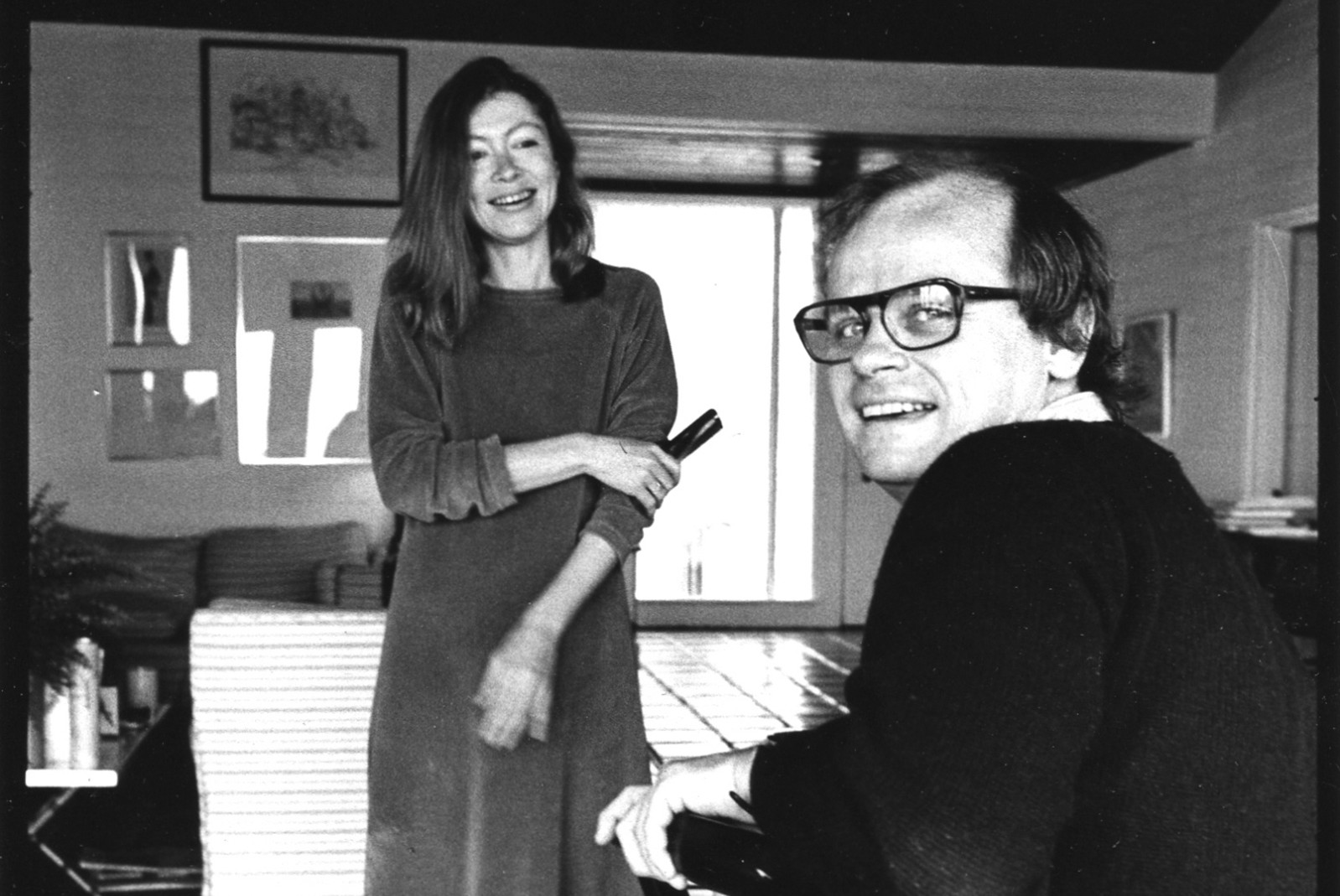


Joan Didion (and Company: on writing and encouragement)

Joan Didion and John Gregory Dunne, in 1972. (from New Yorker magazine)

                       [3-minute read]

Here’s a foolish thing, a very 20th-century sort of stinkin’ thinkin’. But worry not, it ends with two great women (and one fine husband, not me) sending out a peculiar but quotable encouragement, and some of us might listen.

I love writing, or having written, or at least the romance of writing. The Canadian Broadcasting Corporation, the dearly beloved Mother Corp of all Canucks leftish, artsy and true, has a long-running radio program called “Writers and Company”. It’s an hour-long conversation between the quietly enthusiastic, impeccably prepared Eleanor Wachtel and a superb range of authors: novelists, playwrights, essayists, poets, from Zadie Smith to George Saunders to Arundhati Roy. These are three of my recent listens, but I wouldn’t likely have heard them if I’d stayed in one particular mental rut.

For me, Writers ‘n’ Co was, for the longest and silliest time, mostly an occasional, accidental listen, often when I happened to be in the car and remembered what time it was: specifically, the Sunday 3 pm slot on CBC’s Radio 1, where Wachtel has been asking her terse but evocative questions since 1990. I’d catch part of a conversation, sometimes the whole thing if there was a writer known to me, and I’d regularly and fervently resolve to never miss another; I found each episode thrilling as a teacher of readin’ ‘n’ writin’, and began to connect it to my own spastic undertakings as a scribbler. (A gutsier, more daring me might have blustered, Wachtel’s gonna interview ME one day. Well. Maybe not. I finally did meet her, briefly, a year or so ago. She was plainer and funnier than she had always sounded to me, that sombre but voluptuous voice teaching me from tinny speakers.)

But I was never much of a planner, and the number of interviews I caught was small compared to the torrent of writer-talk that was available.

Continue Reading >>

More of a Skirmish. Fray Rejoined.

[2-minute read]

Easy title, tough challenge. Here we go.

I’m back.

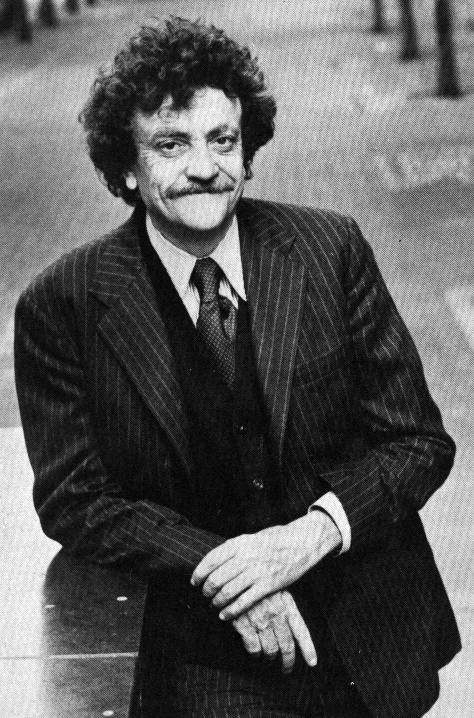
There are endless things to write about, and an infinite number of slimy ways to wriggle away from keyboard, from pen, from the front lines. (Yes, I’ve been meditating on courage, and how life’s demands so often exceed personal supply. I can’t want that.) Courage. My word.¹ When I think of writers I heart the best – and it’s KV² I come back to ever and anon – it’s sometimes ‘how did they do that?’ (technically, commitment-wise) but mostly it’s ‘how did they do  that?’. That is, what allows or compels an artist to be so bloody BRAVE, or reckless, or whatever it takes to tell the whole truth?

¹ Courage: Gord Downie‘s word. (And Hugh McLennan’s.) Go, Gordon.
² That’s Kurt Vonnegut. Hi ho.

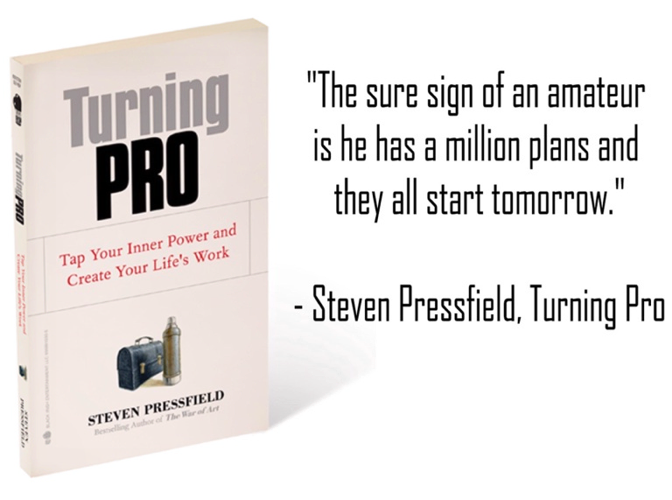
I’ve re-read The War of Art. I’ve had a big birthday. I’ve said ‘no’ to a major time commitment to an activity I love well beyond reason and balance. I’m summoning resolve. I plan to act like a professional. I’m ready to write again and more and still and daily. The title speaks of my renewal of effort as “more of a skirmish”, in the wider lens of the social insignificance of whatever I do, and because I lean hard into self-deprecation and other forms of egocentrism. But it’s big news in my little corner; this is my Olympics. This is struggle. Here is my war – one of ‘em, anyway. That will mean Way More Words from the Howdy Home Office, and some of them will appear here.

Hurray for here!

And if you’re a subscriber, bully for you, and thanks for reading. (And if you’re just stumbling into this, there’s a whole lot of earlier stuff on sport and men, culture and books, faith and fandom, learning and remembering, edges and ledges and the odd bit of ecstasy.)

Fenton Johnson (on solitude, and reclaiming reverence)

[3-minute read]

SPECIAL BONUS QUOTATION BEFORE WE EVEN GET TO THE “HE SAID” AT HAND!

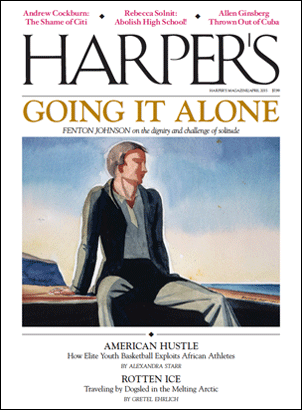
The main article appealed to my loner tendencies, but there was eco-writing, a call to end high schools, and a basketball feature. A must-have.

The main article appealed to my loner tendencies, but there was eco-writing, a call to end high schools, AND a basketball feature. A must-have, absolutely killer issue.

“All man’s miseries derive from not being able to sit in a quiet room alone.”

 — Blaise Pascal

I have never subscribed to Harper’s Magazine, but it’s a wonderful read. I buy it as a gift and a comfort to myself, approximately whenever a cover story leans out from a random magazine rack and says, Buy me now. My love for this smart American publication isn’t timely or disciplined or even remotely organized; for one pathetic example, I’m just now finishing the August 2013 issue, and returning to its cover piece, a writers forum on the lumpily uncomfortable topic “Are You Sleeping?”. This was a Must-Buy because  my nights have been harder work than they should be for a long time. (I’m trying to try easier.)

A year ago last spring, I was forced to kidnap (and to pay the $7.99 ransom for) the April 2015 issue of Harper’s, whose cover story was the long and deeply thoughtful article “Going It Alone: The Dignity and Challenge of Solitude”, by Fenton Johnson. (You can read the whole article here on the magazine’s archives for free.) The piece begins with the quote from Pascal, the 17th-century French polymath/genius, which Johnson follows with a more homely conundrum. He invites us to consider the average bookstore, or daytime TV lineup, or any number of therapists, clergy or Internet advisors, all counseling us on how to figure out our relationships. He compares that to the scarcity of public comment about being by ourselves:

Continue Reading >>

Kurt Vonnegut (an oath on freedom, good news for Dad)

This story, the story of this letter, has moved me over and over as if I was reading it for the first time. I might as well have been. Lately it has been on my mind constantly. This is likely because I have recently entertained the possibility that I will never haunt a classroom again, at least not for money. After years in between blackboards and bored kids, mainly in southern Ontario high schools but for five recent campaigns in two northeastern Chinese universities, I may be done with all that. Hence, the Kurt Vonnegut ear-worm, my writing hero‘s blazing honesty on repeat. (How did you do it, Kurt? How did you do it? I’m reading his non-fiction again, trying to find clues, but I mainly get beaten about the ears by the impossibility of doing what he did.)

Humane, funny, tortured, conscious, brave.

Humane, funny, tortured, conscious, brave.

Yes. So here’s the set-up. KV’s story is in the second of his “autobiographical collages”, Fates Worse Than Death. (The first was Palm Sunday, if you’re keeping score.) (Desert island books, both. I can read these things again and again.) He’s writing about his saintly “unicorn” of a father, and the stoic resilience he showed as an artist enduring commercial vulgarity and disdain, and as a man surviving the madness of his wife. Kurt Junior ends this whimsically sad tribute to a man living in the wrong era by telling of his own early days as a writer, maybe one born at the right time — if being a World War II infantryman is good timing.

At age 27, Vonnegut was paying bills by writing advertising copy for General Electric by day, but his eccentric short stories were — amazing as this seems in hindsight — being accepted by the mass-market general-interest magazines of the day. The last word on his beauty-loving Daddy was this:

Continue Reading >>

About Boston.

I woke to a small explosion this morning, a mother-son dispute about laptop use. We worry about how compelling is our young teen’s attachment to headphones, computers and his PDA. Our little sense of post-dawn peace was – well, I can’t say shattered, just can’t, because my own little electronic window just told me about Boston.

Victory and crisis, crisis and victory.

When you love sport as I do, there is something especially horrible when evil visits the home court of dreams and persistence and the desire to surpass oneself, one of the places we go to believe in human goodness and greatness. This year’s Boston Marathon, 26.2 miles of tradition, where Tom Longboat brought honour to his Grand River people and thousands have found deeply personal victory, was dedicated to the 26 who died at the Sandy Hook elementary school. Now there is disbelief and pain where there should be only exhaustion, exhilaration and the giving of one’s all.

Continue Reading >>

ODY: Week 6 (42/365). Old, Blue, Borrowed and New.

Just picking up Old Dog hairs from your carpet for the first time? The creation myth is here, and the first step is here.

I spent the first part of the week at a training seminar in Toronto, bunking at Sue and André’s place in a cozy Beaches neighbourhood. I’d dragged the guitar along, and kept the faith with some late-night strumming on Sunday. On Monday night, I got caught. André, husband of my wife’s old friend Sue, came home from work late and heard something that reminded him of music in his spare bedroom. He poked his head in to praise Sue for dusting off her guitar. Instead, he found me playing the ol’ Dégas in my underwear. Hurray! Male bonding!

I was training as a facilitator for the Virtues Project , an approach to teaching, child-rearing and relationships that puts fundamental human goodness right up front. Guitar Virtuosity was on my mind. Let’s examine a partial list:

Courage? (Check. Terrified of this thing, started anyway.)
Creativity? (Okay. I am making things. Basement noises. Muttering blogs.)
Enthusiasm? (Muted. Taking a jock approach: never too high, never too low. Should make more whoopee. Not what you’re thinking, though that’s not a bad idea, either.)
Determination? (Check. Day 42, kids!)
Diligence? (Long past due, but duly done.)
Humility? (If I needed more, this newfound clumsiness really helps.)
Idealism? (Larded with practicality and order, but hopefulness leaks through.)
Orderliness? (I have a good place. As for time, though, I shoe-horn practice into the absolute heel of my day, and the night-time, blues be damned, ain’t necessarily the right time…)
Patience? (Man, it doesn’t come easily, but it comes. Haven’t thrown anything. Yet.)
Self-discipline? (42 in a row argues for Yes, but the frayed edges of disappointment try to shout them down. I am disciplining Self to listen more to column A. All those days, whether purposeful or not, count. “90% of life is just showing up,” saith the prophet Woody Allen. I have showed up at fretboard and keyboard.)

Virtues I haven’t the nerve to acknowledge yet as part of this off-key odyssey:

Confidence. (A rumour, a far-away voice. So far, will and embarrassed enthusiasm rule.)
Excellence. (I have, however, just emerged from a pothole in the footpath to the parking lot next to the on-ramp to the road to excellence. That counts.)
Joyfulness. (I hear its giggle, but it runs away when I look.)
Service. (Hard to see what this does for others. Nobody-but-me for the moment…)

Tuesday was Day 3 of the Virtues seminar, and I was presenting some ideas and exercises on COMMITMENT. In part to counter-balance some of the syrupy-sweet or new-age ethereal music that had been played – but mainly to jumpstart my own courage (and humility!) – I went LIVE. I played a perverse kind of musical chairs (If you call that music. If you call those chairs!) with my new best friends. I had them scribbling some ideas in response to questions and challenges, and I (mercifully) didn’t give them much time to write. Mercifully, because their writing time was defined by my playing of “A Blues Riff”, first very slowly (à la Week 2 and 3) and, later in the exercise, as fast as I could go. Going public. Visible (and risible) commitment. (Merde, did I make a lot of mistakes!) Concentration was probably hard for them, as I inserted some startlingly realistic enactments of mock frustration. It was lively, let’s say that, and we laughed a lot. (Commitment is too often a grim, ominous and guy-unfriendly concept.) And that turned out to be my playing for the day, because I wasn’t back to my borrowed bunk ‘til 1:30 a.m., with an important meeting about the Old Dog Year the next morning, bright and early. But most importantly, I chose an intimate circle of gracious encouragement. So many pats on the back, so much praise for this tiny outreach to the Muse of music. I smiled and smiled.

The Wednesday meeting was an assessment of interest about this Guitarzan spasm of learning and all the on-line thinking I’m doing about it. Interest? ‘Fraid not. A busy man had the courtesy to indulge me with a meeting but hadn’t even looked at the submitted collection of entries on the first 31 days of the Old DogYear. Garn! I’ve learned what doesn’t work, anyway. And then it was the long trip home and another exhausted midnight guitar run. Commitment feels strong, though confidence is wobbling. This would have been the night of my second group lesson, but I missed it. I wonder how much farther KW took us.

The end of the week found me back in the beloved basement. Same old stuff. The dullard within. But doing all this repetition feels like early summer days, when the strengthening sun slowly burns off the fog of morning. KW had thrown lots of chords at us, and they’re coming. I’m starting to remember how to configure the C chord, but I’m also hearing what C sounds like and how it speaks to G and D. The little finger-picking sequence that the guitar guru showed us, an initially unruly little gang of 4 notes, began to resolve itself into a smooth and brainless pattern. Look, Ma, no eyes! It’s very relaxing, actually, quite a mind-emptying finger-dance where the digits are starting to remember their steps without my help. Sweet. A little less old. A little less blue.

And a LOT less borrowed, broken-necked Dégas guitar because, on Sunday, I finally pulled a Major Commitment Trigger by buying A NEW GUITAR. My guitar! I wanted to dance and giggle but, to my credit (or shame), I took it all in stride. It’s a Walden guitar – a D550, baby! – a solid-topped beauty that I got on sale for $200 at the Ottawa Folklore Centre. It’s a folk guitar, not low-rent classical as the Dégas was, so the strings are metal rather than nylon. The B and high E strings are like razor wire, so there is another level of fingertip toughening to come. They’re also the same colour as the – what is it, the pick-guard?—that guitar-body armour below the sound hole, so these eyes have trouble picking them out. Guitar Guy at the OFC spoke warmly and knowingly about my Walden, and I feel good about this machine. I bought a stand, an electronic tuner and a humidifier, none of which I know how to work yet. The humidifier is a fairly simple and obvious thing, though I hadn’t considered how dryness could affect a wooden instrument. I’m not sure how it sits, so that’ll be Question 67 or 68 when I go for the next groupthink lesson in a couple of days.

It’ll be fun to show off my new lovely, but I’m scared to play with her. She makes sweet and unfamiliar sounds that my borrowed love was incapable of making. The music we made was obviously much more full and rich, but I strummed as if I was nervously coaxing melody from a crystal vase. I missed the Dégas. This new friend doesn’t yet sit comfortably with me. I wanted to whale away with my mock solos and percussive energy, but I felt nervous and reserved. I wanted things to feel comfortable right away, ‘cause heck, she’s beautiful, she has a gorgeous voice and body, it’s a fresh and exciting start and besides, that first date had cost me a pretty penny! I guess I shouldn’t be surprised that there were those awkward pauses in the conversation, that I was unsure about how to treat her and how she might respond to my overtures. It was a tense kind of fun, though, and I’m pretty sure we’ll be seeing each other again.