Here’s a foolish thing, a very 20th-century sort of stinkin’ thinkin’. But worry not, it ends with two great women (and one fine husband, not me) sending out a peculiar but quotable encouragement, and some of us might listen.
I love writing, or having written, or at least the romance of writing. The Canadian Broadcasting Corporation, the dearly beloved Mother Corp of all Canucks leftish, artsy and true, has a long-running radio program called “Writers and Company”. It’s an hour-long conversation between the quietly enthusiastic, impeccably prepared Eleanor Wachtel and a superb range of authors: novelists, playwrights, essayists, poets, from Zadie Smith to George Saunders to Arundhati Roy. These are three of my recent listens, but I wouldn’t likely have heard them if I’d stayed in one particular mental rut.
For me, Writers ‘n’ Co was, for the longest and silliest time, mostly an occasional, accidental listen, often when I happened to be in the car and remembered what time it was: specifically, the Sunday 3 pm slot on CBC’s Radio 1, where Wachtel has been asking her terse but evocative questions since 1990. I’d catch part of a conversation, sometimes the whole thing if there was a writer known to me, and I’d regularly and fervently resolve to never miss another; I found each episode thrilling as a teacher of readin’ ‘n’ writin’, and began to connect it to my own spastic undertakings as a scribbler. (A gutsier, more daring me might have blustered, Wachtel’s gonna interview ME one day. Well. Maybe not. I finally did meet her, briefly, a year or so ago. She was plainer and funnier than she had always sounded to me, that sombre but voluptuous voice teaching me from tinny speakers.)
But I was never much of a planner, and the number of interviews I caught was small compared to the torrent of writer-talk that was available.
Party at Farm Boy! It’s my party, and I’ll write if I want to². (Behold: the second obscure pop-musical reference. Didja get the first¹ one?)
I don’t always write when I want to. I am not, and have never been, blessed with my bride’s Do It NOW! gene, at least when it comes to things requiring effort. TV, and fridge doors (see: opening of), and thinking about sports, and reading whatever falls under my eyes – these things come as naturally as does scrolling through a Twitter feed long after my original sharing-impulse or micro-news hunger has expired. Yes: a fresh entrant to this category of Indomitably Easy Activities.)
But I am writing now.
I sit upstairs at a high-end supermarket called Farm Boy. It’s across the street from Tom the Mechanic, where my wheels are getting readied for summer. Breakfast has merged into lunch. I like buying groceries and eating them at the store. There’s even a chance to be healthy. (-er)
(And yes, music historians, the title was a pop lyric, too. I now have Spotify³ on my phone. Most of my downloads are decades old, but surely “To Pimp a Butterfly” will join my invisible milk-crate library.)
It’s my mother’s birthday, and I’ll cry if I want to. I don’t think I will, though. She’s been gone 10 years now, and I’m easy about it. I will admit, though: when I went by the asparagus downstairs in the produce department, I pronounced it “Ass-per-AG-us” in my head, because that’s what Enid just about unfailingly called it. She was never a teacher – heck, never went to university, why would she? She was female! – but reliably pronounced words in such a way as to make their spelling graspable. “Skizzers” for scissors, “fatty-goo” for fatigue, and so on and on. Whether this was with her five kids’ spelling tests in mind – we all aced ‘em, always – or just a mock-fashionable bit of extreme word-nerdery, I couldn’t say. Ennyhoo, as she also serially concluded: Hi, Mum. You had an effect.
Mum was a Christian, less nervous about death than about tidying up before Mrs. Adams, our housekeeper, got to our place for a weekly clean. She was ecumenical before it was cool, absolutely friendly with those Presbyterians and United Churchers, and dismissive of attempts by an earnest young Baptist pastor to condemn her weekly bridge games as the devil’s playground. When one of her sons was allegedly barred access to the gates of heaven because of consorting with Baha’is, she sniffed, “Well, it won’t be much of a heaven for me if my kids can’t go there.” She hated confrontation, but as I recall it, her comment snuffed that pseudo-theological debate right quick.
Maybe my mother would have liked Benjamin Sledge. I don’t know Mr. Sledge, but in the way of Internet Things I read a blog post of his on a stealth-Christian site called Heart Support. In the article, “Let’s Stop Pretending Christianity is Actually Relevant, Okay?”, Sledge jumps from the Vans Warped Tour (a travelling rock music fest with faithful underpinnings) to 2nd-century Rome, and then back to a moral landscape – modern America – that obviously troubles him. What troubles him most? “Christians”, mainly, both the mainstream don’t give it a second thought kind, on one hand, and the minority have you accepted Jesus Christ as your Lord and Saviour and hated gays and abortionists enough? brand. It’s unclear which type is the supreme irritant, but he “welcomes”, actually seems to long for, the growing irrelevance of the Christian faith in modern America. He prefers the heroic, supremely loving and sacrificial expressions of the Gospel that he finds in early Roman history, the reason Christianity originally achieved a civilizing groundswell of popularity in the centuries following the life of Jesus. Ennyhoo: you can read the piece yourself. It’s quite refreshing, especially if you reflexively shudder at the excesses of faith-gone-political. It’s not that, not at all. It gives Christianity a good name, actually.
I’m writing in a Farm Boy supermarket, and yes, it’s been awhile since I got anything Out There. And Mr. Sledge has been pleasantly irritating me: a small snippet of the “Relevant” piece has been a brain-worm, burrowing about because of its significance and its craftiness. So thoughtful and cleverly written it was, in fact, that I Actually Wrote It Down in my sorely neglected paper’n’pen journal, as well as a handy just-in-case-I-get-the-typing-itch Word doc. Sledge refers to a simple, under-acknowledged bit of cultural oddness: people hitting other humans over the head with a book they consider Holy, the Bible. Who DOES that? he basically asks. And what in the world do they think they’re DOING?
Not bad, eh? One thing I’ve loved about the Baha’is is that they bend over frontwards and backwards to avoid using sacred writings as hammers. Another story.
It’s good to write. Sledge’s article did come my way via Twitter – not that there’s anything wrong with that — but reasoned faith and my mother’s ever-living example (for example), are far less momentary. And all these things — along with old tunes, and squeaky-cheese curds ‘n’ apples for lunch, and sunshine on a day of swapping out the snow tires — got stirred into a bloggy stew. I feel good! Like I knew that I would.₄
And if you’re a long-time reader here, thanks for sticking around. I know this could have gone in the He Said/ She Said section, but as I said:
It’s my party.
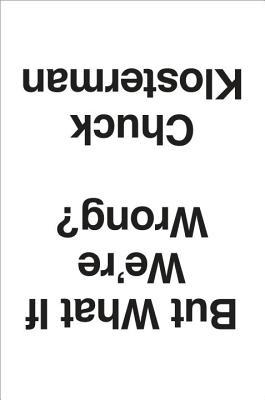
I’ve made no sudden conversion to Column A or Column B, but am still prone to literary accidents, which is how I ran into Chuck. Klosterman’s 2016 – wait, isn’t that THIS YEAR? – book-length thought experiment But What If We’re Wrong? Thinking About the Present As If It Were the Past. It’s my first book-length CK, though I used to read him often on the Grantland sports ‘n ‘popcult website (ah, Grantland, we hardly knew ye). The moral: it pays, in intellectual and vaguely spiritual terms, anyway, to go to the library. [That hyperlink right there was to a Neil Gaiman essay. You should go to it. And to the library.] BWIWW?, with its black text on white, upside-down cover, leaped into my sweaty palms from my local branch’s “Express Reads” shelf. Get it now, it’s hot, but you have only 7 days before library muscle is pounding on your door…²
It’s a smart and entertaining book, which concerns itself with “Big Potato” questions that cluster around the title query: how can we be so sure about nearly anything, when time so often (and often so quickly!) proves us to be out to lunch without a paddle? what can we safely predict about our futures? do we have even half-decent tools for justifying what we think we know for certain? Klosterman is stylish, contrarian and witty on such starchy questions as these³, there are any number of quote-worthy morsels, but I liked the one below. Sportsy readers don’t get nearly enough Cool Quotation time, so this one’s for them. And for you.

The front cover. The subtitle is on the back, right-side up, which forced me to regularly open the book from the back.
As he concludes the book, Klosterman turns his attention to sabermetrics, the growing movement to quantify and generally science-up the approach to appreciating and understanding sports, the teams and the athletes. Why care? you ask. I answer, Because there’s more to sports than just sweat and dunks, grunts and numbers, for one thing, but also because Klosterman makes reading about sports feel fresh and [gulp!] enlightening. He makes sport feel like a genuinely useful lens to understand human beings and their cultures. Bam. Tell the truth: you have to finish this piece now, right? And the quote is just around the bend.
* And on writing on Labour Day. But that’s more about me than by her.

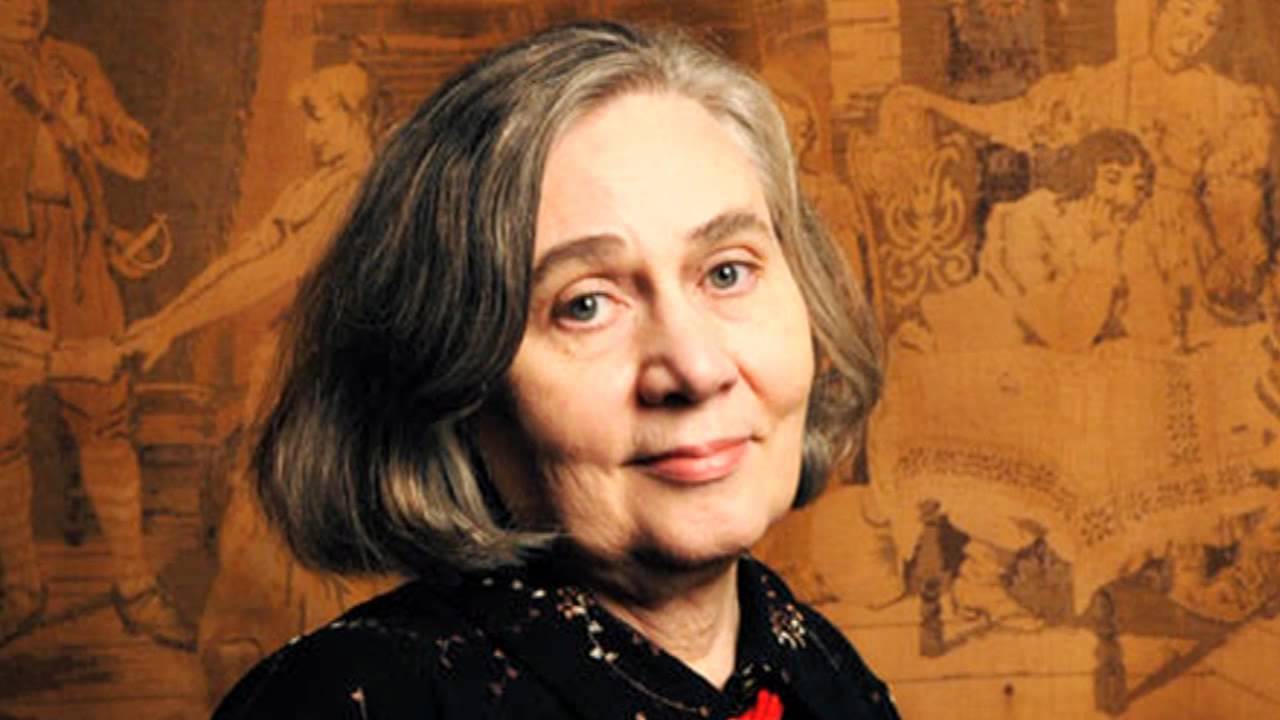
This is not my bride. But it *is* Marilynne Robinson, the gifted American author, about whom and from whom more in a moment. (Guardian photo)
My bride asks me some hard questions sometimes. Labour Day Monday’s was, What do you want your blog to be? What’s if for, anyway? I mumbled my usual answers, which she cut short with a familiar refrain: I think it needs to be more focused. Who’s your audience? I get your latest posting and I never know what it’s going to be about.
She says that with the unmistakeable This Is Not A Good Thing tone. The Dissatisfied Client tone. I resist, naturally. I like writing about different subjects. Don’t you love it when you go to the movies and you find yourself thinking, Gee crappy, I don’t know WHERE this is going! I do. I find that thrilling, as long as I trust that I’m in good hands. Besides, writing helps me learn, and I have lots of things I like to learn about. Such would be my arguments, if I was feeling, say, defensive.
However, my lady is probably right: it seems most people like to be on familiar ground at Movie Time, and that people return to a Dave Zirin Edge of Sports column, or a Stephen King novel, or the latest reboot of the hottest superhero flick franchise – moving from the countercultural through the cultural to the culture-of-mass-consumption – because they pretty much know what they’re going to get, and they like that. Meanwhile, I expect my readers to enjoy running the gauntlet of my popping-corn enthusiasms, “madly off in all directions”, as Thurber once wrote. Well, sorry about that, readers!
It’s something to ponder, though.
Earlier, my wife had also had this question, given that it’s Labour Day, and our son heads back to high school tomorrow, and I’ve been teaching on that WonderDreadFul Tuesday nearly every year of my adult life. She asked, So are you having your teacher dreams?
This answer was easy, but I didn’t quite believe myself. Because the answer was NO. One sabbatical year years back, my late August was still filled with can’t find the classroom, teaching a subject I’ve never thought about, general performance-anxiety-ridden can I still DO this thing? mid-night theatre. Later on, when for three straight Septembers I was writing within the Canadian government, it was the same out-of-synch story. Weirdly, my subconscious believed I’d be back in the classroom even though I clearly wouldn’t be. But not this year, at least not that I can remember. I’m still surprised.
Not that I’m free of doubt, or my recurring claustrophobic frustration dreams. I am instead worrying about my writing and where it’s headed. (And basketball. The coaching dreams still haunt me, and that season’s coming up, too.) Which, you may be thankful to hear, brings us to Marilynne Robinson.
It’s a day of hundreds, centuries, and numerical landmarks that end in double zeroes. (N.B. Not *that* 700 Club. Relax.) Because hundreds! Because, why NOT? Because you’ll see, that’s why! [UPDATE: And thousands, too, ‘cuz ’bout a month after this breathless report, JHdotCOM — this humble effusion of my thinkings — hit its 30,000th page view, which sounds like a lot. (If I cut back on the thinkings.)]
The 100. This is a TV show I have never seen, and only know because I follow a guy on Twitter who’s brilliant but weirdly seduced by gobs and gobs of television. What’s more: a hundred? In the folly of my middle age, I feel I want to live to that age, partly because I’m afraid of missing out on grandchildren if I don’t¹, partly because though allegedly a man of faith I’m afraid to croak, and principally because my hero, the basketball coaching legend John Wooden, fell a few months short and I’d like to do something he couldn’t pull off. When he died in 2010, I was a long way from L.A., and my bucket list was one large item lighter.
200. TWO HUNDRED? Before this blog existed, somewhere around the turn of the century, I hit two hundred pounds for the first time ‘round, and it hit me back. Hard. I found the never-published chronicle of my comical lard-based dismay a couple of years ago, when I was flirting (again! still!) with that flagstaff of fatness, and included it in a 2014 blog-post. My China years of playing basketball, walking everywhere, and reduced access to my preferred vices had gotten me down. Weightwise, that is. Sometime this past year, I cow-tipped my new scales at 200 again, and it ticked me off, so I instantly did nothing about it.
HOWEVER! This very morning, friends and strangers and aliens and all my flat-bellied players, my scales said THIS: 199.5 (Pounds, that is.) So: YES!! And ‘BOUT FRIGGIN’ TIME!! And more brave muttering about how this is just the start and I can DO this and old-guy underwear ads, here I come! and so on. And Bruce Springsteen started singing in my head, so that’s good, too, though I think he had a different kind of descent in mind.
300. I refused to see the movie, and I still think it was crap. * he limps off to growl at children* But I was a pretty consistent .300 hitter in my bat-swinging days. *he prepares to launch into “boring stories of / Glory days…* Springsteen’s everywhere today.
400. It has been four centuries since Shakespeare died. So whatcha gonna DO about it?
500. Nothing to say about this number, except that it’s linked to Fortune, which is a fickle and ephemeral thing (and I haven’t made mine yet but this blog post could change all that).
600. Tennyson, anyone?
(Give yourself a banana split if you guessed “The Charge of the Light Brigade”.)
“…’Forward, the Light Brigade!’ / Was there a man dismayed? / Not though the soldier knew / Someone had blundered. / Theirs not to make reply, / Theirs not to reason why, / Theirs but to do and die. / Into the valley of Death / Rode the six hundred…” Because poetry.
700. SEVEN. HUNDRED. BLURTS. SEVEN HUNDRED! (In which the bloggish typist finally gets around to the point of what this post is, sort of, about. Don’t miss it!!)
Hear voices? Maybe I do, but it’s banal: they’re all mine, or snippets of this song or that. (Recent visits: Bobbie Gentry’s “Ode to Billy Joe”, and “Frosty the Snowman”. No explanation.) I’m as egotistical as the selfie-ing man-boy next door, but I don’t think everything refers back to me. This was happenstance. I know that Bahiyyih Nakhjavani wasn’t writing to me, personally, and even if you’ve been hauling around some weighty notion that you burn to DO something about, she might not have been talking to you, either.

“So, get on with it, then!” she might have been saying to us in this Guardian newspaper photo from 2015.
Nakhjavani is a prose writer with the heart of a poet, and while her short book Four on an Island purports to be about 19th-century political prisoners in Cyprus, it’s more like meditative non-fiction, to coin a genre, than historical biography. She muses elegantly about Earth and Water, Air and Fire, and returns continually to these elemental themes. She teases the reader, occasionally, and finally admits on page 55 that she’s been somewhat coy, offering a kind of pseudo-confession at the halfway point about what the book is actually about. I don’t know whether this was genuine discovery, one of these mysterious cases in which writers claim that the book they are writing, or characters in it, taught them how to write it and what to say. I suspect Ms. Nakhjavani knew where she was going from the start, her twisting and mystical route notwithstanding. (Twistical!)
I was struck by how she prepared the ground for Four on an Island’s change in direction on page 55. Oh, it’s elegant, mildly amusing, and skilfully disguises its sharpness until the point sinks in. But it’s as if she was writing, say, of a book I haven’t finished writing. (It exists.)