Rss

Ursula K. Le Guin (on the alleged decline of reading)

[6-minute read]

One of her mightiest novels, but she wrote *everything*.

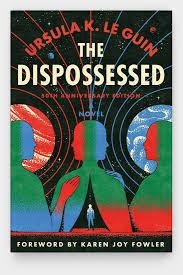
Ursula Le Guin is a hero of mine and, though often labeled as a ‘genre writer’, she is a giant of 20th century American literature. Her series of so-called “young adult” fantasy novels, beginning with A Wizard of Earthsea, were the first Le Guin books that I read. I recently finished The Dispossessed, a remarkable invocation of an extra-planetary society built on the principles of Anarchism, for a book club. (I’d read it before; I loved it again.) I’m midway through a fascinating, diverse non-fiction collection of hers, called Dancing at the Edge of the World. I was lucky enough to see her in conversation before an audience that packed an otherwise underused Anglican cathedral at the Ottawa Writers Festival in 2009. I cannot un-hear, from that electric evening, what her fiction so regularly upheld: her rejection of the trope, so common in speculative fiction (and Westerns, and comic books), of what she called “redemptive violence”. For her, this was an especially ugly non sequitur, a strikingly vulgar contradiction in terms. She radiated intelligence. Wisdom. There was someone to listen to.

Not long before this downright reverent reception at Christchurch Cathedral, in February 2008, Harper’s magazine had published her essay “Staying Awake: Notes on the alleged decline of reading”. I keep a photocopy of it. It anchors a school notebook where I keep irregular tabs on my own reading. “Staying Awake” begins: “Some people lament the disappearance of the spotted owl from our forests; others sport bumper stickers boasting that they eat fried spotted owls. It appears that books, too, are a threatened species…” and she goes on to cite both alarmed and shoulder-shrugging so what? reactions to the “alleged decline”. In the essay, she challenges mass-media’s sometimes gleeful response to surveys indicating that we read less, especially in book form. She takes the publishing industry to task with “amused contempt”; she is deliciously snarky as she bites the corporate hands that (carelessly) feed her craft. She analyzes historical and contemporary trends in literacy and what it means, and has meant, to our culture.

Most importantly, though, she centres her argument on what the act of reading actually is, and what it does with our minds. And what is a book, exactly? But wait. Before quoting the Le Guin perspective that brings us together here in electronic communion, please allow a short side trip. (If you jump ahead to read Ursula, who’s going to know? And how could I complain?)

So here’s a personal, but also amazingly planetary, narrative tangent. It’s all about BOOKS.

An abundance of good luck – and a massive adolescent absence of caution – has meant that I have hovered at the margins of the worldwide Bahá’í community for a long while now. This has meant several sweet things. I have a taste and an ongoing hunger for Persian food; the 19th-century foundation of the Faith in what is now Iran means that I’ve come to understand and love many Persian things and people! I have also known two hopeful and fruitful marriages to believers, the second of which is alive and well, and the first of which is now remembered with fondness and gratitude. I guess I could mention, too, that my worldview has been constantly expanded, enriched, interrogated and confirmed; the globe’s move toward unity and peace and justice is inevitable.

That’s the kind of mindset you can sustain if you hang around with the Bahá’í teachings  and those that seek to apply them. So, lucky me!
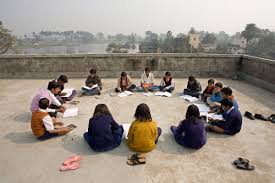
Literacy, learning, society-building in action. Where in the world?

Now, speaking of “the alleged decline of reading” mentioned by the great Ursula K., the Bahá’í community reads like crazy! The ancient references to the “people of the Book”, applied notably (and approvingly) by the Qur’an to Jews and Christians, also pertains to the followers of Muhammad themselves. In the Faith of Bahá’u’lláh, reverence for these and other holy scriptures is deepened by adding a whole modern canon of the Word. “In the beginning was the Word,” says the New Testament (John 1:1), to which I dare to add this: the Word has remained alive, and been renewed, and shall ever continue as the foundation of human progress and comprehension. That’s my take on the Bahá’í take on the power of the Word.

The Bahá’ís, too, are “people of the Book” in their high regard for the sacred teachings and writings of the major world Faiths, as well as the traditional wisdom of Indigenous peoples. It is not some passive, token respect for holy writings. They actually read them. For example, faithful believers are asked to read from the Faith’s writings twice a day; not for long, necessarily, but as part of their spiritual hygiene. What’s more, the worldwide community has adopted, as one of its core activities – all of which are open to the wider public – a series of “study circles” that enhance one’s understanding and application of the Bahá’í principles. (Check ‘em out: truth, justice, love – the old faithfuls – as well as the essential oneness of humanity, the equality of women and men, the fundamental harmony of science and religion, and the eradication of all forms of prejudice and oppression. Yup. Astounding stuff.)
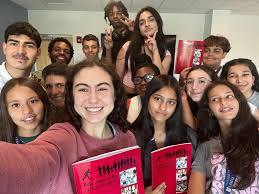
These young’uns are from Boston, could’ve been my town or yours.

The initial sequence of courses has titles like “Reflections on the Life of the Spirit”, “Arising to Serve”, and “Releasing the Powers of Junior Youth”. For the Baha’is and their friends, though, in-group shorthand just calls them Book 1, Book 2, and Book 5. (People of the Books!) And you’ll find such study circles, if you look a bit, just about everywhere in the world. They work. Learning happens, habits build, trust is established. And more: the act of reading, and of education generally, is celebrated and valorized in the most grassroots way. I’ve seen photos from all over the world — what happens when a study circle is complete? In a most charming and counter-cultural tradition, the group will have a photo taken, smiling friends holding up their red or yellow or green manuals. They might be saying, with their grins, We love our books! It’s been great to study and learn together! We even memorize certain passages! We are learning to not only read the Word but to read the reality of our place and time, and we find great hope in our shared community-building. How’s that for enthusiasm for the importance of the written word?

Thanks for staying with me! And now, back to Ms. Le Guin, for one of the clearest and most emphatic arguments for the power of the word (not to mention The Word) that I have read.

“At about the two-thirds mark in her essay, Le Guin acknowledges the variety of ‘entertainment media’ available to the modern data-consumer; after all, “the Internet offers everything to everybody: but…there is curiously little aesthetic satisfaction to be got from [it].” And then she gets to the heart of the matter; here is why reading matters SO MUCH to so many of us:
Reading. Trees.
(Public Domain)
“…[R]eaders aren’t viewers; they recognize their pleasure as different from that of being entertained. Once you’ve pressed the on button, the TV goes on, and on, and on, and all you have to do is sit and stare. But reading is active, an act of attention, of absorbed alertness—not all that different from hunting, in fact, or from gathering. In its silence, a book is a challenge: it can’t lull you with surging music or deafen you with screeching laugh tracks or fire gunshots in your living room; you have to listen to it in your head. A book won’t move your eyes for you the way images on a screen do. It won’t move your mind unless you give it your mind, or your heart unless you put your heart in it. It won’t do the work for you. To read a story well is to follow it, to act it, to feel it, to become it—everything short of writing it, in fact. Reading is not ‘interactive’ with a set of rules or options, as games are; reading is actual collaboration with the writer’s mind. No wonder not everybody is up to it.

“The book itself is a curious artifact, not showy in its technology but complex and extremely efficient: a really neat little device, compact, often very pleasant to look at and handle, that can last decades, even centuries. It doesn’t have to be plugged in, activated, or performed by a machine; all it needs is light, a human eye, and a human mind. It is not one of a kind, and it is not ephemeral. It lasts. It is reliable. If a book told you something when you were fifteen, it will tell it to you again when you’re fifty, though you may understand it so differently that it seems you’re reading a whole new book.

“This is crucial, the fact that a book is a thing, physically there, durable, indefinitely reusable, an object of value.

“…[Meanwhile] [e]lectrons are as evanescent as thoughts. History begins with the written word. Much of civilization now relies on the durability of the bound book—its capacity for keeping memory in solid, physical form. The continuous existence of books is a great part of our continuity as an intelligent species. We know it: we see their willed destruction as an ultimate barbarism. The burning of the Library of Alexandria has been mourned for two thousand years, as people may well remember the desecration and destruction of the great Library in Baghdad [during the 2003 Iraq war]…”

[Italicized emphasis in the quote above is mine, not Le Guin’s. Read the whole essay here.]

Petrarch (on lost souls and tennis)

In pursuit of a possible piece centring on the too-soon departed David Foster Wallace, that brilliant and neuron-crackling and ultimately doomed writer, that Guy with Curious Hair (and an ever-present headband), that Broom of multiple Systems, that brain of infinite zest, that Pale authorial King, that supposedly fun-tastic writer-thing he’ll never be or do again¹ – and oh, the loss that was to us, though too few know it! – I bought a posthumously issued collection of his essays, Both Flesh and Not. Before I could even finish the first piece, his classic take on the on-court genius of tennis god Roger Federer, the universe delivered a piping-hot review of another posthumous collection of all the tennis-themed Wallace oeuvre. (It’s called String Theory, which title is a tidy bow linking ribbons of jockery and the nerdiest domains of physics. Would Wallace have approved of the title? Sure, it’s a pun, but not the most brainless, after all.) In eager pursuit of writing I didn’t actually have to do – that is, somebody else’s – I was electronically extracted from the old-school pulpy pages of Both Flesh, (surely by Twitter, or perhaps it was Wikipedia?) pricked by precisely God-only-remembers-what in the Federer piece, and then virtually dragged to an on-line review of String Theory, which rubbed my ever-forgetful nose in pungent memories of what little I know of the desperately sad and finally self-destroying DFW, laden meanwhile with my own fumbling, muted, doomed urgency about doing whatever for no particular reason or special benefit to anybody but my imaginings, vain or narcissistic or otherwise.

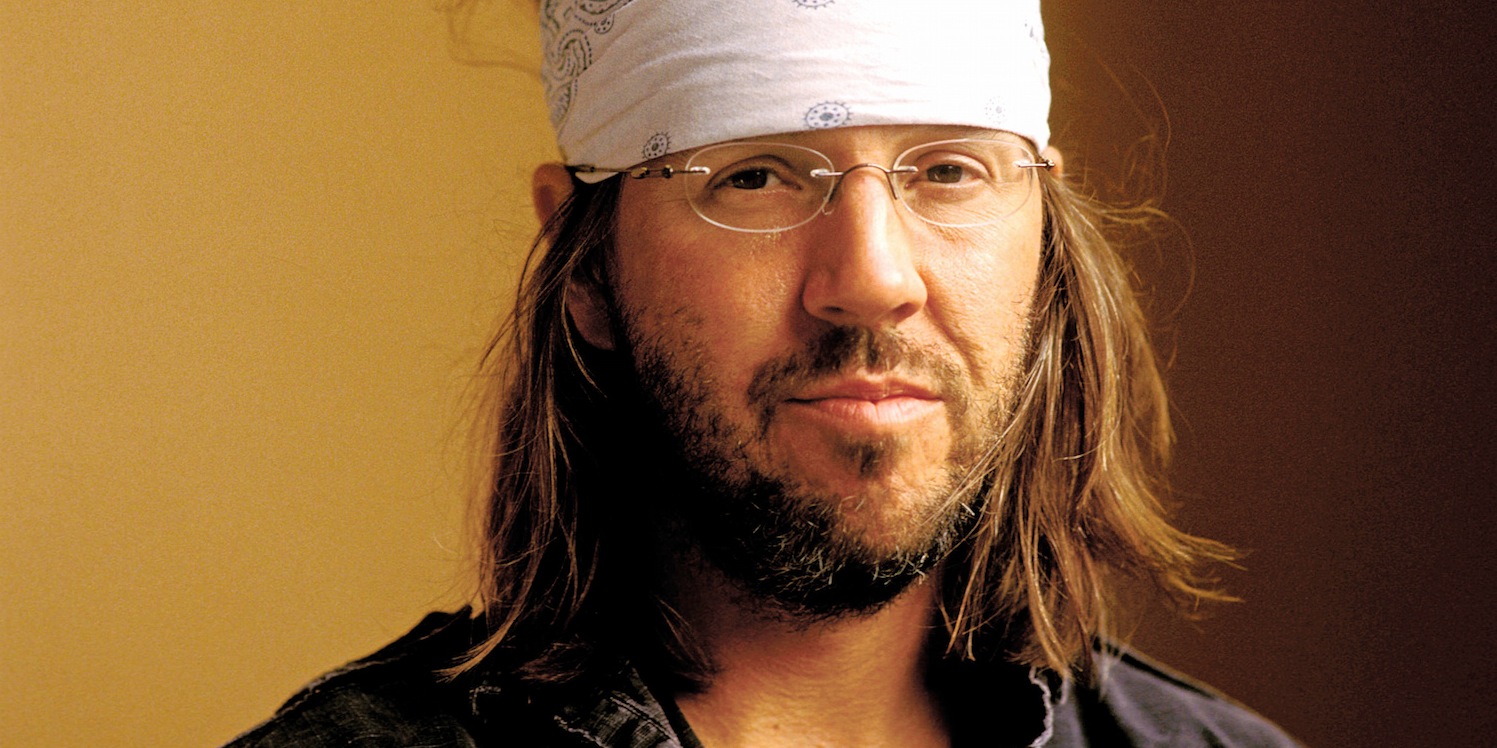
This is the author photo for "Both Flesh and Not". Very high, this man, on my Wish I'd Met Him list. Reading more will only make this worse, but that's okay.

This is the author photo for “Both Flesh and Not”. Very high, this man, on my Wish I’d Met Him list. Reading more will only make this worse, but that’s okay.

¹ DFW was famous, in his essays and even in his novels, for an exuberant use of superscripts and page-end notes, digressions and elaborations that were just as fascinating as the central march of his subject. Sometimes there were end-notes to his end-notes. This note of mine points back to a set of descriptions each of which nods to one of his most important book-titles. Way too nerdy-clever (clerdy! nerver!), I know, but I had fun.

And somewhere in that review was Petrarch,

Continue Reading >>

Oliver Sacks (on awakening to the end)

Oliver Sacks is the neurologist and professor who was brought to cinematic life by Robin Williams in Awakenings, helping and observing as Bob DeNiro’s coma patient emerges from the darkness. (Side note which I vaguely promise will not turn into an intolerably long digression, but the length of whose prefatory remarks must even now be giving pause to sensitive and perceptive readers such as you: I notice suddenly the number of films in which Williams is the psychiatrist/healer. Not just Awakenings, but his gruff and brilliant therapist to Matt Damon in Good Will Hunting, and his turn as Patch Adams, the unconventional MD who used humour and nonsense to heal and console his patients. All of which did Williams no good at all in calming his own demons, or so it would seem. Terminate digression.)

Sack’s books on psychological oddities and wonders — Awakenings was his second book, I think, followed by such titles as The Man Who Mistook His Wife For a Hat, Musicophilia, An Anthropologist on Mars — made him famous and beloved, though not always embraced by medical rivals. Now that he’s dying, as he announced recently, I want to read more than I have. Typical.

Continue Reading >>

George Monbiot (on economic growth and the dreaded WHY)

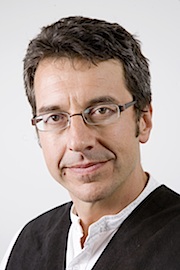
For his quirky autobiographical note alone, I'd admire the man.

For his quirky autobiographical note alone, I’d admire the man.

For most of our politicians, in most of our countries — those who are elected to preserve and advance a governance system that appears unable to consider anything besides economic growth as keys to the good life, the good society — George Monbiot is on the lunatic fringe. His book Heat: How to Stop the Planet from Burning (2006) was unsparing, openly pessimistic and radical in the original sense — it called for fundamental change in how we look at our governance, our lifestyles, our future, everything. “Radical” means “going back to the roots”. Those that we invest with the authority to make societal changes aren’t often interested in radical thought, partly because it requires so much thought and partly because it undermines their own privileged positions in society.

Here was Mr. Monbiot earlier this week, concluding a recent commentary in the Guardian newspaper — “Growth: the destructive god that can never be appeased” — with questions that the elected don’t often consider, but which citizens must:

Continue Reading >>

An End to Foreign-ness: This is London Calling

My last post bemoaned my neglect of this quiet little forum, and that was several months ago. If you happen to have been a regular reader when there was fresh fodder, sorry and thanks. If you’re new, thanks for showing up. (And “an end to foreign-ness”? It’s part of what ‘Abdu’l-Bahà, visionary and civilization-builder, called upon the world to create nearly a century ago. I love that phrase.) (I hope I don’t have to explain the “London Calling” reference, except maybe for my mother-in-law: Margery, it’s a great punk album by The Clash. You’re welcome.)

After a wobbly and jet-lagged first day in London, vacationing back to the Anglo-Saxon homeland with my wife and youngest son, I want to throw this into the ether before pitching myself into the loft of oblivion. Sleep, my friends. Sleep.

The next thing you’ll see is a little something I wrote to my Grade 10 English class — a group that should’ve been a delight, considering the material we studied and the brainpower of many of the kids, but was only occasionally so — as class ended in June. No coincidence that I’ve relaunched my writing / With gnashing and biting and / Blasts from a thousand kazoos after a week and more away from being a full-time educator. Teaching and writing is a balancing act I haven’t yet found the rhythm or the moderation to master…

Welcome.

Sunday Morning Angels

Good things happen to men who do dishes and tidy up their rooms, especially if they listen to good radio stations. Here are a couple of highlights from a mere 90 minutes of radio (plus a little scrubbing, a little filing, a little man, look at this place!).

Hail to Jane.  How do we make cities work? Three radio guests offered their answers, their hopes and despair, about the state of cities in Canada, in everywhere. Reverend Bowtie (aka Michael Enright) was piloting The Sunday Edition, and navigating the airwaves with him were architect Brigitte Shim, a former Vancouver planner (was it Larry Beasley? Ah, the downside to writers doing dishes: poor note-taking), and Toronto’s William Thorsell, a former Globe and Mail editor and now head of the Royal Ontario Museum. They were talking cities, and responding to Enright’s how do they work questions. They decried city development that was piecemeal and commodified and developer-driven. They argued that density wasn’t a bad word, if it was combined with humanity and concern for the building of coherent and livable communities within a city. Shim, in particular, wondered how long it would be before we figured out that bulldozing prime farmland for sprawling one-family commuter suburbs might not be a sustainable practice. Thorsell, in particular, confessed his shame at being a Torontonian every time he visits Vancouver, a world model for urban sustainability. And Beasley – if I’ve actually got the right guy – was particularly humble in discussing what North American cities might be able to learn from what Vancouver is doing. (So why hail Jane? Because behind all this thinking and re-thinking about what can make cities the centre of art, culture, science, dynamic forms of human understanding, is the astoundingly clear and still-ringing voice of the late Jane Jacobs. The only reason I could even follow this morning’s conversation was because I finally read her brilliant book The Death and Life of Great American Cities last year. Few books have informed me like this one.)

Hail to Ingrid. Check this out. Not only is she a woman, not only is her name Ingrid, but she grew up as a devout Roman Catholic in Kitchener, Ontario. This seemingly ordinary constellation of facts becomes astonishing when you hear, as I did this morning for the first time, that Ingrid Mattson has been elected President of the Islamic Society of North America. (She had been a vice-president since 2001, and a good profile of her from that year can be found here.) She converted to Islam as a young woman, having rediscovered in Muslim practice the child-like wonder and reverence she had loved as a Christian child. She also found great scope and comfort for her brilliant mind, and she is now professor of Islamic studies at Hartford Seminary in Connecticut. What a calm and intelligent voice she has! And what a potent perspective she brings to Muslim communities around the world, and to those who wish to better understand Islam, as a woman of European/Christian heritage, Canadian upbringing and profound Muslim scholarship, a wife, mother, academic and Western convert to the Faith of Muhammad. I’m glad to know Ingrid is at work in the world.

Hail to Agnes. For a reason I didn’t entirely catch, there was a brief tribute to Agnes McPhail in my radio, too. In the first year that Canadian women had the right to vote — did you know it was 1921? — McPhail was elected to Canada’s House of Commons as the first – and for a long time, the only – woman Member of Parliament. She served nobly until 1940, and later spent five years as an Ontario M.P.P. I heard her voice for the first time this morning, a tape of a CBC interview from the late 1930s, I think. Here was another smart and serene (and quietly fierce) female voice. (It’s the same voice she used when, heckled by a fellow MP — “Hey Agnes, don’t you wish you were a man?!” — she fixed him with a cool stare and said “Why yes, don’t you?”) She had an eloquence we don’t often hear these days, and a flatness of tone that showed no evidence of media training or the search for the perfect sound-bite. Yet she was incisive, clear and almost unbelievably modern in her views, without the shrill extremes that often accompany contemporary quests for justice. Except perhaps for the diction, her discussion could only be dated by the laughably archaic worries of the male union leader she was quietly slaughtering in debate.

Hail to Wendy. The last thing I heard on The Sunday Edition was a repeat documentary, first aired last spring, on a fifth-grade teacher in an Ottawa Catholic elementary school. Her name is Wendy Alexis, and her voice was one of those reminders of the greatness of the good teacher. Our culture too seldom recognizes it, but the Wendys of the world are priceless gems. “Always keep a diamond in your mind…” This Tom Waits lyric rumbles through my thoughts in the voice of Solomon Burke, and today it refers to Ms. Alexis. Her classroom is one of those New Canada, New World places where the children come from 20 countries, speak 15 languages among them, and are often refugees from humanity’s greatest modern failures. So Wendy Alexis gets her kids to be quiet so they can listen, to clean up the floor, and to learn their times tables. Yes, and she has created a community that is a microcosm of a suffering but still-hopeful world, where children can tell and hear their stories and work for the betterment of a world that has done them harm. And these kids at St. Luke’s school have a small project. It’s called “One Angel at a Time” (oneangelatatime@hotmail.com), and it is a project of remembrance. They are collecting feathers, 800,000 feathers, one for each of the slaughtered in the Rwandan genocide of 1994. I’m not sure what they’re doing with them, and I don’t much care. They are becoming angels of mindfulness and compassion. They have about 50,000 so far. They are learning to read and think and love and trust. I’d like to send some feathers for these angels. And you?

Jane and Ingrid and Agnes and Wendy. Good morning!