Rss

Ursula K. Le Guin (on the alleged decline of reading)

[6-minute read]

One of her mightiest novels, but she wrote *everything*.

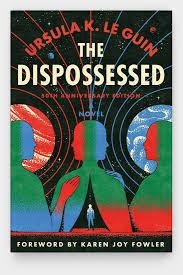
Ursula Le Guin is a hero of mine and, though often labeled as a ‘genre writer’, she is a giant of 20th century American literature. Her series of so-called “young adult” fantasy novels, beginning with A Wizard of Earthsea, were the first Le Guin books that I read. I recently finished The Dispossessed, a remarkable invocation of an extra-planetary society built on the principles of Anarchism, for a book club. (I’d read it before; I loved it again.) I’m midway through a fascinating, diverse non-fiction collection of hers, called Dancing at the Edge of the World. I was lucky enough to see her in conversation before an audience that packed an otherwise underused Anglican cathedral at the Ottawa Writers Festival in 2009. I cannot un-hear, from that electric evening, what her fiction so regularly upheld: her rejection of the trope, so common in speculative fiction (and Westerns, and comic books), of what she called “redemptive violence”. For her, this was an especially ugly non sequitur, a strikingly vulgar contradiction in terms. She radiated intelligence. Wisdom. There was someone to listen to.

Not long before this downright reverent reception at Christchurch Cathedral, in February 2008, Harper’s magazine had published her essay “Staying Awake: Notes on the alleged decline of reading”. I keep a photocopy of it. It anchors a school notebook where I keep irregular tabs on my own reading. “Staying Awake” begins: “Some people lament the disappearance of the spotted owl from our forests; others sport bumper stickers boasting that they eat fried spotted owls. It appears that books, too, are a threatened species…” and she goes on to cite both alarmed and shoulder-shrugging so what? reactions to the “alleged decline”. In the essay, she challenges mass-media’s sometimes gleeful response to surveys indicating that we read less, especially in book form. She takes the publishing industry to task with “amused contempt”; she is deliciously snarky as she bites the corporate hands that (carelessly) feed her craft. She analyzes historical and contemporary trends in literacy and what it means, and has meant, to our culture.

Most importantly, though, she centres her argument on what the act of reading actually is, and what it does with our minds. And what is a book, exactly? But wait. Before quoting the Le Guin perspective that brings us together here in electronic communion, please allow a short side trip. (If you jump ahead to read Ursula, who’s going to know? And how could I complain?)

So here’s a personal, but also amazingly planetary, narrative tangent. It’s all about BOOKS.

An abundance of good luck – and a massive adolescent absence of caution – has meant that I have hovered at the margins of the worldwide Bahá’í community for a long while now. This has meant several sweet things. I have a taste and an ongoing hunger for Persian food; the 19th-century foundation of the Faith in what is now Iran means that I’ve come to understand and love many Persian things and people! I have also known two hopeful and fruitful marriages to believers, the second of which is alive and well, and the first of which is now remembered with fondness and gratitude. I guess I could mention, too, that my worldview has been constantly expanded, enriched, interrogated and confirmed; the globe’s move toward unity and peace and justice is inevitable.

That’s the kind of mindset you can sustain if you hang around with the Bahá’í teachings  and those that seek to apply them. So, lucky me!

Literacy, learning, society-building in action. Where in the world?

Now, speaking of “the alleged decline of reading” mentioned by the great Ursula K., the Bahá’í community reads like crazy! The ancient references to the “people of the Book”, applied notably (and approvingly) by the Qur’an to Jews and Christians, also pertains to the followers of Muhammad themselves. In the Faith of Bahá’u’lláh, reverence for these and other holy scriptures is deepened by adding a whole modern canon of the Word. “In the beginning was the Word,” says the New Testament (John 1:1), to which I dare to add this: the Word has remained alive, and been renewed, and shall ever continue as the foundation of human progress and comprehension. That’s my take on the Bahá’í take on the power of the Word.

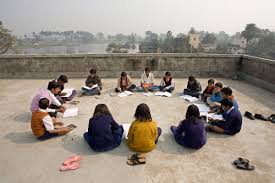
The Bahá’ís, too, are “people of the Book” in their high regard for the sacred teachings and writings of the major world Faiths, as well as the traditional wisdom of Indigenous peoples. It is not some passive, token respect for holy writings. They actually read them. For example, faithful believers are asked to read from the Faith’s writings twice a day; not for long, necessarily, but as part of their spiritual hygiene. What’s more, the worldwide community has adopted, as one of its core activities – all of which are open to the wider public – a series of “study circles” that enhance one’s understanding and application of the Bahá’í principles. (Check ‘em out: truth, justice, love – the old faithfuls – as well as the essential oneness of humanity, the equality of women and men, the fundamental harmony of science and religion, and the eradication of all forms of prejudice and oppression. Yup. Astounding stuff.)

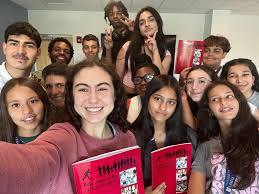
These young’uns are from Boston, could’ve been my town or yours.

The initial sequence of courses has titles like “Reflections on the Life of the Spirit”, “Arising to Serve”, and “Releasing the Powers of Junior Youth”. For the Baha’is and their friends, though, in-group shorthand just calls them Book 1, Book 2, and Book 5. (People of the Books!) And you’ll find such study circles, if you look a bit, just about everywhere in the world. They work. Learning happens, habits build, trust is established. And more: the act of reading, and of education generally, is celebrated and valorized in the most grassroots way. I’ve seen photos from all over the world — what happens when a study circle is complete? In a most charming and counter-cultural tradition, the group will have a photo taken, smiling friends holding up their red or yellow or green manuals. They might be saying, with their grins, We love our books! It’s been great to study and learn together! We even memorize certain passages! We are learning to not only read the Word but to read the reality of our place and time, and we find great hope in our shared community-building. How’s that for enthusiasm for the importance of the written word?

Thanks for staying with me! And now, back to Ms. Le Guin, for one of the clearest and most emphatic arguments for the power of the word (not to mention The Word) that I have read.

“At about the two-thirds mark in her essay, Le Guin acknowledges the variety of ‘entertainment media’ available to the modern data-consumer; after all, “the Internet offers everything to everybody: but…there is curiously little aesthetic satisfaction to be got from [it].” And then she gets to the heart of the matter; here is why reading matters SO MUCH to so many of us:

Reading. Trees.
(Public Domain)

“…[R]eaders aren’t viewers; they recognize their pleasure as different from that of being entertained. Once you’ve pressed the on button, the TV goes on, and on, and on, and all you have to do is sit and stare. But reading is active, an act of attention, of absorbed alertness—not all that different from hunting, in fact, or from gathering. In its silence, a book is a challenge: it can’t lull you with surging music or deafen you with screeching laugh tracks or fire gunshots in your living room; you have to listen to it in your head. A book won’t move your eyes for you the way images on a screen do. It won’t move your mind unless you give it your mind, or your heart unless you put your heart in it. It won’t do the work for you. To read a story well is to follow it, to act it, to feel it, to become it—everything short of writing it, in fact. Reading is not ‘interactive’ with a set of rules or options, as games are; reading is actual collaboration with the writer’s mind. No wonder not everybody is up to it.

“The book itself is a curious artifact, not showy in its technology but complex and extremely efficient: a really neat little device, compact, often very pleasant to look at and handle, that can last decades, even centuries. It doesn’t have to be plugged in, activated, or performed by a machine; all it needs is light, a human eye, and a human mind. It is not one of a kind, and it is not ephemeral. It lasts. It is reliable. If a book told you something when you were fifteen, it will tell it to you again when you’re fifty, though you may understand it so differently that it seems you’re reading a whole new book.

“This is crucial, the fact that a book is a thing, physically there, durable, indefinitely reusable, an object of value.

“…[Meanwhile] [e]lectrons are as evanescent as thoughts. History begins with the written word. Much of civilization now relies on the durability of the bound book—its capacity for keeping memory in solid, physical form. The continuous existence of books is a great part of our continuity as an intelligent species. We know it: we see their willed destruction as an ultimate barbarism. The burning of the Library of Alexandria has been mourned for two thousand years, as people may well remember the desecration and destruction of the great Library in Baghdad [during the 2003 Iraq war]…”

[Italicized emphasis in the quote above is mine, not Le Guin’s. Read the whole essay here.]

He Said/She Said: Bill Bryson (and Sarah Selecky) (on WONDER)

[3-minute read]

There’s a writing coach around whose e-bay window I occasionally lurk. She’s always pretty and smiling, or pensively curled up with notebook and pen. She entices me to write more, and more satisfyingly and more deeply, and to link up with other scribblers. Her messages sometimes inspire in a general way, they encourage without fail, though they may be too jasmine-scented, too chamomile and meditative and soft for me. (I sometimes write with Jeff Beck or The Propellerheads blazing in the background.) Perhaps I just resist for the sake of loonie-pinching resistance, carrying on in my own solitary way. Still, she has me wondering, and doing math about it…

Sarah’s recent e-blandishment was to join a virtual writing community that has a new emphasis each month. May’s is Wonder. She writes, “In their great new book, How to Design a Meaningful Life, Dave Evans and Bill Burnett share their wonder equation. Here it is:

curiosity + mystery = wonder.

When you know the equation, you see that wonder is always available. It’s a choice. You can find it in ordinary things, once you start looking. An apple, when you really think about it, is completely unfathomable…”

This image comes from Amazon, but please buy from an independent bookseller!

I wonder why and what?! and how?! and who was she in high school? and when will it be?… and I’m off to the races. We all are, when our curiosity isn’t strangled by routine or petty distractions — not to mention that my reflexive question is this: do these slim answer machines that we’re leashed to actually stunt or misdirect our engagement with life’s questions? My big sister loves her iPhone, and quick-drew it on me last weekend more than once to respond to my idlest who won/when’s the next game? queries with an encyclopedic recitation. Fair’s fair: I did ask, but there was precious little mystery attached to my bland microdose of curiosity. My question about smartphones stands, though I do admit that smartphones and the algorithms that fuel their constant use really can (he argues hypothetically, but without much conviction) prompt profound and useful investigations of mysteries more lofty than can you believe what this cat/these guys just did? 

But I wonder, I do, how much and how often this kind of outsourced thinking encourages genuine curiosity about truly mysterious things. They are more likely, in my experience, to excite thoughtless engagement with banal and repetitive images, without a single idea in sight. I wonder.

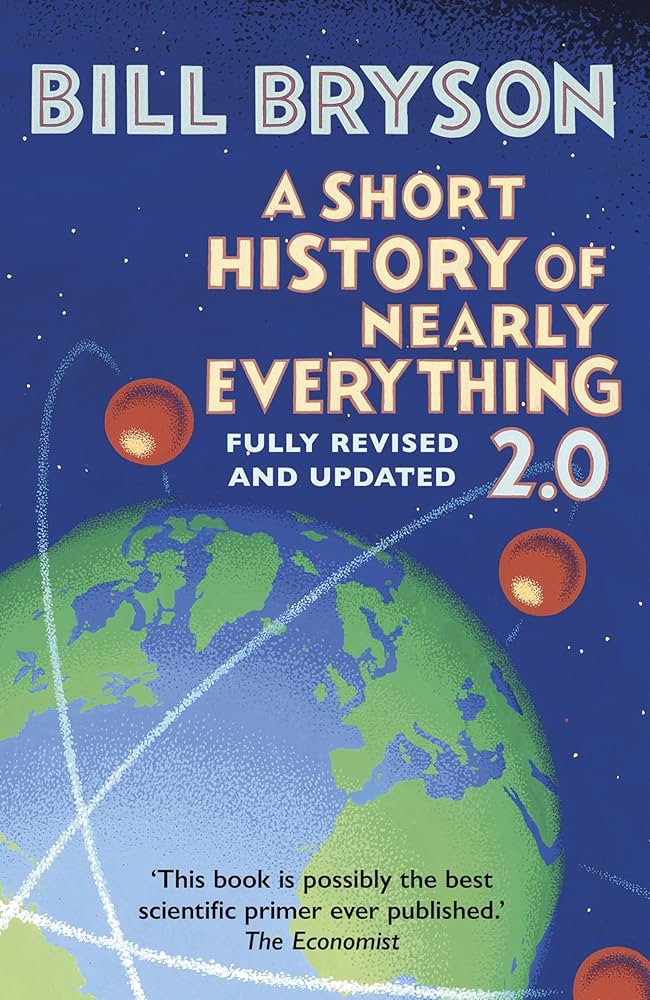
Now, according to my notes, the force-of-authorial-nature Bill Bryson was on my Sunday Magazine CBC wireless radio as 2025 wound down. (Vacuum tubes, static fuzz-hiss, carefully calibrating the dial so I could listen while shovelling coal into the furnace.) (Okay, no, the CBC still lives in modernity; I mostly listen to its shows as podcasts on my iPhone. Driving. Walking. Or in this case, I believe the Mother Corp soothed and informed me while I loaded the dishwasher.) Bryson is mainly known for writing rich and funny travel books – Notes From a Small Island (England) and A Sunburnt Country (Australia), for only two best-selling examples – but I especially liked his 2003 departure, A Short History of Nearly Everything. It was an avowed non-scientist’s gigantically ambitious attempt to write the story of scientific discovery from the ancients to the 21st century. For the first two years of my family’s five-year unplan in northeastern China, nightly readings of Sciencey Bill Bryson composed my young son’s science curriculum. (When Dad’s an English teacher, you come to expect science as an exercise in storytelling, and what an amazing work of narrative non-fiction it was!)

And is, still and again and even more so! Bryson was interviewing with Magazine host Piya Chattopadhyay about his 2025 complete revision and

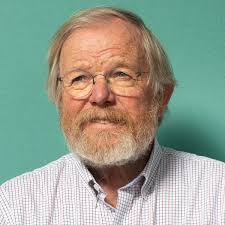
Bryson in 2020 (from The Guardian, a fine news site).

update: A Short History of Nearly Everything 2.0. (This, despite his 2020 “retirement” from writing at age 68, as delightfully chronicled in The Guardian.) It was a tasty, engaging conversation, chock full of fun and fascination and – yes, I did remember where I was headed with this! — wonder. Piya wanted to know, after all these books and the over 20 years that had elapsed between original publication and this renewed re-telling of the greatest (and latest) adventures in scientific discovery: what feeds Bill Bryson’s curiosity? What makes the wonder mill keep on grinding?

I loved his answer. He’s a humorist by nature, but a relentlessly thoughtful and wonderfully wise one. He said,

“Here we are….We have this very short window of existence. Before we existed, there was this great eternity that we didn’t take part in, and when we die eternity will go on….But in between, there is this moment where we have the exhilarating privilege to exist. And I think it’s such a shame that we take it all for granted.”

So here’s the math: add Bill Bryson’s furious, curious desire to understand to the vast slowly revealed mysteries of the universe? The sum total is WONDER. Reverence. Amazement. And he moved me to want MORE.

Having Fun While Me

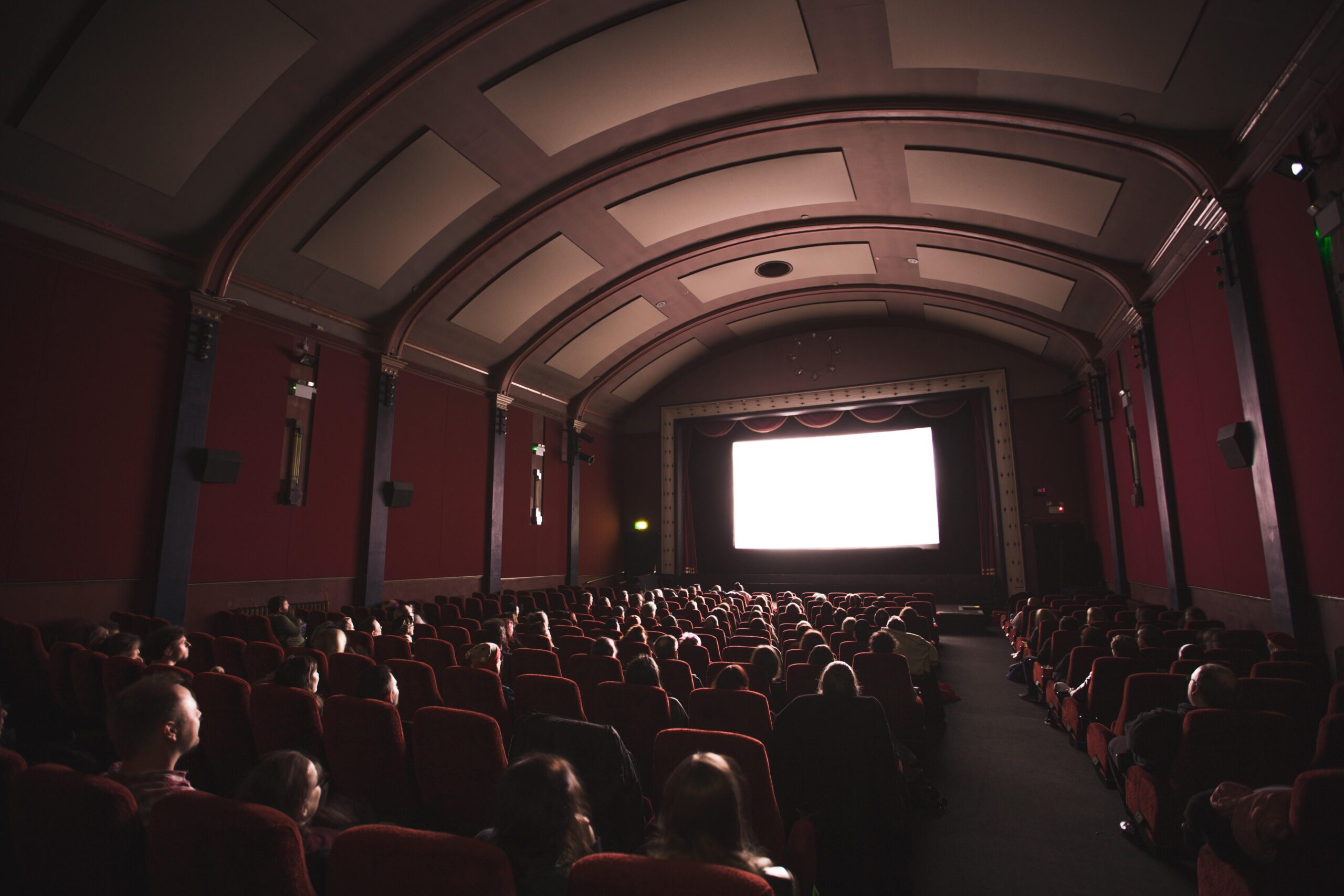
Big house, great sound, respectful audience, super popcorn, and MOVIES! (photo from Playback magazine)

[4-minute read]

Sunday night was Double Date night – no second couple, in this case, but just my bride and I bopping from one Ottawa cultural heartthrob to another. After a light and early supper at home, we were off to the Mighty ByTowne cinema (yes, kids, it’s back!) for a mouth-watering bite of history. Then we hopped on our pony and bustled to the western edge of downtown for a Writers Festival event (yup, pardners, they’re back, too, in Three Entire Dimensions!).

This was my fifth or sixth Return to the ByTowne since its new ownership re-opened that grand old videodrome in the fall. All my fears of it having been blandified (or turned into condos, he shuddered) have been dispelled. Many of the familiar staff faces are back, the popcorn hasn’t been meddled with, and the slate of movies remains rich, diverse, international and occasionally quirky. The Power of the Dog with Cumberbatch and Dunst, C’mon C’mon with Joaquin Phoenix and Gaby Hoffmann, are both still bouncing around my brain days or weeks later. Kurt Vonnegut: Unstuck in Time, strangely current even all these years after his prime and then his passing, had me sobbing repeatedly. (Vonnegut does this to me regularly, but I was still surprised at how hard this loving documentary tribute punched me. Hi ho.)

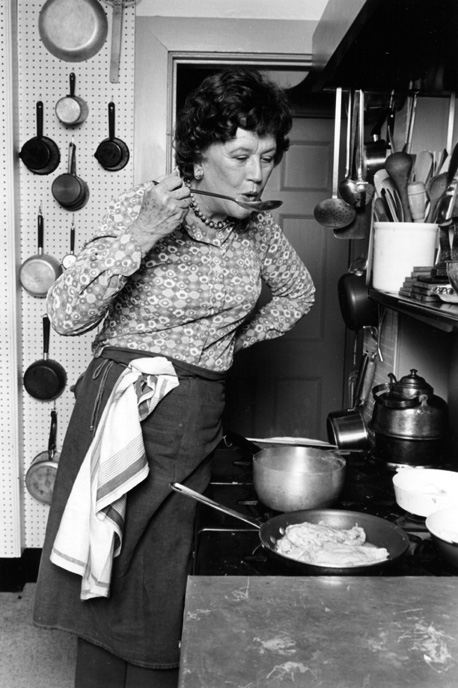
We were there Sunday for Julia. For anybody over, say, 40, who has been around American television shows, filling in the last name might be easy as omelettes. Julia Child was a towering presence in popular culture, especially from the 1960s through to the ‘90s – and not just because she was 6’3”. Her monumental first book, Mastering the Art of French Cooking, and her subsequent presence as the “French chef” on the Public Broadcasting System (PBS) made her an icon. Julia tells her life story in lavish detail, and with stunning re-creations of many of her most famed recipes, and shows not only her fame and cultural impact – yes, her show was parodied on Saturday Night Live! — but also “how important she was, is, will be”, as one of her admirers puts it.

On set in 1978: Julia Child, TV star, at 66. She was far from finished. (Wikipedia)

She was the first person to make cooking on television attractive, in spite of her plainness and age. I had thought Meryl Streep’s voice for her in Julie and Julia (2009, another Child-focused film I hadn’t expected to greatly enjoy, StreepLove aside) was a bit clumsy and overdone — until I saw Julia, that is. I hadn’t connected her to the rise of real attention to good eating in America, but she profoundly influenced young chefs and helped spawn “foodie” culture. The silly, materialistic extremes of that movement don’t undo the value of eating good food, lovingly prepared, which was Child’s essential oeuvre. I also wouldn’t have thought of her as a feminist icon, for example, and in hindsight I’d have been wrong. Julia involves some time travel, painting a vivid (black and white) portrait of the life of one unusual woman in the first half of the 20th century and her flowering, in her mid-50s, as an ambassador of French cuisine. The film is funny, informative and absolutely delicious to look at; the gorgeously framed contemporary food-prep sequences are big-screen-worthy, even for a culinary primitive like me.

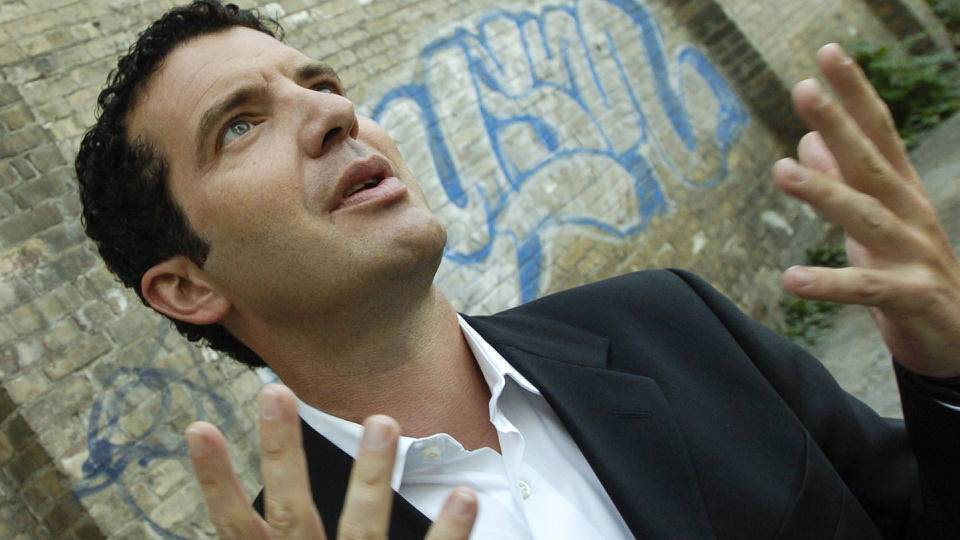
We raced from the ByTowne, skipping the end credits (gasp!), to Christchurch (Anglican) Cathedral, the most common recent venue for the live events of the Ottawa International Writers Festival. We went from one local arts treasure to another, and from an American TV icon to a pair of Canadian ones. Linden McIntyre is a Nova Scotian journalist (most famously hosting The Fifth Estate, and then famously retiring to save one younger person’s job at the beloved and beleaguered “Mother Corp”, the Canadian Broadcasting Corporation (CBC). Also a novelist (he won the Giller Prize for The Bishop’s Man), he was our laconic and charming interviewer for a younger Maritime star, Newfoundland’s comedic genius Rick Mercer. Once the “angry young man” of Canadian comedy, He has written something longer (and mildly less angry) than the 90-second “rants” and other satiric slices that have made him beloved across the country. Talking to Canadians is a memoir that my wife and I will read with delight.

You might have heard the echoes of his (in)famous “Talking to Americans” segments in that book title. Among the many irreverent stories he told

Striding down Canuck streets, ranting.
(from the Globe and Mail)

at Christchurch Cathedral was of the genesis of that thoroughly Canadian project; it is something of a national sport to enjoy Americans being foolish. (Thinking they can beat us at hockey, f’r’instance.) While Mercer was filming in Washington, D.C., a passing American public servant was savvy enough to determine that the “Canadian Broadcasting Corporation” printed on an equipment case meant that Mercer must be from..…(wait for it)…..“Canada!” It was a gift to a young satirist there on other business: Guv Guy was completely gullible about the absurd name Mercer gave to Canada’s Prime Minister (“Benmergui”, which true CBC-lovers chuckle at as a reference to former radio host Ralph), but was quite prepared to explain the concept of “alphabetical order” on camera when Mercer pretended, to this pompous ignoramus, that Canadians weren’t familiar with this clever new method of organization. From his sudden starburst on the national scene, to his membership in the This Hour Has 22 Minutes¹ crew, to The Rick Mercer Report to his current return to stand-up comedy and whatever comes next, we all got to be spectators as MacIntyre prodded Mercer into story after story, and even his closing punchline “I’ve been glad to be that prick.” (Had to be there, folks!)

Jay and Diana went out on a date, and an icon-fest broke out. And that’s why Ottawa isn’t “the town that fun forgot”! ²

¹ Such a CBC-centric occasion, in so many ways. True dévotées will remember not only the show, but its sly naming echoing an ultra-serious 1960s CBC TV news magazine called This Hour Has Seven Days. 
² As I am wont to do, I refer here to the acerbic and ever-living Allan Fotheringham, who described Canada’s capital in this unfair and fairly accurate way, depending on your definition of fun.

Silver Linings Playbook: Covid-19 Edition, Part 1

It’s a cliche for a reason. [6-minute read]

(And HEY FOLKS: I updated my WordPressing, and just noticed that you might have missed page 2, a button you need to punch just below the “share” notice. Not too obvious, sorry.)

This pandemic is a bloody gigantic, forebodingly black cloud that has blotted out the the sun of Everyday Life. (Yet there’s no stopping the literal sun.) Buckets of rain. Hailstones like shot-puts. Figurative lightning strikes, mudslides and wildfires – just ask doctors in New York City, Wuhan, northern Italy, and too many other outbreak spots to name. And still I maintain, and human nature appears to insist, that there are bright spots that pierce the gloom, linings of silver behind the darkest of clouds, just as my mother always said.

I’m looking for them. Lots of us are, and we can train ourselves to see positives where they exist. This is not to suggest that we ignore suffering, nor to shelter in a comfortable place and whine about inconvenience, drowning our petty sorrows in self-absorption, but also not to be blind to the light that every darkness hides. You’ve seen what folks are doing in crisis. It’s widespread, it’s constant, and often it really isn’t that hard: you support your local foodbank, he shops responsibly, maybe she’s making some extra phone calls to family, friends, neighbours, WHATEVER — but I hope you’ll join me in Finding Goodness Where We Can.

Today, I’m reporting on fortunate consequences within the cozy confines of my Ottawa home, which I share with DancerGirl and our not-long-for-teenager-dom son, The Lanky One. So:

Within These Four Walls + Our Fully Functioning Roof + Sump-Pump. Hard Times Have Been Good to Find — Let Me Count the Ways!

  • INTROVERTS for the WIN! My bride laments the lack of people, and I quietly thank my lucky stars. I don’t know if I’m storing up Loner Energy or not, but I do enjoy the lack of appointments and obligations, really, to an absurd degree. Maybe this will pass, but it’s fun for now.
  • Hang-time with the Lanky One has been almost completely good. Cabin-fever hits him hard (I hear girlfriend rumours occasionally), but he’s funny, philosophical, and the all-in-this-together vibe is working for him. (Or on him.) It’s not as sudden as it sometimes feels, but our Ornery Teen is a rather congenial housemate. Silver! Gold!

Reading With Phyllis in Ottawa

[8-minute read]

The more we read, the bigger the “To Read” pile grows. It’s mysterilicious.

We’ve missed her, but we carry on. This past March, her friends marked a first anniversary, grieved with her husband and family and, oh yes, be very sure of this, a sweet ripe bunch of them felt grateful for her life as they read and reflected on another fine book they’d likely never have heard of without her. And then they did it again in April.

I write here in remembrance of Phyllis Perrakis, a woman I knew only a little, though I felt lucky all the same. It is also a brief history of a book club, full of women, of course, plus one token oddball. (That would be Yours Truly.) I will also offer notes on the BIHE, an educational institution based on courage, justice and belief, but these seeming sidetracks all lead us back to Phyllis, a quiet, unassuming professor of literature. You would not have found her Very Professorial, if that adjective strikes notes for you of bombast or intellectual arrogance, but she surely glowed when she was sharing thoughts about a book she loved. BOOKS. Only now, far too late to learn more from her, do I find out that she was an internationally recognized scholar on the work of the Nobel Prize-winner for literature, Doris Lessing. But to better understand how we came to be Reading With Phyllis In Ottawa, first we need a side trip to Iran…

Once upon an early 21st century time, there was a book. It was written by Azar Nafisi, an Iranian professor of literature who had fallen exquisitely in love with American writers: Twain, Baldwin, McCullers, and the Russian-born Nabokov. It may not surprise you that Nafisi’s prospects for professional advancement in her homeland, after its Islamic Revolution, were bleak, and she has since moved to the United States. But before she did that, she found a clandestine way to share her literary enthusiasms with young women, the ones that she could never engage with publicly in studying “decadent” Western texts. Her book Reading Lolita in Tehran spoke of tense arrivals, a relieved doffing of the hijab upon entry into Nafisi’s home, but above all the rich delights of forbidden conversations among trusted friends about officially banned books, Lolita among them. Nafisi’s account was brilliant and popular and I highly recommend it, but that’s just the beginning.

Continue Reading >>

Neil Gaiman (on books & analogic)

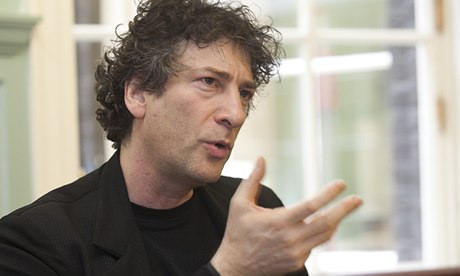
A few years ago, when I read American Gods, likely at the behest of Son One, I was surprised at how much I enjoyed it. I may have waded in expecting some nifty ideas and a dumbed-down bit of guilty-pleasure genre reading, but it was much better than that. Recently, through a Twitter accident, I’ve been reading Neil Gaiman’s blog and watching some of the videos attached to it, and find him a thoroughly engaging and admirable

Gaiman: a humane, generous and eloquent spokesman for the arts of reading and writing.

person. I love his simple and humble description of what he does for a living — I make things up and I write them down — and I will read more Gaiman. The quote below, on the lasting quality of the analog book form, comes from a superb speech he made in support of The Reading Agency, a British supporter of the whole wonderful business — threatened, in so-called “developing countries” everywhere — of libraries and reading and the fuelling of imagination. I think of it as his “We Have an Obligation to Imagine” speech, and it’s fine, all of it. This reluctant e-reader particularly enjoyed his defence of the non-digital book: 

Continue Reading >>

2013 in Review: The Great Eighteen. Writing you can READ.

The last time I compiled a “Best of Howdy” list, for 2012, it was easier. I browsed through the year’s posts, remembered some things I liked, whittled it down to 10, gave a brief description, done. This time I tried to get more scientific, more democratic, and it’s been a mess. Not a lot of people responded to my invitation to submit favourites of the year, but they were some of my best readers and it was satisfying to hear about posts they liked. But.

My correspondents were far from unanimous in their preferences, and often those didn’t match the things I’d have chosen. And now that I have slightly more sophisticated analytics, I can easily check which posts had the most page views, which was often a completely different list from mine or the sometimes-odd choices of my panellists. A blogger’s work is never done. All this did cause extra work, but it was good thinking – along with the sidebar reflections that my Choice Readers had made – about what I’ve done, what worked and didn’t, and especially about what got read, and how. As it turns out, a tour of these will give you a pretty good idea of what I’m on (and off) about.

So here it is, again in the form of a quick trip through the Howdy catalogue. And I know: eighteen posts? Well, I plead indecision, for one thing, but it’s hard to choose among your children. There were 128 of them birthed on JH.com for 2013; also I reached my 500th post overall. Not a bad year, I’m not afraid to admit it.¹

Continue Reading >>

Holiday Tourism of the Local Kind

I can almost imagine a year when late December finds me breaking the pattern. Maybe I’ll jet my carbon-neutral way to sun and beaches, or more likely to visit some holy place or natural wonder. Maybe I won’t go anywhere at all, just batten the hatches and gorge myself on the movies I haven’t seen, whittle down the stack of books that implore me to fondle their pages. A guy can dream.

But neither of these extremes is likely. This is the time of year when I can curl up with a good movie; at this point, it looks like that may be confined to finally having seen The Queen, which reminded me of Ray, oddly enough: an okay movie but a superb central performance, here by Helen Mirren. Good reads have come more readily, with a second reading of Toni Morrison’s Beloved in a month being the recent highlight. But, inevitably, it’s never the cinematic orgy or literary bender that I imagine. And though the last ebb of December is not some spectacular foreign getaway, we do travel to two outstanding Canadian counties. Haliburton and Haldimand. Who’d want to be anywhere else?

As per usual, our pre-Christmas routine found us heading westward along winding, hilly and ever-more-obscure blacktop to visit my mother-in-law in her lakeside retreat near the town of Haliburton. The road to late December is traditionally fairly frantic, especially in my busier years of teaching and coaching like my shoes were on fire. (Thankfully, though, Christmas shopping is a pretty low-intensity imperative for us, as we put more emphasis on Baha’i holy days. If my bride hadn’t been born on the 23rd, I’d have boycotted the malls utterly and religiously.) By the time we descend on Portage Lake, where the nearest neighbours are birch trees and looming hills, things are suddenly languid. Lazy. (This is much easier for me than for HyperBride, but I’m just saying.)

A couple of days before the Day, we had the usual low-key celebration of my bride’s birthday. The princess was happy with her usual perquisites: beef fried in a fondue pot, another song-filled and weepy viewing of The Sound of Music. (Report: The Von Trapps escaped. Again. People regularly broke into song at the oddest moments.) Christmas Eve is another subdued tradition, where Mum-in-law Margery places a shrimp ring gobblefest just before The Main Event: the Portage Lake Plum Pudding Massacre. Flaming brandy. Three sauces. Think you’re ready? You’re not ready. Not even the loons will hear you groaning…

One of the subtle joys of late December is how blissfully predictable and serene it all is, especially on the Haliburton end. On Christmas morning, we eat fresh-baked scones and have the most gentle exchange of gifts among the four of us. No tree, no invocation of sacred rituals and bearded elves. (With my first three, we’d ask them if they wanted to play “the Santa game”, worried that they’d feel left out. Sam is unfazed, though, perhaps in part because about half the kids at his school and all his bus buddies are Muslims.) I predicted: socks for Margery, a low-tech toy for Sam, something warm and fuzzy and hand-knit for Diana, and a gently-broken-in book for me. (Margery has great taste in books, and never leaves crumbs or bent pages or reads it in the bathtub. But THIS time, I am shocked and awed and slightly bent to report, she had believed reports of unread books from Christmases past and broke the pattern!) And more. I got to watch one of the annual Christmas Day NBA games, a much older tradition than Haliburton, but didn’t have the father/son sitdown to absorb the hardwood genius of a genuine Canadian idol, Steve Nash. (He always makes me want to coach again.) Supper was duck rather than turkey, an abrupt and fowl departure from orthodoxy, and a visit from Margery’s basket-weaving friend. Talk and warmth and not much else. Sweet.

Then we drove to suburban Cayuga on Boxing Day aft, where the Howden clan gathers in such numbers (and with such a copious food frenzy) that Haldimand appears, next to the somnolence of Haliburton, like Union Station at rush hour. People, people, people, and so dear. But here, changes are more the order of the day. Nieces and nephews come with new romantic interests in tow. (Some even survive for a second Christmas inspection.) We have finally limited the gift exchange, so it wasn’t the interminable round of consumer delight that it once was. It was also our second Christmas without my Mum. We remembered how absurdly and endearingly and predictably overjoyed she would be at the gathering of such a large, goofy and thoroughly wonderful crew. And for the second straight Howden Christmas, not coincidentally, alchohol has returned after our Noels were decidedly dry for decades. The teetotalling curmudgeon of a Baha’i uncle don’t bloody like it. (Stoical but dramatic sigh.)

As I predicted in my holiday crystal basketball, my Sam got as much cousin-time as he could fit in. As I also predicted, I have failed to encounter quite as many old friends or profound conversations as I’d hoped. And after a couple of days to lounge, recover from big sister’s carefully organized food marathon, maybe run by a corn field or two, we’ll soon be ready for the trip back home. My wife will be frantic to get DOING things. I’ll be worrying about whether the backyard rink survived the rain, and cursing myself for not writing more. Sam will be missing his snow-fort and friends. And all will be right with the world.

A Beautiful Biography

In my typically timeless style — I’m referring to tardiness, not eternal glory — I missed the Ron Howard film A Beautiful Mind when it won all those Oscars in 2001. (Gracious. Ron Howard has Academy Awards for Best Director and Best Film, and Martin Scorcese doesn’t.) It was just before Christmas, actually, that I finally saw it, and I liked it well enough that I watched it again with my girl a couple of weeks later.

An old friend told me years ago that I should see it, partly because of its cinematic merits but mainly because she’d seen pictures of my Dad as a university grad. “Crowe looks just like your father!” It was true: I was knocked out by Russell Crowe’s portrayal of the troubled mathematical genius, John Nash, but there was an extra thrill of creepiness there. My father was in his 50s when I was a young boy. I caught ghostly glimpses of a Dad I’d never known except in black and white photos from the thirties, forties and fifties. And beside that, Crowe was great. He didn’t tower over a so-so film like Jamie Foxx had in RayBeautiful Mind is better than that – but there was a family resemblance. I’d forgotten that it won four Oscars, and its best performance wasn’t even one of them.

I immediately went looking for the Sylvia Nasar biography that had inspired the film, and just finished it. And when I note that the movie version won for Best Screenplay, well, it’s interesting. A Beautiful Mind was based on the Nash bio of the same name, but I was startled by how much “creative licence” Hollywood allows itself in recounting a true story. The love angle, besides being much more central than it actually was, was mainly fiction. Almost the entire depiction of Nash’s paranoid schizophrenia, too, is completely invented. (I guess faithfulness to the book would have eliminated a good role for Ed Harris.) Given the Hollywoodization of life, it’s no wonder how little understanding the public has about mental illness!

But’s let’s concentrate on the book, which was superbly told and incredibly detailed. As a case study of genius, as an examination of psychiatric problems and their effect upon families, and as a recreation of critical times and places in mid-century America, Nasar’s book is a brilliant and compelling investigation. Its detailed description of Nash’s mathematics and of his fall into delusion barely slows down the book. I was engrossed, especially once I gave myself permission to skip the hundreds of end-notes in this densely detailed life history.

It has made me think long and hard about many things: how lonely it can be for our leading minds, how fine the line between creative genius and madness, the courage it takes to be an innovator or to live with one. In our dreamy moments, we sometimes think we’d like to be in the forefront of some great idea or cause, but most of us shrink from the cost. As spookily good as Russell Crowe was in the film, the story of the “beautiful mind” of Dr. Nash is best and most interestingly told – hey, have you heard this before? – in a book. The movie was worth the look, but A Beautiful Mind is a better thing when it’s read.

Writers Festival Highlights

I read Andrew Cohen’s While Canada Slept about a year and a half ago. He’s an Ottawa man, so though his book isn’t new, he’s here and his book is even more relevant. Questions about Canada’s involvement in Afghanistan keep growing with every young man (and one woman) that we bring home to bury. Are we returning to a time when Canada “punches above its weight” as far as international influence goes? Cohen recommends it, from a military but especially from diplomatic and development perspectives. This is a smart and eloquent guy. If he was more prone to performance and less to dispassionate analysis, he’d be a big star in the punditocratic constellation. Punditocratic. a. describing those who make their living by entertaining us with their knowledge. Word of the day. Word to your father. You’re welcome.

Steven Manners has the look of a stubbornly loyal but chronically disappointed pro sports fan. (The Cubs. The Leafs.) He makes Cohen look like a sharpie, a vaudeville showman, but his wryly detached delivery began to grown on me as he discussed his Super Pills: The Prescription Drugs We Love to Take. I enjoyed his historical reminders of how root beer and Coca-Cola starting out as tonics, in the great tradition of Ayer’s Sarsparilla and Lydia E. Pinkham’s Vegetable Compound. (For example, only when the forerunner of the American Food and Drug Administration began to investigate why Coke “contains neither coca nor kola” did the company begin marketing it as a mere beverage.) Mainly, though, his book addresses the modern phenomenon that has been called “cosmetic psychopharmacology”: the avid search for and consequently ready supply of meds designed to make us “better than well”. Valium. Prozac. Ritalin. Viagra. The list is long, and the stories around them are a caution. We do love our magic bullets.

After Mr. Manners, I hustled over to fancier digs at Ottawa’s famous Chateau Laurier ballroom to hear my Ol’ Boss, former Governor General Adrienne Clarkson. Her memoir Heart Matters is monstrously important for me and all my former colleagues, and is making a predictably big splash in Canadian newspapers and bookstores. Many in the large crowd, I’m sure, were anxious to hear the “state secrets” she has been admonished in some circles for telling. She was not a big fan of Prime Minister Paul Martin, it is now publicly clear, but she dismisses any idea that she’s broken a sacred code. In any case, she didn’t share anything from that part of the book. What she did read was fine storytelling, much of which I hadn’t heard before, about her family’s harrowing refugee experience and growing up an immigrant in a then very white Canada. She is a superb performer, of course, but she read far too long and the subsequent delightful conversation with host Ken Rockburn was far too short. (Yes, she simply cannot do without me. Ahem.) But then again, the line of book buyers eager to have it signed went on and on. I was in it.

The “Big Idea” series continued Monday night with Stephen O’Shea and his book Sea of Faith: Islam and Christianity in the Medieval Mediterranean World. I was not familiar with O’Shea, but he’s impressive and I’ll read his book. He’s a journalist writing history, and made a point about the importance of being in the place where great events occurred, and not merely consulting texts in libraries. This was perhaps a gentle critique of academic historians and also of our frequent tendency to give greater weight to abstraction and reference than to direct and felt experience. O’Shea devotes much of the book to countering a pervasive fallacy: the idea that war and conflict is what defines the course of history. Most accounts of medieval relations between Christianity and Islam focus on the great battles (“if it bleeds, it leads”), but O’Shea gives considerable attention to the long periods of peace and productive interaction between the two faith communities. He coins the term “Islamochristian civilization”, and terms the historic relationship as “a sibling rivalry, not this dangerous shibboleth of the ‘clash of civilizations’”. And as for “East is East, and West is West”? O’Shea argues, very convincingly, that “the twain did meet, and mingle, and marry”. He eloquently expresses his dismay at the contemporary toxic rhetoric that mixes politics and religion, and especially the West’s ignorance of Islam and its ongoing “fear of the Turk” – a renewable resource, it appears. “Religion, for all its solace, will always be a ready hand grenade for those who wish to make war,” he said. And I liked the following example, thrown off during questioning after his thoughtful and appealing talk. It’s a good conversation starter (or ender!), and rattles some of the slack-minded impressions of Islam into a new context. “Osama bin Laden is as much a Muslim,” O’Shea stated, “as David Koresh and the Branch Davidians at Waco were Christian…” This guy is good. (I’ve been doing a lot of thinking and listening about Islam lately. If you’d like a sample, start here.)