Rss

A Boy, a Man. And All Those Nutbars In Between.

It’s never really about basketball.

These boys were neither cute, rambunctious children, nor young men launching themselves into the orbit of their adult lives. Not quite yet: they were “my guys”, a coupla dozen nutbars (he fondly called them) entering grades 8 to 10, students working on their basketball skills in anticipation of a new academic year and school team tryouts. It was August 14. It was our last of 23 training sessions. There were Freezie pops for everybody, and a chocolate bar (or two) for the guys who showed up the most and weren’t afraid to be “try-hards”. (Try-hards. In the joy-killing cynicism of youth basketball “culture”, this is a term of dismissal and a weird sort of shame.) I preached courage all summer. And concentration. And yes, competitiveness, the willingness to rise to the challenges presented by other players, by a keen and pushy coach (me), and by the ever-green imperative to improve on our previous best selves.

So. Good last session. We tried hard. I was glad to be finished. Eleven more days until school begins. But only two boys of that final day’s 20 thanked me for the summer’s (volunteer) work. Empty Freezie pops were left on the gym floor. Ideal outcomes were unachieved. Irritating realities intruded. Mainly, I wanted the gym cleared and the equipment stored and the boys gone. The coach was weary, and fighting off the typical post-feverish-engagement voices: shoot, I thought we’d get more done and wish I’d seen more of *those* two but also there *was* massive improvement, admit it and don’t forget that C is really starting to lead…

The gym was finally quiet when Amalia’s text came. WHAT? That little boy I had loved was suddenly gone? That 20-year-old man I was longing to meet in his adult flowering? Won’t ever happen. That gorgeous family — an Italian sweetheart and his lovely American wife and those three delightful little boys – the one that I loved to meet whenever our ex-pat group in Dalian (China) could get together? It is devastated now.

It’s less than two weeks since we reunited with Piero and Tannaz at a large conference in my home city, a dozen years after leaving Dalian. Our periodic connection during our shared years in China was especially sweet for me; I had been father to a three-boy family, a second try-hard at marriage had brought along a fourth son, so I was helplessly smitten by Jian and his littler brothers. Tannaz and Piero brought us up to speed about their boys, on a convention centre escalator and in between conference sessions. Jian was now 20, a lean and handsome extension of the bright-eyed 6- to 8-year old tornado I had known back then and there. He was now a college kid, spending a few weeks at Green Acre Bahá’í  School, deepening his knowledge and commitment in summer sessions of the Institute for Studies in Global Prosperity. (ISGP is a phenomenally impactful institution, dedicated to training young people to transform their worlds.) I had a hundred questions for him, which would have been summed up in one basic query: Who are you NOW, young fella? 

Amalia’s text was a sudden lament. There had been a drowning. The Piscataqua River, near Green Acre, empties into the Atlantic. A young man, our dear Jian, full of energy, intelligence, deep commitment and enormous potential (and so handsome, and how could he have been otherwise considering the parents who had raised him?), had suddenly leapt from the worldly stage he seemed destined to stride with grace and purpose, with joys and usefulness.

I had been relieved to have the gym to myself for a few minutes before I got on with my day. Now, I wanted to call my players back. I wanted to tell them about Jian Grant Morano, what a sweet small boy he’d been and the grief and loneliness I felt about a young man I would never know. My loss is nothing against the earthquake of a father, a mother, two younger brothers and the tide of people who knew and loved this family. I wanted to warn adolescent boys: nothing is guaranteed, life is sudden, don’t waste a second, all those earnest cautions that I would not have heeded at their age.

Prayer helps. I am led to believe that it can stir distant hearts, even those souls that have passed on. What I know is that it helps me in ways that my oh-so-strained understanding cannot. So does the Old Testament, specifically the blunt comfort of Ecclesiastes 9. The voice in that book, the Teacher, has been telling us for millennia that our limited views of human justice are inadequate for the scope of the life of humanity, and that a Creator infinitely beyond our comprehension should not be judged by our petty standards. Death comes to all:

For I considered all this in my heart, so that I could declare it all: that the righteous and the wise and their works are in the hand of God….All things come alike to all:…(Ecclesiastes 9:1-2)

In Chapter 8, the Teacher had famously advised his hearers that “there is nothing better under the sun than to eat and to drink and to be merry“. Similar encouragement follows later in the ninth chapter, which I was coming to know when I was the age Jian was, back when we were together in Dalian, twelve and more years ago:

Live joyfully with the wife whom you love all the days of your vain life which He has given you under the sun, all your days of vanity; for that is your portion in life, and in the labor which you perform under the sun. Whatever your hand finds to do, do it with your might;…I returned and saw under the sun that—

The race is not to the swift,
Nor the battle to the strong,
Nor bread to the wise,
Nor riches to men of understanding,
Nor favor to men of skill;
But time and chance happen to them all… (Ecclesiastes 9:9-11)

(Sigh. Nobody gets to marry Jian.) However, for those who believe in what we blithely call the “hereafter” — I count myself among them, though I can’t say I’m very good at it — there are comforts beyond Ecclesiastes. For example, the New Testament’s vision of the soul’s continued existence (“in my Father’s house are many mansions”) is confirmed and amplified in the Bahá’í teachings, which at one point compare the untimely death of a young one to the actions of a “kind gardener” who transfers a tender plant to a wider and lovelier place. Furthermore, a treasured prayer of ‘Abdu’l-Bahá has been on my mind and tongue since I learned of Jian’s death, one in which we beg the Lord of the universe, on behalf of someone whose loss we grieve, to

…cause him to enter Thy glorious paradise, and perpetuate his existence in Thine exalted rose garden, that he may plunge into the sea of light in the world of mysteries. Verily, Thou art the Generous, the Powerful, the Forgiver and the Bestower.

But how do I make sense of this loss? I keep learning to pray, yes, and hope that perspective sets in. I also hope to keep hearing the Teacher, to do “whatever [my] hand finds to do” with all my might. I’ll try hard, and remind my nutbar ballers that there’s no shame in that! (Not ever.) And when I’m coaching or otherwise working with the youth I am so drawn to, I will look to Jian and his example. We all need help down here.


SIV: Germanwings, High School, and Islands

Yes, and you may have heard of Stubbornness Is Virtue (SIV) week, self-declared and self-extended, in which I have granted myself executive authority to Get Stuff Done, no matter how ‘last month’ it might be. This week, we have heard more from the investigation of the Germanwings air disaster, more on the sordid rehearsal that CopilotBoy did for his all-too-sadly-inclusive march into oblivion. I wrote, quite bitterly, about this unnameable coward earlier, but here was my first (pre-empted) reaction, now finally finished — rather like my lengthy high school career.

I was in high school for a LONG time.

It was five years, at first, back in the era of Ontario’s Grade Thirteen. Five years of education and some factory/retail time later, I did some teacher prep-time in a few southern Ontario elementary schools, and then resumed what seemed to be the endless walk down the halls of eternal high school. I was a full-time Creature in my 20s, and was still barking and grinning, cajoling and joking and explaining and teaming my ever-lovin’ head off ‘til I was deep into my forties.

Then, in China, I taught university students, but it didn’t feel much different. (The kids, so sheltered by the abrasive cocoon of high-pressure study – and so charming in their child-like forays into English – seemed younger than European and North American kids. Less experienced. Less jaded. The freshmen inevitably reminded me of ninth-graders, the girls beginning to dress for the male gaze, the boys pretending not to notice.) And even now, having retreated from that consuming, exhausting gig, I hang with high-schoolers all the time. Two of ‘em live with me, and I chase many more of them around gyms, with a whistle and incessant roundball counsel. (It’s no way to make a living, but I feel lively when I’m doing it.)

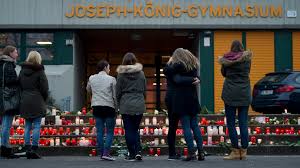
There weren't enough candles in the world to brighten that day. (photo from rt.com)

There weren’t enough candles in the world to brighten that day. (photo from rt.com)

High school is where I live, still, with much of my heart. No surprise, then, that when the Germanwings airliner went down, and my morning dose of Bad News at Home and Abroad muttered that “…eighteen of the dead are from one German high school”, my heart ached more than usual. The last time I felt this way – like a bombing near-miss, where I’m assaulted by the carnage but haven’t a scratch myself – was the bit-by-bit unfolding to me of the costs of the Sichuan earthquake in 2008, especially in the lives of children buried in shoddily built schools.

Continue Reading >>

If It’s Any Consolation – And It Likely Wasn’t

I’m at the CIS Final 8, the men’s basketball championships. My opening round account, in living black and white, is here, if you want to catch up. (I want to catch up.) The semifinals last night were great, but I’ve stubbornly insisted on writing up the consolation round first. And the title match is coming in 42 minutes and 47 seconds, so let’s get this reading party started!

*********

Was Anybody Consoled?

As an obsessive consumer of all things Final 8 this weekend in Toronto, I wonder: if they held “consolation” games for first-round tournament losers, and no one was consoled by the experience, did anybody come? The simple answer is ‘no’, since the Mattamy Centre at Ryerson was an echoing bowl containing mostly lacklustre games, a small group of steadfastly cheerful parents, smiled-out volunteers, pouting coaches and whoever the rest of us, maybe 100 not-so-strong, were. As always, the longer answer is more interesting. Why does this tournament have a consolation round?

We usually console after death, or at least some notable loss, and I suppose young athletes with a dream of trophy-hoisting qualify for the latter. The word comes from the Latin consolari, “to offer solace, encourage, comfort, cheer”. If there was comfort, it was chilly; if there was cheer, it was certainly muted, especially for Dalhousie and Bishop’s universities, who got to add a second insulting ‘L’ to their injuries in losing close games to Victoria and Ottawa, respectively. I’m sure, too, that it felt better than a kick in the head for the universities of Saskatchewan and Windsor to win (the Big W) that second day, but Windsor’s coach, Chris Oliver in particular seemed especially uninterested. Of course, the competitive juices kick in for the players, and the second halves of these games are routinely more energetic than the first. That was a slight consolation to my weary eyes.

Continue Reading >>

Hitting ‘Refresh’: One Dark Night, This Ol’ Dad

I just didn’t get it. (I never seem to, as he often reminds me.)

We’d had a pretty good time at the basketball courts, my 13 year-old son and me and a half dozen temporary teammates. I thought so, anyway; I was gassed, toast, bagged (as we used to say in the Grand valley), as usual, but fairly content. I’d had a good run. Some shots and passes found their targets. No ankles were harmed in the making of that afternoon which had turned into an early Dalian evening. We had a 20-minute walk home, but somehow we couldn’t pull it off.

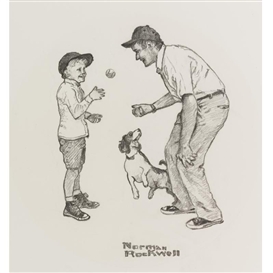
Ours was not a Norman Rockwell moment.

I can’t rebuild that wrecked conversation now, and there’s no instant replay available – all I know is that I must have said a steaming pile of Wrong Things, and before I could say “that was fun” my lad was snorting and huffing, you just don’t get-ting and stomping his way as far from the Dysfunctional Father Unit as he could get. He’s a fiery critter, and a stubborn, and maybe-just-maybe a little too much like his old man for our collective good. Here we go again, I muttered. How did we get here from there?  

It was dark, and I was alone, and except for the relationship shrapnel, that was fine by me. Breathing room. A little peace and quiet. Yes. But not only that: I also remembered to turn to an old favourite consolation.

Continue Reading >>

My Heart in New Brunswick

The world is full of tragedies, sweeping and small. (It is also chock-a-block with morality plays, comedy and inspiration. But not in this column.) It is a curious study: what makes a tragic event from outside affect us, moves us to the core? No matter how compassionate one might be, it is at least insane-making (if not actually impossible) for a person to react with deep feeling to every bit of pain and grief that others experience. It’s a matter of psychic self-preservation, I suppose. To be too open, too desperately responsive to what goes on around us would be as crippling as its opposite, the utter disregard for the feelings and experiences of others.

The suffering of children, it would seem, is something most of us are wired to be distressed about. Some are never so moved by human difficulties as by the sorrows of pets. (After the tide of frothing condemnation for football star Michael Vick’s involvement in dog fighting, I read a searing comment from New Orleans. Would we have gotten more help after Katrina if the media had focused on the dogs instead of the people?) Much of our work as human beings, ultimately, is to develop the capacity to care about our neighbours, “to feel, in your heart’s core, the reality of others,” as the novelist Margaret Laurence once put it. To understand that the lives of others are just as important to them as our own lives, and the lives of our dearly beloved, are to us. What hits home when we hear or read of terrible misfortune? What is it that opens wide the gateway to empathy? (And while we’re on the subject, who ARE our neighbours?)

Usually, it’s something as simple as shared biographical detail. Wow. This person is kinda like me. And bad stuff happened to him. Ouch. “There, but for the grace of God, go I,” a more eloquent observer noted. When asked why he had responded so dramatically, how he had performed such an absurdly courageous deed, a winner of Canada’s Governor General’s Award for bravery put it this way: “I looked into that burning truck and I thought to myself, That guy is ME.” The dark inversion of this credo, though, is what allows us to kill in war, to ignore suffering, or simply to live comfortably when many do not: those people are not like us. Such a fine balance. I was struck forcibly by the matter of identification with others last weekend.

I was stunned by grief Saturday morning, quite instantaneously, hearing the first radio reports of a terrible highway accident near Bathurst, New Brunswick. Tens of thousands die every year on the roads, of course. It’s a price we’re willing to pay, as a society, for unlimited mobility. This was different, for me and for many, because of the scale and because of the youth of the victims. Eight dead. One fell and grinding swoop. Seven of them were among the leading young men of their high school, members of its varsity basketball team. And one was the coach’s wife. The coach, the driver of the passenger van on the cold and slippery Friday night, walked away from the carnage. The boys were playing a game I have loved and coached with eager hours, and suddenly this driver who walked away was me.

“Walked away”, we say, when someone survives an accident with little bodily damage. Wayne Lord didn’t “walk away”, though. He must’ve been screaming, running, searching. He must’ve been mad with grief and helplessness, seeing the shredded vehicle he’d lost control of, the broken bodies of his wife and of seven boys to whom he had given hours beyond measure, and encouragement, and extra laps, and technical instruction, help with their courses and advice about girlfriends. His daughter was in that van, too, what was left of it after hitting a transport truck head on just a minute or two from home. There was no walking away for Coach Lord.

Or for me, even thousands of highway clicks away, choking with emotion for people I’d never heard of, because I’ve been in that van. I was that teacher and basketball coach, bringing eight, ten, twelve young men – silly, sleepy, bruised, music playing, mainly happy even after a loss on the road – back home, back to their families. I am wounded by what this former stranger, this colleague, this brother, faces now. I broodingly imagine the hallways of that high school, knowing how the sudden deaths of fellow students and friends make a young person feel cut off at the knees, heart-sick and desperate. I remember the devastation in my own hometown high school after three young women were lost in a similar tragedy. For too many kids, with shaky families or non-existent religious convictions, the sudden loss of peers is more than that, as awful as that is for anyone. If my friends are gone for no reason, what’s the point of anything?

In my mind, I walk the streets of Bathurst. It’s probably much like the place where I grew up, lived, taught and coached. The McDonald’s has its flag at half mast, and attempts at community consolation where meal deals would normally be signed. I wept again when I saw this news photo: friends of the dead athletes had dragged two portable basketball hoops out to the highway to honour their buddies. A guy does what he can do, especially when there’s not much you can say and less that you can understand.

The truth of what I often used to say to my bemused players, or to friends who wondered why an apparently intelligent man would spend so much time with sweaty teens, comes back to me: There’s more to life than basketball, but then there’s more to basketball than basketball… There surely is in Bathurst, New Brunswick, these days, as they bury their sons, brothers, friends, and one wife. And what can be done about the heart of a bereaved husband, whose loss has been multiplied by the extinction of seven young lives that he had done so much to enrich and guide? Thank God his daughter lives and therefore he must, too. I hope that town wraps its arms around him, around her. I pray for consolation, as far down the road as that may seem.

I even dream that he may someday have the heart to blow a whistle again.

Death of a Centaur: An Essay on Updike

A classic tension in life and fiction lies between the poles of unfettered individualism and the imperatives of the wider society. North America, and the United States in particular, became in the 20th century the home ground for an ethos that favoured individualism – especially the rugged, masculine kind – as the supreme value. Even religious inclinations were understood primarily in the context of personal benefit. The life, liberty and pursuit of happiness so central to the American project were interpreted increasingly as individual quests, rather than collective ones.

The ideal of the Self-Made Man, grown iconic in the stories of Horatio Alger and the reputedly solo exploits of Lindbergh, Elvis, even Einstein, becomes a problem in the relationship of a father and son. How can a man lift himself by his own bootstraps and still follow in his father’s footsteps? The failure, even the refusual, to recognize the debt owed to paternity is one of the less-known consequences of individualism, especially for males in American culture. The men’s movement that found its strongest – if occasionally cringe-making – expression in works like Bly’s Iron John is based upon one fundamental perception: that fatherly guidance is shockingly minimal in the experience of modern men, that for many there is a smoking hole where a father should be.

Hemingway’s Nick Adams stories from the early 20th century flirt with this theme. The father figure is either remote, implied, someone to be respected in his absence by recalling his views about drinking or literature, or he is suddenly and overwhelmingly present, exposing Nick to struggle and death in a way for which he is utterly unprepared. In Kurt Vonnegut, we see a retrospective longing to understand his distant, disappointed Dad. (Accounting for Kurt the younger’s long retention of the “Junior” in his pen name.) Recently, the most remarkable feature of the apocalypse imagined by Cormac McCarthy in The Road is a fiercely protective and starkly intimate relationship between an anonymous father and his nameless son. We wonder if only such a world-devouring flame could make such interdependence and devotion possible.

***

Given this framework, consider George and Peter Caldwell, the father and son central to John Updike’s 1963 novel The Centaur.

Continue Reading >>

High Points for LitWits

Just a few more (lately logged) comments on the Ottawa International Writers Festival, among which will not appear a re-opening of the debate about whether there should be an apostrophe at the end of “Writers” (except to say that it’s an adjective, not necessarily a possessive one, and with the ridiculous littering of apostrophes where they ought not to be, leaning toward exclusion where it can safely be justified is fine by me, so there!) (Was there ever a debate?)

• Especially for those who remember well the Air India disaster, and the Canadian implications in other explosions of religious extremism, Anita Rau Badami’s Can You Hear the Nightbird Call will be very interesting reading. It dances between Indo-Canadian communities and the murderous background of Sikhs versus Hindus in the Punjab. Sounds good.

• High school English teachers can having a writing life. Brent Leo Robillard (Houdini’s Shadow) has proved it. (Unsure whether to praise or curse him.)

• English professors can write with humour, irreverence and sauce. Randy Boyagoda’s Governor of the Northern Province skewers several Canadian complacencies, institutions and sloppily held ideals.

• While I am impatient with the partisanship and constant posturing that is built in to our governing system, I do have time for the characters in the play. Found Eddy Goldenberg (How It Works) and his discussion of his decades as “back-room boy” to former Prime Minister Jean Chrétien interesting. He tells a funny story of Mr. Chrétien’s first social visit with George Bush, where the President’s attempt at small talk (okay, do I know any Canadians?) began with his admiring view of Conrad Black, sworn antagonist to the PM who wouldn’t agree to a Canuck being allowed entry into the British House of Lords. There were several Bush anecdotes, at least one of which is getting some play in Washington (his reference to stringing the source of government leaks up by the thumbs, “just like we do at Guantanamo Bay”.) Interesting from an insider point of view, and also for the sake of humanizing a government process that can seem foggy and far away.

• I had known of Michael Redhill as the editor of Brick, a literary magazine, and as a playwright, but my knowledge of theatre is pathetic. Hearing him read from his latest novel, Consolation, has put a new entry on my must read list. (This may not be a compliment these days, but he reminded me of Mel Gibson a few months after firing his personal trainer.) I enjoyed his turn of phrase as a writer, and found his comments incisive and intelligent. And a bit of a caution: “All writers have diseased egos – and in awards season, it metastasizes”; and “Why publish? I find myself quite perplexed about why I do this.” This is someone I’d like to know.