Rss

Better Read Than Never: Saul’s Unconscious Civilization 3

My first look at this book (and its author, John Ralston Saul) was here, and the first chapter was summarized here.

Saul called Chapter 2 of The Unconscious Civilization – the second of the speeches he originally gave as the 1995 Massey Lectures in Canada – “From Propaganda to Language”. To bring (Western, or maybe even global) civilization to a more conscious state, to encourage genuine democracy and real citizenship in pursuit of the general good, he advocates fundamental changes in the way that we communicate, and in the role of

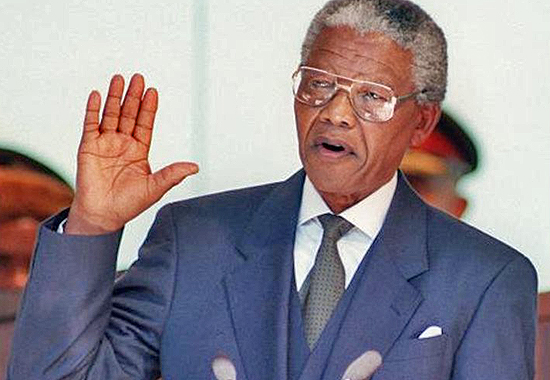
JRS at the lectern.

education in producing such true and meaningful expression. These are big ideas. Saul is often criticized for his sweeping generalizations. Even his fans might find occasional pronouncements positively tsunami-like in their breadth, force and where-did-that-come-from suddenness. This is also his greatest strength: he describes philosophical and historical forests to a public too often entranced by the trees.

And speaking of sweeping general statements, then, here are my no-more-than-500 words in summary of “From Propaganda to Language” by John Ralston Saul:

Continue Reading >>

Jonathan Franzen (fictional glimpse: doomed male desire)

There’s nothing exceptional about this extract, which is the brilliance of Franzen’s Freedom. It is full of tawdry modern incidences and aggravatingly imperfect characters that we love, distrust, admire, roll our eyes about and want to shout at. It is also full of invention and lively details, superbly written but easily readable. (A little stamina will be needed, but. There’s another one here.) Sometimes he is nastily funny, and sometimes he makes depressingly accurate observations about how the “comfort-loving peoples of the West” live these days. (Which category does this micro-excerpt fit for you?)

Here, young and newly-wed Joey arrives at the airport to meet the most impossibly beautiful woman he’s known and (maybe) begin a torrid South American affair. (I won’t try to explain the ring.)

“The wedding ring was still stalled somewhere in his abdomen as he breasted through the churning warm sea of travellers at Miami International and located Jenna in the cooler, calm bay of a business-class lounge. She was wearing sunglasses and was additionally defended by an iPod and the latest Conde Nast Traveller. She gave Joey a once-over, head to toe, the way a person might confirm that a product she’d ordered had arrived in acceptable condition, and then removed the hand luggage from the seat beside her and — a little reluctantly, it seemed — pulled the iPod wires from her ears. Joey sat down smiling helplessly at the amazement of travelling with her. He’d never flown business-class before.”

Jonathan Franzen is an American novellist that you’ve likely heard of. I mull over the story of Joey Berglund and his family, with whom I’ve lived for a couple of weeks. I’ve gotten very close to his parents, Walter and Patty, though they drive me crazy.


Better Read Than Never: “Rudy Kong” & Dragons, Donkeys, Dust

Faithful readers may have been expecting a different BRTN, the third part of the series of summaries I’m doing on John Ralston Saul’s The Unconscious Civilization. Today’s review is of a decidedly less weighty book, a borrowed one that I finished a while back and have to return to my friend Ladon, who lived parts of it. JRS will return soon.

Dragons, Donkeys and Dust: Memoirs from a decade in China

by Rudy Kong (Bing Long Books, 2010)

Teacher Conradi had a story to tell, actually ten years worth of them, the tales of a foreigner spending an unexpected decade in China. Not only China, by the way, but my very own neighbourhood, the modest and reputedly lovely small city of six million where I’ve spent a half decade of my own: Dalian, the number-two burg in Liaoning province. Conradi is a Canuck, too, and spent his time teaching in the Canadian-based high school that I at one point thought would be my professional home and visa-provider. He left town not long after we came, but he left behind a book and a few mutual friends. I’m glad to know him.

The first story of Dragons, Donkeys and Dust is told in Conradi’s pen name, Rudy Kong. Much as Chinese young people usually choose, often with startling or laughable results, an English version of their name, “RK” is the anglicized version of the Chinese name that this Canadian ex-patriate was given by local friends. Conradi begat Kong Ruidi begat Rudy Kong. (This strikes me as a mild and fairly sane version of an Internet game that has replaced the old “Telephone” fun of seeing how much a message changes with repeated re-telling — put a phrase into Google Translate, and watch what happens to it after sloshes through a few languages. My son loves this.) I’m guessing at how his pseudonym came about,

And away he goes! He spent ten years in China, and all he got was three kids, a million memories, one book (so far) and this cool portrait.

but Mr. Kong has dozens of tales, and he is an engaging and appealing story-teller. He’s a foreigner who genuinely lived in China. He wasn’t here to score a quick million, or view a changing China from the safety of his chauffeured SUV, or to cure his chronic bachelorhood with a compliant (or financially or geographically ambitious) local woman.

Continue Reading >>

Foot Soldiers of a Different Sort

The TV types back home have been wearing poppies for a week now, and the day of remembrance has arrived. On another front of stylized war, the sporting airwaves have been spiked with tales of a truly offensive lineman for the Miami Dolphins and the out-of-bounds brutality he is said to have inflicted on his team-mate. There is much hand-wringing from the shocked public, which is countered by furious defence by insiders, arguing that civilians – and I use the word purposely – cannot know the ferociously masculinized world-of-the-wars that is an NFL locker-room. For today, I will only say that Mr. Incognito (that’s actually his name) “did not act alone”, and cite a superbly indignant piece on the “warrior culture” and its insistence that Being a Man involve sometimes being less than human. Now, it’s two other offensive lineman – the grunts, the hewers of wood and haulers of water, the spear-carriers of this quite incredible game/industry of football – that I want to mention, for an entirely different reason: they’re done with it, gone too soon as some fans might lament.

I read about them the same day. One was an NFL pro, one a wannabe in the high echelons of the NCAA “student athlete” zone of professional apprenticeship. Josh Williford played for Louisiana State University, a usual top-ten program in the best league in America. He’s 6’7” and weighs way north of 300 pounds, and in a game in October of 2012, he lost his mind.

Cuts heal, but we’re not so sure about concussions. I’ve been there — different field, same blankness — more than once. Man down, way down.

Continue Reading >>

Shoghi Effendi (on humanity’s prospects)

When I was about 10 weeks old, the appointed Guardian of the Baha’i Faith, Shoghi Effendi Rabbani, died unexpectedly in London, England on November 4. He was barely 60. He was brilliant, notably as a writer/historian, and could’ve been and done many

Beautiful, carefree face. He’s about 8.

things, but when his grandfather appointed him to lead the small Baha’i community, he gave up alternate futures completely, at the age of 24. He died in harness, and the Cause that he led for 37 years is still trying to account for all the work he did in establishing it on firm and growing administrative, spiritual, ethical and material foundations. Shoghi Effendi was a community architect, counsellor, pre-eminent translator of its scriptures, and an astoundingly prolific correspondent.

One of his many book-length letters was written to the Baha’is of the West in March of 1941, in the darkest days of the second World War.

Continue Reading >>

Better Read Than Never: SAUL’s The Unconscious Civilization 2

I began talking about John Ralston Saul’s book back here, though on that occasion I mainly focussed on the writer. Here is the first part of my precis of this short, bold, stimulating, even visionary book.

Kind of a cheesy cover, but don’t judge…

“Know thyself.” “The unexamined life is not worth living.” John Ralston Saul might have chosen these Socratic aphorisms to lead off The Unconscious Civilization, his 1995 lecture series and book. Instead, he chose a slightly more modern reference to self-knowledge, and his fundamental argument is that this same imperative of understanding applies to societies and even entire civilizations, hence his title.

Saul argues that mere propaganda has become a domineering substitute for the socially constructive use of language in public discourse. He warns that our practice of what we call ‘democracy’ is in fact warped and even thwarted by the steady march of corporatist thinking.

Continue Reading >>

John of Salisbury (on personal understanding)

“Who is more contemptible than he who scorns knowledge of himself?”

John of Salisbury (1120-1180 C.E.), born in England, was a churchman, diplomat and writer. He was secretary to the assassinated Thomas a Becket, the Archbishop of Canterbury; a prime source of the early history of the University of Paris; and, “little John” was the Bishop of Chartres in the last years of his life. John Ralston Saul’s 1995 The Unconscious Civilization leads off with this “true question” from the Middle Ages, and asks us to apply it to societies, to civilizations, as well.

Boston Strong. So is Baseball. Radio Works.

I know, I know. It’s Friday. The World Series ended Wednesday night. We should forget about it as quickly as possible and get on to the next entertainment fix, just as we trash the orange and black from the malls and get the reindeer prancing and Santa selling. I beg to differ. (I stomp my feet and holler to differ.) I had an odd and possibly interesting view of the high baseball holy days from China, and here’s what some of it looked like. This is the third in my World Series Series (the first was here). 


“They are three outs away from winning the World Series, ” Dan Shulman suavely said into my earphones in Room 501. He’s a microphone pro, one of the best narrators in the world of sports, and though smooth  as always, a younger man’s glee at looming victory was tangible in his voice. (He’s also Canadian, I may have pointed out before, as is Jonah Keri, the author of this excellent recap of Boston’s road to victory. Mine’s a narrower, more idiosyncratic take, while Keri gets inside baseball as well as anybody I’ve read.) I was with Shulman and fellow commentator Orel Hershiser, plus tens of thousands of screaming BoSoxian crazies, and who knows how many eavesdroppers via ESPN Radio, but I couldn’t have been much more alone in my hunger for baseball.

501 is the Chinese teachers’ workroom in the small economics college of a thoroughly average university in northeastern China. There were no tacos, no high fives and no between-innings arguments. (For most of the hour or so I was there, there wasn’t even another human.) I hadn’t been able to find another foreigner with any baseball interest to share the “October Classic” with.

Continue Reading >>

A Distant World Series: What About the *Radio*?

Note: This post has been updated to reflect that I heard bits and random pieces of the radio broadcast of game 5, but mostly ESPN program notices. 

This became my plan for doing more than just reading recaps on the World Series games on a Chinese afternoon, that is, after I caught the best bits of the Cardinals’ game two World Series win on ESPN Radio. This solution never occurred to me in my ridiculous struggles to catch Game One or the first six innings of the second, more compelling game. Ortiz’s two-run shot for the Sox, followed next inning by the Cardinals running and daring themselves back into the lead. Epiphany! A return to yesteryear! Nostalgia becomes the solution to a technical problem! Mum and Dad had followed the Cleveland Indians this way in the ‘40s and ‘50s, and why not now? (Well, my bride did have to wave her hands in front of my face during that stretch of Game 2 – she wasn’t even hearing what had me day-dreaming of Fenway Park – as she tried to engage in a curious exercise she calls “planning”. That was Friday morning.) My iffy Internet connection had no trouble pulling down some good old-fashioned audio.

The added bit of sentimental pleasantness was the rich voice and baseball clarity of Dan Shulman doing the play-by-play, and not only because he’s a Canadian.

Continue Reading >>

Jonathan Franzen (in Freedom, on rival wives)

After a small festival of reading Franzen non-fiction, and non-fiction about Franzen, and speculating idly about the famous Franzen Twitter-aversitude, I dived into his most recent novel, Freedom. I read and enjoyed his The Corrections six or seven years ago, and have been waiting for “the right time” to start his newest. ‘Nuff waitin. Ain’t no ‘right time’. (Unless it’s now.) I’m a quite delicious (thank you) 164 pages in, with no real effort. Here are just a few sentences — the last knocked me out — brief character description that somehow implies an entire generational critique. Merrie Paulsen is a neighbour of protagonist Patty Berglund’s, and not in her fan club:

“Another problem…was that Patty was no great progressive and certainly no feminist (staying home with her birthday calendar, baking those goddamned birthday cookies) and seemed altogether allergic to politics. If you mentioned an election or a candidate to her, you could see her struggling and failing to be her usual cheerful self — see her becoming agitated and doing too much nodding, too much yeah-yeahing. Merrie, who was ten years older than Patty and looked every year of it, had formerly been active with the SDS in Madison and was now very active in the craze for Beaujolais nouveau…”

Jonathan Franzen, pp. 8-9 of the paperbook version of Freedom, just getting rolling. The SDS, for you youngsters and un-Americans, was the radical organization Students for a Democratic Society, which had no interest in wine or gentrification at all.