* (BUT WHAT A PARTY! IT’S #WritingYouCanREAD!!)
That boy’ll be late to his own *funeral*, my mother used to spit (sometimes). Or mutter it with a forgiving hint of a grin (most of the time). The Tardis, if it hadn’t already been taken for Doctor Who‘s adventures in time and space, would’ve been my ideal life vehicle, at least as far as its name is concerned. (Silly Side Note No. 1: For the inverse reason, when we bought a car recently, I was swayed against all reason to buy a Honda Fit because I wanted to be that and sought constant reminders. We ended up buying a Mazda 5, and I don’t know why other than its practicality, low price and surprisingly good condition.)
So, I may not be the most practical tool in the shed, and time is almost never on my side. But hey, enough about me: what do YOU think of my Greatest Hits of 2015? There was no polling, and no process, really, and when it’s this late, who cares? Here are 12 posts from last year that you may be inspired to revisit or read for the first time (using the handy links!!), or ignore utterly in favour of finishing this post quickly. I’m with you.
(Depressing Side Note No. 1: After futzing around with this off and on for a couple of weeks, today I wrecked my suspension on the speed bump of melancholy. Now the whole idea seems stupid, but I’m hitting <PUBLISH> anyway.)
A Dozen
So we’re counting down, kids, some of my favourite posts from 2015, in no particular order except for the chronological one. (Keen, Daddio!) It starts with Martin Luther King, badly remembered, and ends with basketball teams I’ve been loving from up close, hopefully springing.
Forgetting MLK: Back to a Future (January 21)
I finally watched Selma the other night. It got me. I have, of course, no idea if David Oyelowo captured Doctor King in his private moments, but he got the rhythms and the accents of those speeches just right. (Man, and he’s a Brit, an actor who’s done Henry VI and TV cop dramas. Talent.) I watched it by a crackling fire on a February night of gorgeous and never-ending snow, so I don’t know if I did MLK or the people “sweltering with the heat of oppression”¹ any empathetic justice.
¹ Besides, that was a reference to Mississippi, not Alabama, in King’s “Dream” speech, but still.
Over a year ago, I wrote this wandering, wondering piece in the realization that I’d had nary a thought of Martin on the day of his birth and his country’s latter-day celebration of it. It has basketball in it, and Malcolm Gladwell, but mainly staggers off (as did I) into the world of an imagined 2019 Los Angeles, as per Ridley Scott’s director’s cut of his now-legendary Blade Runner. (Yes, and Oscar Pistorious, come to think of it.)
Sunday School Picnic (non-Super Bowl Edition) (February 1)
Terrorists were everywhere in 2015, and were spoken about here. “Let’s talk toxic religion!” I wrote with mock enthusiasm, and then proceeded to write with gusts of anger. Travis Bickle, from Scorcese’s Taxi Driver, made an appearance in this piece, to my surprise. So did the Buddha, and Boko Haram, Je suis Charlie and my city’s celebration of World Religion Day. The projected Part 2, on that latter subject, would have been much more uplifting, but I never wrote it. Too happy.
Hindsight: Memorial for a Quiet Hero (February 13)
This was a local story of a humble man, one I barely knew, whose death brought me not only the familiar spectral chants of Carpe diem! from a dimly recalled Dead Poets Society, or from any number of shivering, back-straightening, deep breath-inducing invocations to LIVE while I yet live. Mark Goldblatt’s funeral let me know the man I had missed, a heroic character I had managed to pay inattention to. This one might have been my most popular of the year; it touched many more nerves than just my own.
No Academy Award – Just Light in a Dark, Dark Room (March 3)
The local met the international at the crossroads of film, politics, social justice and human rights. I gave a few hours to help organize a special showing of a documentary on the Baha’i students in Iran who are denied university education, and I got this experience back. Think Rosewater. (Which I STILL haven’t seen.)
A Canuck Man’s March Madness (March 13)
It was a little nutty. I’d decided I wasn’t missing the Canadian Interuniversity Sport (CIS) men’s basketball championship last spring in Toronto. I took an overnight bus and lived hoops for a weekend in what used to be the greatest Puck Pagoda, Hockey Shrine, and Temple of Aggressive Forechecking on the planet: the former Maple Leaf Gardens, Conn Smythe’s “Carleton Street Cashbox”. That weekend, you may know, it became a nest away from home for the incredible Carleton University Ravens, as they won their 11th national championship in 13 seasons. This was my experience of the opening day. Spoiler Alert! (and possible Trigger Warning for those who’ve been traumatized by hoop madness): contains basketball, but in lyrical and not-at-all-obsessive detail.
There were several posts, the last of which was called “CIS/CSI Toronto: The Birds! (They Shoot Horses, Don’t They?”, in which two old movies were summoned to explain what happened in the national final. It was gruesome.
SIV: Germanwings, High School and Islands (May 13)
I had already raged against the weakness of one particular man, the suicidal narcissist who piloted his plane into the side of a European mountain. (Blaze of inglory! Bastard!) Later, as more came out on that German airline disaster and its bitterly lost author, I wrote again, but it turned into an extended meditation on tragedy, especially searing when it strikes schools. (I’m a bred-in-the-wool, dyed-in-the-bone teacher.) I found a mild painkiller in a Jeffrey Deaver crime novel, of all places.
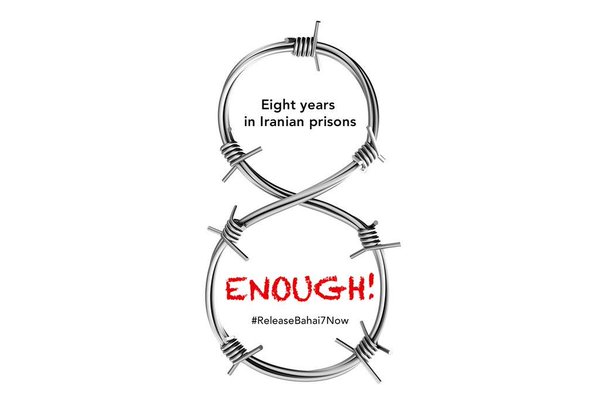
Seven Baha’is, Seven Years (May 14)
I wrote a whole series on this travesty, one rant for each of the 7 “Yaran” (friends) thrown into Iranian jails on hatefully delusory charges. This might have been my angriest. It will be eight years in May, and these quietly magnificent seven are not the only Baha’is – or the only Iranians, God knows, or the only unjustly imprisoned on Earth – to be warehoused, withheld from contributing their gifts to their society. But they are remarkable concerning the reasons for their captivity, and the radiant acquiescence of their response to it. (No radiance here. I’m pissed.)
Vahid: Peerless Insights From Inside Prison (May 21)
I republished my seven biographical sketches of the seven Baha’i leaders later in the year. Six months had passed since my flurry of indignation. The Quietly Magnificent Seven were still locked away, so I released them into the Internet wild a second time. I’m not so crazy. I knew that they’d be no more effective than they were the first time. However, some liked these profiles – I certainly did – and here is the last one, about an optometrist who turns into a lion.
Murray Sinclair (on Aboriginal justice) (June 28)
In 2015, Another Trudeau² was elected to lead Canada in 2015, but another story might turn out to be the big sociopolitical event of the year. Canada’s Truth and Reconciliation Commission was formed to inquire into and inform the public about the historic mistreatment of our Indigenous peoples in general, and especially the multigenerational cost of having taken thousands of children away from their parents to place them in residential schools. The purpose was to take the Indian out of ‘em by suppressing their language, assigning “Christian” names, strangling cultural affiliation and banning their godforsaken dances. Surprise! People suffered deeply, no matter how well-intentioned some of the priests and nuns and other culture-changers might have been, as did their communities and their families and their self-esteem. (And some of their teachers were brutes, racists, sociopaths and pedophiles. So there’s that, as well.)
Ahem. Anyway, back to Judge Sinclair: of Ojibwe heritage, and among the first Aboriginal judges in Canada, he gave five years of his life to hearing the stories of the survivors of Canada’s residential schools, and authored a report that brought truth to Canadian light. Reconciliation is another story, but I believe in that one, too. Read this post, if you read no others. It’s not long – it centres on a short quote, and fits easily into my He Said/She Said niche – but Judge Sinclair’s labours, and the voices to which he gave a wider hearing, will echo through Canada’s public life and policy for decades to come.
² His actual name is Justin. His election caught the imagination of Canadians. As a certified fan of his brilliant, iconoclastic father Pierre, I sometimes mutter about the son’s ah-ing and unimposing academic credentials, but he has a lot of the best of 21st-century leadership. (No illusions, though: he does labour within a fatally flawed system.) He gets diversity, he gets consultation, in a way no other Canadian leader ever has, not even his swashbuckling daddy.
September FIRST. What’s It To You? (September 2)
As a high school teacher, dad and lover of fresh starts, the first of September is always a watershed for me. In 2015, I reflected on marital success and failure, my craft, another read-through of my fave novellist³, basketball seasons to come and the meaning of the only life I know. Buckle up. This one careens about, but I still like it.
³ Initials: K.V. (Junior)
Return of the Attack of the Cool Lean Bean Counter (October 8)
Title of the Year, I think, hands down. The Bean Counter was Kevin Page, a gadfly government accountant who railed, and rails still, against government bungling and the shackling of the civil service. The event was a surprisingly lively session of the Ottawa Writers Festival, a local institution I love. This could have been one of my “Better Read Than Never’ book reviews if I’d actually read the book! I won’t – too many other things that push Unaccountable to the curb – but that’s partly because the evening itself was fun, and stimulating, and enough.
Coaching, Hoops and Young Men: A Tale of Two Teams (December 10)
One of the reasons I haven’t been a productive pen-monkey is that I’ve been coaching my arse off. This is a post where I wrote about my coaching instead of doing it. I have spent hundreds of hours with 14- and 15-year-old boys since September. My struggling high school team has finished its season, but I ruminate still over what we do in the off-season to raise our games. Meanwhile, the elite-level club team is now increasing in practice frequency as our competitive season shifts into overdrive. Pray for me. (Reminder: there’s more to life than basketball, but there’s more to basketball than basketball, too!)