Rss

He Said/She Said: Bill Bryson (and Sarah Selecky) (on WONDER)

[3-minute read]

There’s a writing coach around whose e-bay window I occasionally lurk. She’s always pretty and smiling, or pensively curled up with notebook and pen. She entices me to write more, and more satisfyingly and more deeply, and to link up with other scribblers. Her messages sometimes inspire in a general way, they encourage without fail, though they may be too jasmine-scented, too chamomile and meditative and soft for me. (I sometimes write with Jeff Beck or The Propellerheads blazing in the background.) Perhaps I just resist for the sake of loonie-pinching resistance, carrying on in my own solitary way. Still, she has me wondering, and doing math about it…

Sarah’s recent e-blandishment was to join a virtual writing community that has a new emphasis each month. May’s is Wonder. She writes, “In their great new book, How to Design a Meaningful Life, Dave Evans and Bill Burnett share their wonder equation. Here it is:

curiosity + mystery = wonder.

When you know the equation, you see that wonder is always available. It’s a choice. You can find it in ordinary things, once you start looking. An apple, when you really think about it, is completely unfathomable…”
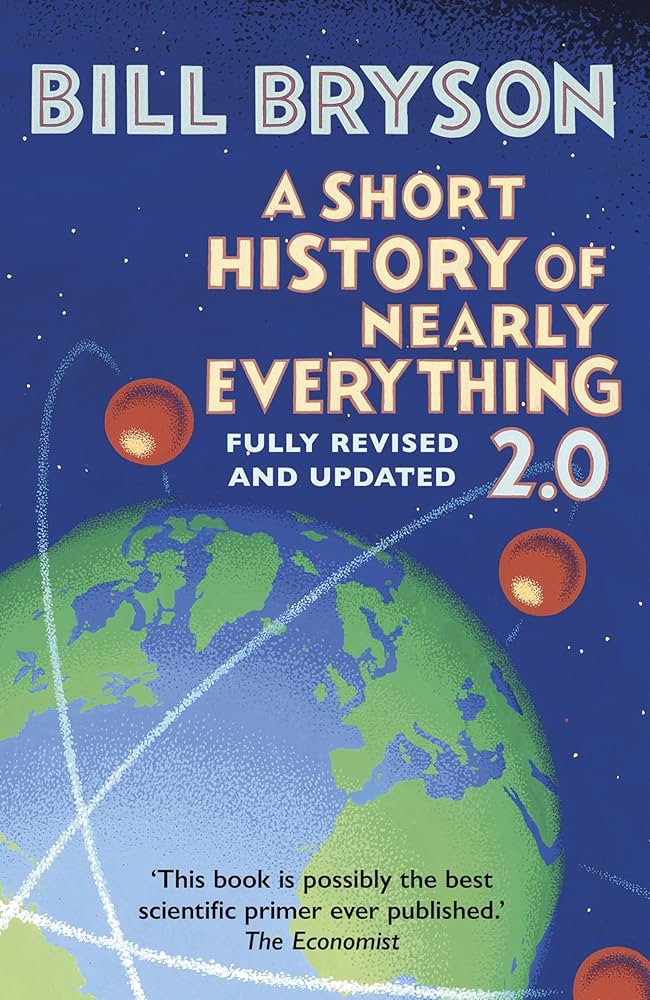
This image comes from Amazon, but please buy from an independent bookseller!

I wonder why and what?! and how?! and who was she in high school? and when will it be?… and I’m off to the races. We all are, when our curiosity isn’t strangled by routine or petty distractions — not to mention that my reflexive question is this: do these slim answer machines that we’re leashed to actually stunt or misdirect our engagement with life’s questions? My big sister loves her iPhone, and quick-drew it on me last weekend more than once to respond to my idlest who won/when’s the next game? queries with an encyclopedic recitation. Fair’s fair: I did ask, but there was precious little mystery attached to my bland microdose of curiosity. My question about smartphones stands, though I do admit that smartphones and the algorithms that fuel their constant use really can (he argues hypothetically, but without much conviction) prompt profound and useful investigations of mysteries more lofty than can you believe what this cat/these guys just did? 

But I wonder, I do, how much and how often this kind of outsourced thinking encourages genuine curiosity about truly mysterious things. They are more likely, in my experience, to excite thoughtless engagement with banal and repetitive images, without a single idea in sight. I wonder.

Now, according to my notes, the force-of-authorial-nature Bill Bryson was on my Sunday Magazine CBC wireless radio as 2025 wound down. (Vacuum tubes, static fuzz-hiss, carefully calibrating the dial so I could listen while shovelling coal into the furnace.) (Okay, no, the CBC still lives in modernity; I mostly listen to its shows as podcasts on my iPhone. Driving. Walking. Or in this case, I believe the Mother Corp soothed and informed me while I loaded the dishwasher.) Bryson is mainly known for writing rich and funny travel books – Notes From a Small Island (England) and A Sunburnt Country (Australia), for only two best-selling examples – but I especially liked his 2003 departure, A Short History of Nearly Everything. It was an avowed non-scientist’s gigantically ambitious attempt to write the story of scientific discovery from the ancients to the 21st century. For the first two years of my family’s five-year unplan in northeastern China, nightly readings of Sciencey Bill Bryson composed my young son’s science curriculum. (When Dad’s an English teacher, you come to expect science as an exercise in storytelling, and what an amazing work of narrative non-fiction it was!)

And is, still and again and even more so! Bryson was interviewing with Magazine host Piya Chattopadhyay about his 2025 complete revision and
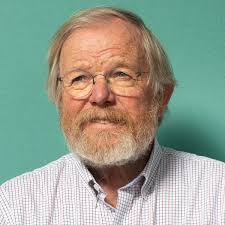
Bryson in 2020 (from The Guardian, a fine news site).

update: A Short History of Nearly Everything 2.0. (This, despite his 2020 “retirement” from writing at age 68, as delightfully chronicled in The Guardian.) It was a tasty, engaging conversation, chock full of fun and fascination and – yes, I did remember where I was headed with this! — wonder. Piya wanted to know, after all these books and the over 20 years that had elapsed between original publication and this renewed re-telling of the greatest (and latest) adventures in scientific discovery: what feeds Bill Bryson’s curiosity? What makes the wonder mill keep on grinding?

I loved his answer. He’s a humorist by nature, but a relentlessly thoughtful and wonderfully wise one. He said,

“Here we are….We have this very short window of existence. Before we existed, there was this great eternity that we didn’t take part in, and when we die eternity will go on….But in between, there is this moment where we have the exhilarating privilege to exist. And I think it’s such a shame that we take it all for granted.”

So here’s the math: add Bill Bryson’s furious, curious desire to understand to the vast slowly revealed mysteries of the universe? The sum total is WONDER. Reverence. Amazement. And he moved me to want MORE.
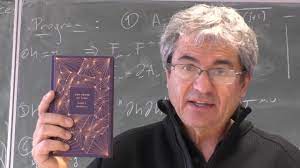
Carlo Rovelli: On Science (what it is, what it does)

Rovelli, a book, and a blackboard covered with inscrutability. He’s great with words, too.

[3-minute read]

Rovelli is a physicist who inhabits a realm of thought I couldn’t find with any GPS. Grade 12 physics had already left me behind. But Rovelli is an intellectual star, with a degree of celebrity from a series of articles he’d written for an Italian newspaper; Seven Brief Lessons on Physics became a slow-moving international sensation. It has been on my vague gotta get around to that sometime list for about five years. I was surprised and impressed to find Rovelli’s Reality is Not What It Seems: The Journey to Quantum Gravity among the books I picked up from the library for my enterprising life partner, who is even less science-literate than I am. (N.K. Jemisin’s fantasy novel The City We Became was a choice she struggled even more to explain; knowing a bit more about quantum physics suits her pragmatism better than fantastical battles between eccentric good and brooding, yucky evil, even though she loves New York City. Yup, I’m reading that one, too.)

I thought I’d try to be pragmatic. I would read the introduction to Reality is Not What It Seems during a half-hour walk to the library. That would do it: grasp the basic outlines of the physicist’s thinking, pop the thing in the Return slot, and bypass the thornier bits to come. Good plan! It didn’t work, because Rovelli writes with grace and conviction as he outlines the ancient roots of the bewildering investigations of modern physics. Reality is Not What It Seems, written before Seven Lessons, has been widely translated after the success of the Seven Brief Lessons that followed it. It is profoundly engaging. I was all the way in after reading this portion of “Walking Along the Shore”, Rovelli’s introduction to the Reality of quantum gravity. (Yes, I’m going to be reading about quantum gravity. I’m 70 pages in, have winged from Democritus to Newton and am now beginning the summary on our dear 20th-century friend Albert. My brain has not yet been broken.¹ It’s a wonderful read.)

In his introduction, Rovelli recalls Plato’s allegory of The Cave. Remember? One man escapes his chains, leaves the cave and encounters initially blinding new vistas, a sequence of approaches to “reality” he couldn’t have imagined from the cave’s shadowy depths. He “returns excitedly to his companions, to tell them what he has seen. They find it hard to believe.” Plato’s philosopher-king, the one who transcends the limited understandings of his benighted companions,  is Rovelli’s image of the scientist:

“We are all in the depths of a cave, chained by our ignorance….If we try to see further, we are confused; we are unaccustomed. But we try. This is science. Scientific thinking explores and redraws the world, gradually offering us better and better images of it, teaching us to think in ever more effective ways. Science is a continual exploration of ways of thinking. Its strength is its visionary capacity to demolish preconceived ideas, to reveal new regions of reality, and to construct new and more effective images of the world. This adventure rests upon the entirety of past knowledge, but at its heart is change. The world is boundless and iridescent….We are immersed in its mystery and in its beauty, and over the horizon there is unexplored territory….[O]ur precariousness, suspended over the abyss of the immensity of what we don’t know, does not render life meaningless: it makes it interesting and precious.”

Carlo Rovelli, Reality is Not What It Seems, p. 8

To think in progressively more useful ways. To refine our perception of what truly is. To refuse to be bound by traditional constraints on understanding. I love this poetic description of science.

I infer from much of his commentary that Rovelli is firmly anti-religion in his views, seeing the impulse toward faith as necessarily a reinforcement of tradition, authoritarianism and reason-held-hostage. I do think he’s mistaken in this, falling into the same trap religionists have, all too often; dogmatism among scientists has a long rap sheet of its own, some of which Rovelli recounts. However, I am no less attracted by his excellent, accessible explanations. I am also confirmed in my own unsystematic, accidentalist approach to deciding what I’ll read next. Good to meet you, sir.

¹ I spoke too soon. My brain pan started to leak noticeably last night, around page 72, as Rovelli explained Einstein’s special relativity to me. I’m not giving up yet, but it appears that my ability to roughly grasp physics ended in 1904. (Einstein was twenty-five in 1905, when he submitted three journal articles “each…worthy of a Nobel Prize”, according to Rovelli.)

Everything’s Coming Up *Marilynne*

[5-minute read]
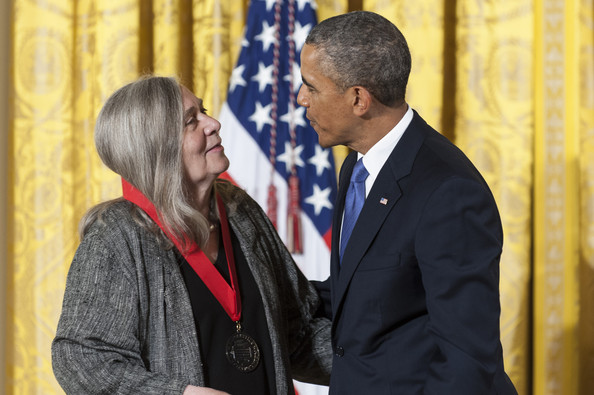
Robinson receives the National Humanities Medal from Obama in 2012.

Robinson receives the National Humanities Medal from Obama in 2012.

#ObamasFavoriteWriter is the most reductive, semi-dismissive and ‘Net-friendly way to capsulize her, so I won’t. (Um…)

Let’s start this way: Before 2016, I had never heard of Marilynne Robinson, or at least her name never stuck to my brain casing. Now, I have read all four of her novels, listened to a lecture and two interviews, and read and re-read her Paris Review discussion and one book of essays while ploughing through a second, which was my main accomplishment yesterday and the day before. I think about her work, and about her – where does such a person come from? – constantly. I find myself pestering everybody I like whom I consider might be even a remote candidate to read her. She’s a glorious read.

It started with Phyllis¹. She is a retired university prof who decided, as one of her several voluntary teach-ins, to start a book-club looking at great modern fiction with spiritual themes and underpinnings — as if such literature could actually be found in what often seems to be a doubtful, jaggedly ironic and chronically disillusioned age. Surprise! It can be! Phyllis knew where to look. And so, I got to be the token male among a dozen-and-a-half thoughtful, quietly eager book-types. We read Louise Erdrich and Bahiyyih Nakhjavani and the conversations were fun and light-shedding.

¹ Nobody names a daughter Phyllis anymore, yet once upon an old time it was a beautiful name suggestive of green leaves and ancient Greek loyalty and goddess-love. Not bad, Phyll!

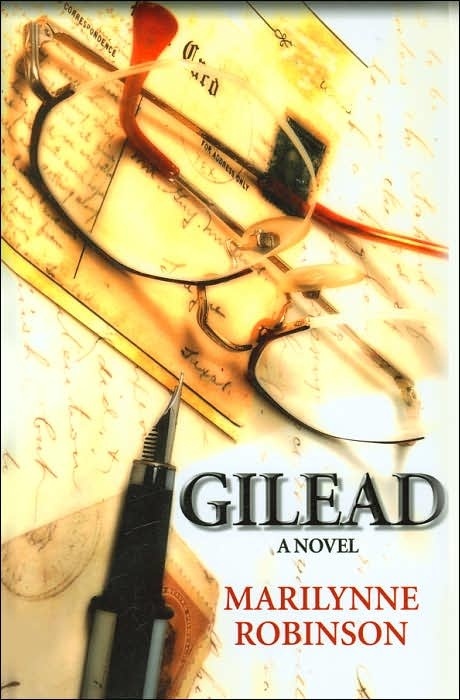
But mostly, we careened off on a helpless Marilynne Robinson jag. We couldn’t stop. We didn’t include her 1980 first novel, Housekeeping, which brought her critical praise and a “writers’ writer” designation and a faculty position at the University of Iowa. (I went back and read that one on my own, after I’d finished her Iowa-based sort of a trilogy but not really.) Our little group pulled its chairs up in a circle and started talking about Robinson’s Pulitzer Prize-winning Gilead, which had stunned me and shaken the ground of American fiction at its 2004 publication – not that I noticed! (I show up late to some of the very best parties.)

Gilead came nearly a quarter-century after Housekeeping. I remember Frank McCourt’s reaction to questions about how late in his life his “overnight success” had come. (His 1996 memoir, Angela’s Ashes, was an international publishing sensation; he was well into his 60s when it came out.) “I was TEACHING,” he wrote, “that’s why it took so long!”² Robinson might give the same explanation, as she is a long-time faculty member of the legendary Iowa writers workshop. However, she has said in interviews that, not wanting to contribute shallow or derivative novels to the stream of American literature, she wanted to read. And think, as well as teach. And well she did, and does. She is a profound scholar: history, literature, religion, philosophy. Gilead, far from being a work that she laboured over for the intervening decades, came to her quite quickly in the voice of John Ames, a rural Iowa pastor.

² Ever grateful, I am, for McCourt’s lesser-known third book Teacher Man, an in-depth account of his locally legendary career as a high school English teacher in New York City. My review of Teacher Man has a special place, one of the few JHdotCOM pieces to run elsewhere before it ran here, and as a free-lance piece for which I Actually Got Paid.
The NY Times review is worth a read, if you're hungry.

The NY Times review is worth a read, if you’re hungry.

As I read Gilead, I kept asking myself, How is Robinson doing this? How can a novel about a Christian minister in a nowhere town even get published, let alone be this gripping and so smartly written? Simply put, it is a literary miracle, and our little group couldn’t stop, since neither could Ms. Robinson. She wrote Gilead – it is a tiny actual town in Iowa – as the letter that the aging Pastor Ames writes to his young son, the product of a strange, late and utterly unexpected marriage to a much younger woman. Ames wants to explain himself before he dies, so that the boy will, when he comes of age, know something of his departed father. As a novelistic result, so do we, as well as making other compelling acquaintances  of the imaginary kind: Ames’s young wife Lila, his lifelong friend and intellectual sparring partner Robert Boughton, and Boughton’s troubled and troublesome son Jack. Robinson couldn’t get enough of these characters either, to our good luck and delight.

Continue Reading >>