Rss

Thirty-OneDERFUL. Time. Taste!

[3-minute read]

Looks like Gold Medal Ribbon’s in there. I WIN!

This silly “one/won” pun has always been about ice cream for me, until yesterday arrived. I achieved a new marital milestone, a personal best! And dessert is always on the menu…

Once upon an ad campaign, Baskin-Robbins touted their flavour for every day of the month (well, the 7 months that have 31 days) conceit by calling themselves “31-derful!” Who am I to disagree? I’ve likely sampled at least 31 of their flavours, and carry a cool, smooth and only occasionally crunchy minor grudge against B-R for their shelving of two of the greatest: German Chocolate Cake and Oregon Blackberry. Yummm. But this isn’t about loss, far from it!

Yesterday? This ol’ sweet-tooth and his sweetie celebrated another anniversary – oddly enough, exactly ONE YEAR AFTER we had observed thirty years of marriage! – with bicycles and Baha’i Studies and a basketball training session (okay, that was just me, and not-quite-31 high schoolers) and a freshwater swim (that was just her) AND an evening with the great Colson Whitehead, he of Nickel Boys and The Underground Railroad (and a truly odd first novel about elevator repair (!)) and his recently completed “Harlem Trilogy” of novels. Yes: a long and eventful day, a gorgeous one, and neither one of us had the time to write our annual tribute to each other and the wonders of making it this far. There’s a just-us dinner coming, later in Anniversary Week. But I seized this day’s hurried writing moment to praise my dearest friend and partner-in-time, and the brightness and consolation of our colourful marriage.

I’m a lucky man, that’s for sure. It looks like my latest application for a one-year marital contract-renewal will be granted! COACH JAY FOR THE WIN! I like to think that there are advantages also for my Sudden and Inexplicable Lady, but here’s to her, with an added sauce of why we’re blessed to still be doing this Togetherness Dance.

This year our anniversary coincided with the beginning of the North American conference of the Association for Baha’i Studies, which began in Ottawa 50 years ago. We share adherence to and exploration of the Baha’i teachings, and enormous thankfulness for the peace, hope and understanding that they give. We’re deep-diving into those teachings and practices and implications this weekend, and also greeting dear ones from all over, new friends and old. We dive in different waters and in distinct ways, and share what we find with each other. It’s rich, confirming, joyful, and it’s challenging, sometimes heart-breaking (“how come history takes such a long, long time?” Bruce Cockburn’s lyrics echo in my skull), but steadfastly scientific and visionary. When we’re serving and learning and yearning together, the troubles and trivialities of life fade away.

She came with me, after supper with American friends, to a sweaty stone Presbyterian Church, not far from the conference, for the Writers Festival event, her company a sweet gift to me. Although I’m the one who geeks out on literature and writing, and who stands in awe of the Whiteheads of the world, she’s a reader and investigator and appreciated an evening with the Festival folks nearly as much as I did. Bounty.

We pedalled home through downtown, across a canal and a river. “There’s nothing better than biking on a summer evening!” she sang out. I smilingly disagreed – I can think of a few things – but it was pretty sweet, and not only because I was in tandem with my favourite VeloGirl.

She’s healthy again after a year of health concerns that slowed her down, almost to my pace, and I’m thrilled to once again try (and fail) to keep up with her, while also granted occasional permission to help her slow down, maybe read her to sleep or leave the driving to me. Wonders. It’s amazing that I get to be with her, so often and for so long now.

She loves her work – yes, and she’s a federal government employee, so industrious and dedicated – as a promoter of green energy and other ecological solutions. Retirement would appear to be in the front view,  but while she’ll never lack for things to be doing, her vibrant public service in such a critically important field has her thinking she’ll keep at it. I am proud of her work and the adventurous way she approaches it.

She loves to bike. She shines after a swim; heck, she’ll duck out (another bad pun, very much intended!) during the conference’s lunch break, ruffle her own and other feathers, and jump in a swimming spot near where the Rideau Canal joins the Ottawa River, not far from Canada’s Parliament and the downtown conference site. She’s a happy woman in open water. She’s her, as my ballplayers might say.

She loves and loves and loves, and I try my best to love her well. It ain’t just ice cream that’s thirty-oneDERFUL, in my fortunate little world. Happy me! Happy us (fingers and toes crossed)!
Everything’s Coming Up *Marilynne*

[5-minute read]
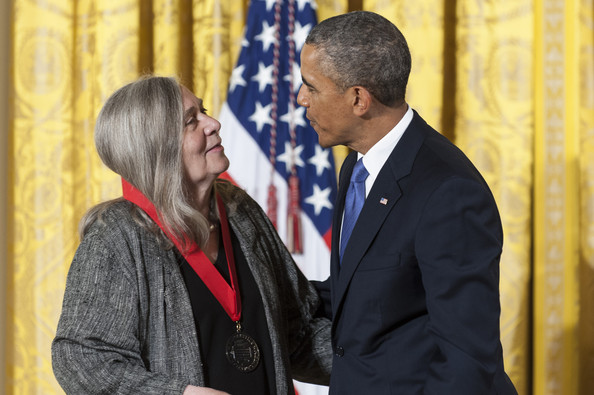
Robinson receives the National Humanities Medal from Obama in 2012.

Robinson receives the National Humanities Medal from Obama in 2012.

#ObamasFavoriteWriter is the most reductive, semi-dismissive and ‘Net-friendly way to capsulize her, so I won’t. (Um…)

Let’s start this way: Before 2016, I had never heard of Marilynne Robinson, or at least her name never stuck to my brain casing. Now, I have read all four of her novels, listened to a lecture and two interviews, and read and re-read her Paris Review discussion and one book of essays while ploughing through a second, which was my main accomplishment yesterday and the day before. I think about her work, and about her – where does such a person come from? – constantly. I find myself pestering everybody I like whom I consider might be even a remote candidate to read her. She’s a glorious read.

It started with Phyllis¹. She is a retired university prof who decided, as one of her several voluntary teach-ins, to start a book-club looking at great modern fiction with spiritual themes and underpinnings — as if such literature could actually be found in what often seems to be a doubtful, jaggedly ironic and chronically disillusioned age. Surprise! It can be! Phyllis knew where to look. And so, I got to be the token male among a dozen-and-a-half thoughtful, quietly eager book-types. We read Louise Erdrich and Bahiyyih Nakhjavani and the conversations were fun and light-shedding.

¹ Nobody names a daughter Phyllis anymore, yet once upon an old time it was a beautiful name suggestive of green leaves and ancient Greek loyalty and goddess-love. Not bad, Phyll!

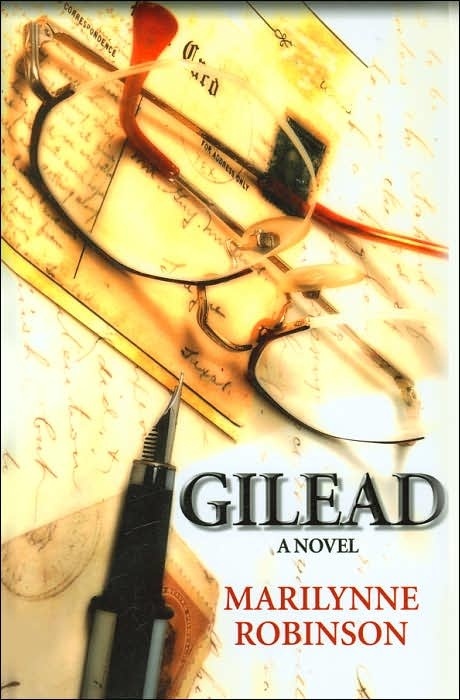
But mostly, we careened off on a helpless Marilynne Robinson jag. We couldn’t stop. We didn’t include her 1980 first novel, Housekeeping, which brought her critical praise and a “writers’ writer” designation and a faculty position at the University of Iowa. (I went back and read that one on my own, after I’d finished her Iowa-based sort of a trilogy but not really.) Our little group pulled its chairs up in a circle and started talking about Robinson’s Pulitzer Prize-winning Gilead, which had stunned me and shaken the ground of American fiction at its 2004 publication – not that I noticed! (I show up late to some of the very best parties.)

Gilead came nearly a quarter-century after Housekeeping. I remember Frank McCourt’s reaction to questions about how late in his life his “overnight success” had come. (His 1996 memoir, Angela’s Ashes, was an international publishing sensation; he was well into his 60s when it came out.) “I was TEACHING,” he wrote, “that’s why it took so long!”² Robinson might give the same explanation, as she is a long-time faculty member of the legendary Iowa writers workshop. However, she has said in interviews that, not wanting to contribute shallow or derivative novels to the stream of American literature, she wanted to read. And think, as well as teach. And well she did, and does. She is a profound scholar: history, literature, religion, philosophy. Gilead, far from being a work that she laboured over for the intervening decades, came to her quite quickly in the voice of John Ames, a rural Iowa pastor.

² Ever grateful, I am, for McCourt’s lesser-known third book Teacher Man, an in-depth account of his locally legendary career as a high school English teacher in New York City. My review of Teacher Man has a special place, one of the few JHdotCOM pieces to run elsewhere before it ran here, and as a free-lance piece for which I Actually Got Paid.
The NY Times review is worth a read, if you're hungry.

The NY Times review is worth a read, if you’re hungry.

As I read Gilead, I kept asking myself, How is Robinson doing this? How can a novel about a Christian minister in a nowhere town even get published, let alone be this gripping and so smartly written? Simply put, it is a literary miracle, and our little group couldn’t stop, since neither could Ms. Robinson. She wrote Gilead – it is a tiny actual town in Iowa – as the letter that the aging Pastor Ames writes to his young son, the product of a strange, late and utterly unexpected marriage to a much younger woman. Ames wants to explain himself before he dies, so that the boy will, when he comes of age, know something of his departed father. As a novelistic result, so do we, as well as making other compelling acquaintances  of the imaginary kind: Ames’s young wife Lila, his lifelong friend and intellectual sparring partner Robert Boughton, and Boughton’s troubled and troublesome son Jack. Robinson couldn’t get enough of these characters either, to our good luck and delight.

Continue Reading >>

Rainn Wilson Explores The Matrix

The Association for Baha’i Studies is knocking the “stuffy” out of the notion that academia and intellectual pursuits are narrow, competitive, elitist and pretty darned dull. The concept of scholarship is being remade out of its old “ivory tower” paradigm into something more closely resembling a noble, shared adventure in learning. This, among many other things — the new friends I meet, the musicians I add to my playlist, the books I lust over, the writing ideas I hatch — has made the Association’s annual conference one of my greatest treats. So many smart and good-hearted people! Such outstanding, mind-altering presentations! So many confirmations of my careening efforts to “walk the spiritual path with practical feet”! 

Anyway. What follows is Part One of a report on one of the highlights of the recent conference of the ABS in Irvine, California, which is (kind of) on the way from Ottawa to Dalian…

***

“So I went to the fights the other night and a hockey game broke out!” Rodney Dangerfield

It’s an old gag, but it’s still a goodie. In the same spirit, I went to the 37th annual conference of the Association for Baha’i Studies and a pop-culture laugh riot ensued. Not only did I feel happy and a little smarter at the end of that comic lecture, but nobody tried to sell me anything except ideas. This is the second time, so far as I know, that actor Rainn Wilson has spoken at one of these spirited, brainy conclaves. He brings a healthy kind of irreverence and the humour one would expect from a certified Comedy Star, but also a serious commitment to his faith community, a sharp mind and a blazing conviction that soul matters. (And no, he doesn’t speak or behave like Dwight Schrute from The Office.)

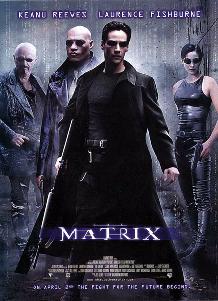
The iconic poster: trenchcoats and coolness and guns, oh my!

Mr. Schrute’s Wilson’s talk was designed to show that the 1999 blockbuster film The Matrix had more to it than awesome special effects and a cool visual style. He wasn’t joking, but he was hilarious.  Just in case we’d forgotten, or had missed Keanu Reeves (as Neo) and Laurence Fishburne (Morpheus) and the gang when The Matrix came out, Wilson went to the video screen for a reminder.

Continue Reading >>