Rss

Nelson Mandela (on all the fondest hopes)

“It always seems impossible until it’s done.”

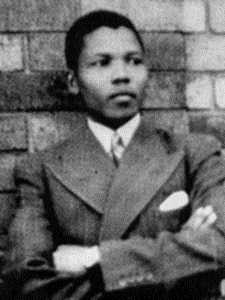
Nelson Mandela (1918-2013). For many, a world without “Madiba” must have seemed incredible, but now it’s here. The triviality of Adidas and its “impossible is nothing” campaign becomes obvious in comparison to the brand of impossible things to be achieved in the world, according to Madiba’s way of thinking..

A dashing young man, and perhaps not a saint, but then what he *became*.

Stephen Lewis (on Nelson Mandela)

“He turned the other cheek.”

Stephen Lewis was a leftist Canadian politician, and remains among the most articulate and passionate champions of social justice in the world. He was Canada’s Ambassador to the United Nations, and a Special Envoy from that body for the cause of AIDS in Africa. He was also a friend of Mandela and especially his wife, Graca Machel. Lewis could unleash a tidal wave of scrupulously chosen words, but in a CBC interview on hearing of Mandela’s death, his most powerful were these five. They enshrine the courage, the wisdom, the Christian forebearance to seek only justice, only forgiveness, only the future good of his country, when revenge might have seemed a necessity.

George Bernard Shaw (on circumstances & blame)

“People are always blaming their circumstances for what they are. I don’t believe in circumstances. The people who get on in this world are the people who get up and look for the circumstances they want, and, if they can’t find them, make them.”

George Bernard Shaw (1856-1950) in Mrs. Warren’s Profession. (Mrs. Warren’s was the “oldest” of them.) Her daughter Vivie, previously unaware of her mother’s business, well-educated and (for that time) wildly privileged in her relative independence, is initially shocked by her mother’s management of brothels.

I’ve loved this quote for a long time, but didn’t know where in Shaw’s canon it occurred. My goodness, what a writer and thinker he was! (His Wikiquote page is ridiculous.) Writing this play in 1893 was a remarkable thing, as was his stated motivation: “to draw attention to the truth that prostitution is caused, not by female depravity and male licentiousness, but simply by underpaying, undervaluing, and overworking women so shamefully that the poorest of them are forced to resort to prostitution to keep body and soul together.” I don’t think male licentiousness can be entirely exonerated, but still.